


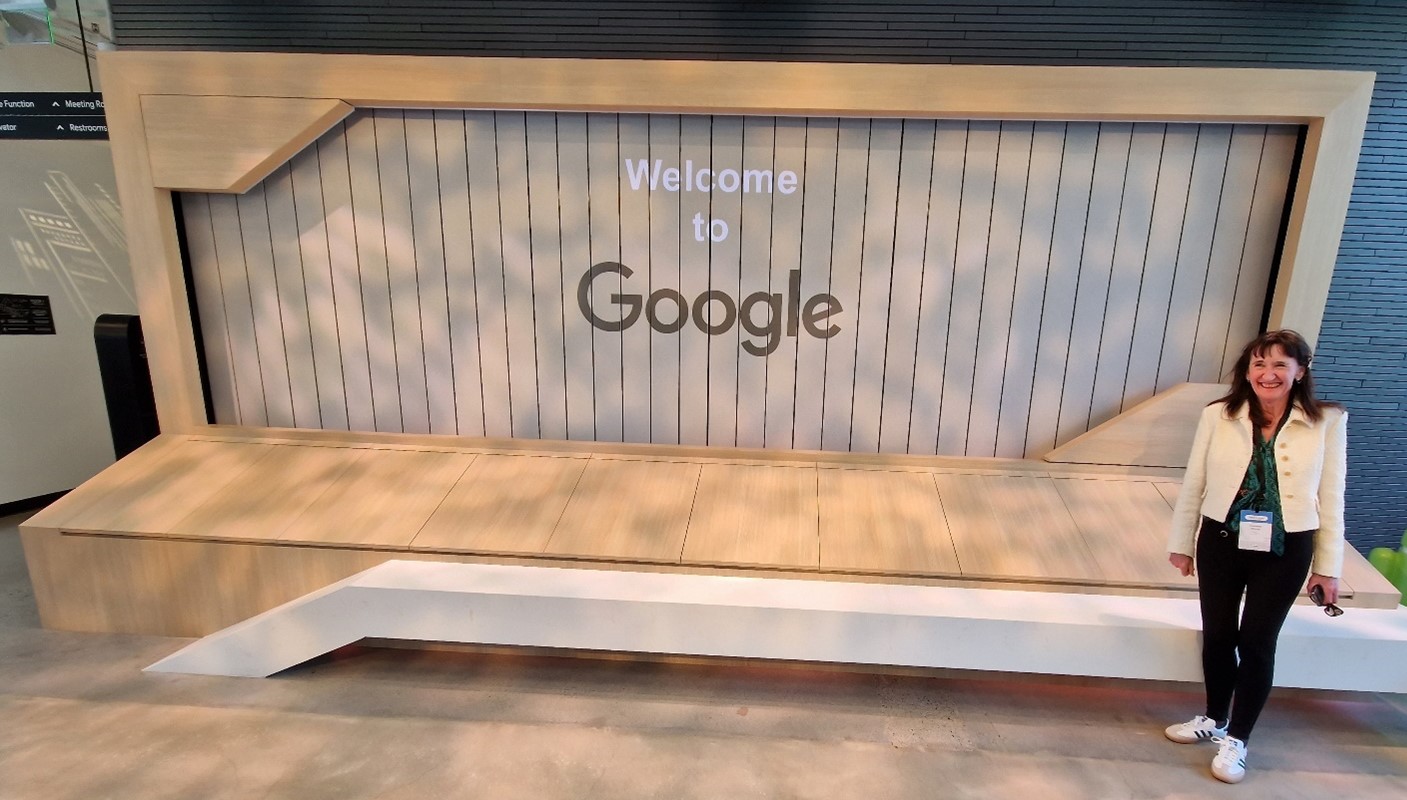

Toyeeb Rehman and Jeanette Whyte were invited to join the Government Affairs track at Google’s biggest annual event, the I/O developer conference in Mountain View, California.
The focus of this year’s event was on AI advancements within the Google ecosystem. It was a great opportunity to gain firsthand insights into Google’s latest AI updates and to engage in discussions on various topics with industry peers from across the globe.
The event this year was kicked off by Marc Rebillet — an artist known in online spaces for pairing improvised electronic tracks with amusing vocals. Marc entertained the audience by demoing the DJ mode that Google recently added to its generative AI text-to-music tool, MusicFX.
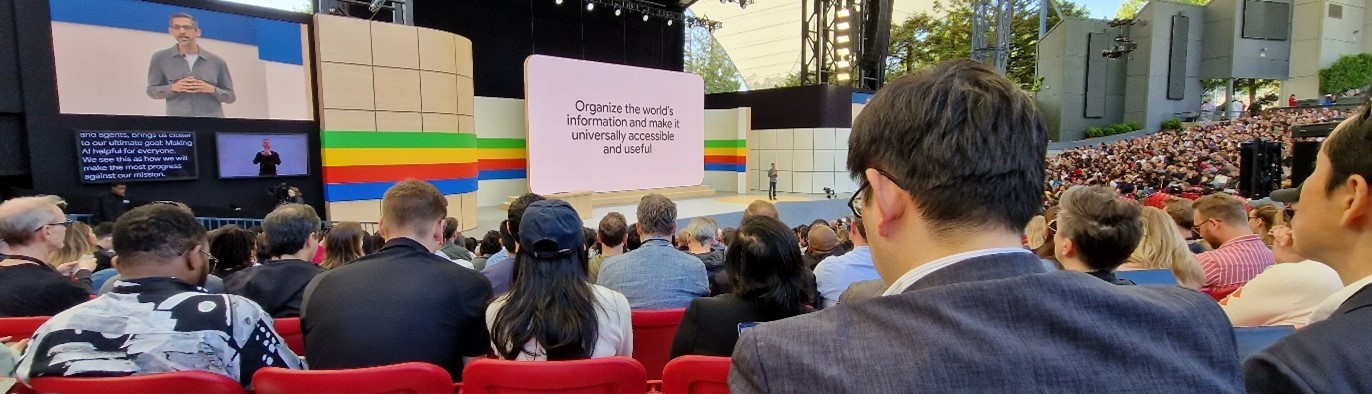
The Opening Keynote followed, in which Sundar Pichai (Google CEO), emphasised the company’s rapid progress in AI.
“The power of Gemini, with multimodality, long context, and agents, brings us closer to our ultimate goal: making AI helpful for everyone.”
The Keynote unveiled the latest developments in Gemini (the multimodal large language AI model developed by Google DeepMind) across the Google ecosystem – including Android, Search, Photos, and Gmail.
Amongst the announcements made, some of our favourites were:
- AI Overview, is a Generative AI Search feature, enabling multi-step reasoning to Google Search, which is available in the US only.
- SynthID toolkit has been expanded from images to include video and text. SynthID watermarks and identifies AI-generated content and imbeds an imperceptible watermark without impacting the quality, accuracy, creativity or speed of the text or video.
- LearnLM which is a new family of AI models that has been fine-tuned for learning and is grounded in educational research to make teaching and learning experiences more active and
The word “AI” was used 121 times during the opening keynote and Sundar Pichai joked that the company had taken over the “hard work” of counting for us.
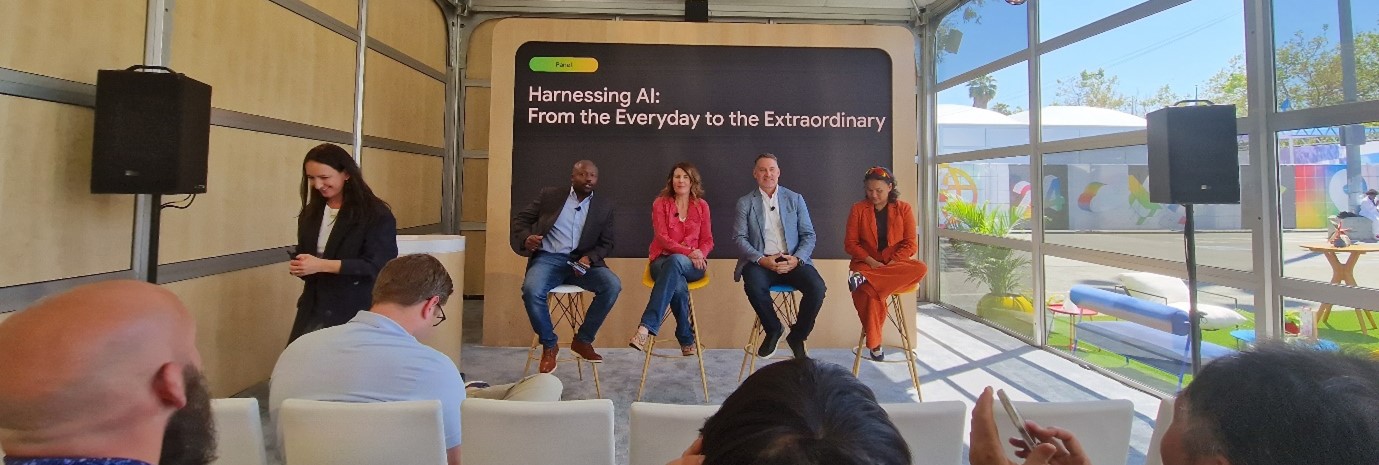
As participants of the Government Affairs track, we joined several lively panel sessions that explored topics such as how can we leverage AI Tools within policy frameworks to ensure that AI’s promise can be enjoyed by all. There was also a Developer Keynote that focused on how developers can integrate their applications with Google’s generative AI tools across multiple platforms. For example, the use of Gemini API across multiple programming languages and the introduction of a Gemini “nano” model that runs purely on device.
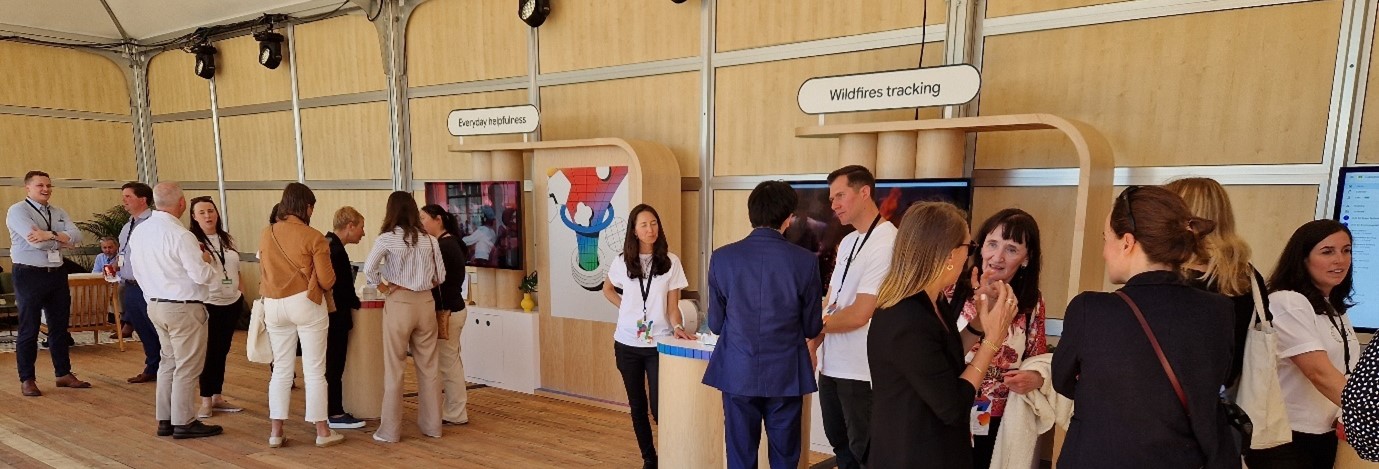
Outside of the keynotes and the panel sessions, there were a series of buildings and stalls dedicated to specific topics such as Mobile, Web, Cloud, AI. Of particular note were the following hands-on demonstrations:
- Project Astra – a booth where we interacted with an AI agent as it “watched” and listened through a camera. We placed prop items on a desk (such as animals, vehicles, foods) and asked the agent to identify the items and to tell a story involving the items. We also asked the agent for a list of dishes that could be cook using the items on the desk. The communication with the AI was seamless throughout the session, it was able to oblige to all requests, to prompt for further information when required, and to demonstrate an impress level of creativity.
- Project Starline – an immersive holograph-like video calling booth. We sat in front of a TV screen and had a short meeting with a remote Google representative. The representative appeared in life-size 3D, allowing us to follow each other’s body language and to make eye contact. While it was not a completely life-like experience, the advanced state of the technology was striking.
- Penalty Kick Challenge – an AI football coach that provided penalty kick advice. There was a small setup involving a full-size goal, artificial turf, and a penalty spot. Participants were challenged to kick a ball into the corners of the goal (Top Bins) whilst an AI coach processed the attempts through a camera. When the attempts were over, the coach provided textual advice to improve results. Whilst the advice was basic, the potential of the technology is clear and we could see it being used initially in scenarios to review and practice technique.

During the Opening Keynote, Sundar Pichai stated that Google is firmly in its Gemini era. This was demonstrably apparent throughout the event as Google showcased a wealth of tools and services to empower developers with AI capabilities. This trend is prevalent across the technology sector and will significantly influence the trajectory of our digital lives – and thus necessitate continuous engagement at Policy level across industries and government.