


by Fatin Haziqah
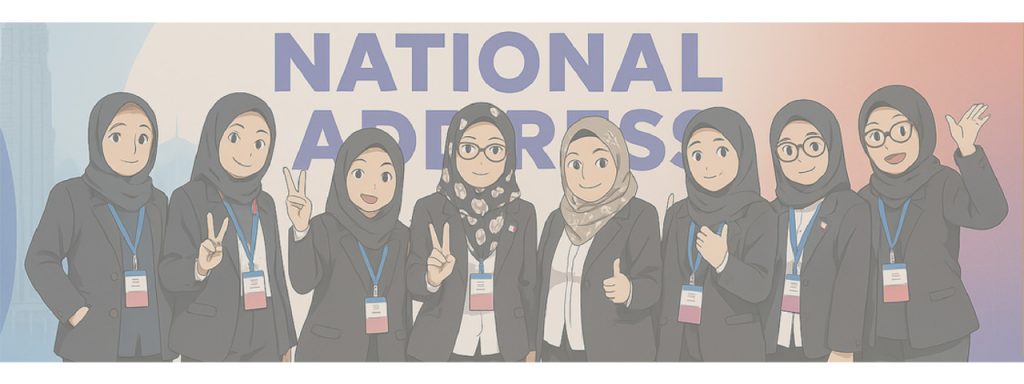
I learned early that talent is universal, but trust isn’t. In meeting rooms, we count women on slides; online, women and girls count the risks before they post, click, or build. Inclusion does not happen in press releases. It is built through a hundred quiet design choices that make the digital world feel safe by default, especially for those who have had to fight just to be in the room.
Across low- and middle-income countries, women are still less likely than men to use mobile internet. The
previous GSMA analysis showed that the gender gap has narrowed recently, but women remain about 15% less likely to be online, which translates to hundreds of millions of women still being disconnected.
Progress is real, so are the distances left to travel. (The Mobile Gender Gap Report 2024).
My story does not begin with a headline. It begins with a question I cannot stop asking: Will she feel safe enough to stay online? I know the feeling of being counted before being heard, and I know what changes outcomes: not slogans, but governance that wires trust into the walls; before launch, across languages, with numbers we are willing to publish.
Below is the compact habit stack I am asking leaders, builders, and regulators to adopt. It is not a theory; it is an operating system for inclusive AI.
1) Protect by default
In the physical world, no one opens a school and adds fire exits later. Digital products should follow the same logic: limit stranger replies, throttle mass forwards, require verified DMs, and filter abuse on by default, with explanations in local languages. When the baseline protects people, women and girls do not have to dig through settings just to participate. Trust becomes invisible because it works.
2) Speak the country you serve
Harassment detection that only “hears” polished English fails in predictable ways. Ship features only when
safeguards understand the local language like, Malay, Mandarin, and Tamil, using local examples at test time. Language coverage is not a “nice-to-have”; it is the threshold for launch.
3) Inspect before take-off
We do not certify a bridge after the traffic jam. Make Algorithmic Risk Assessments (ARAs) a pre-launch step for high-reach features and a must-do on major updates. Publish short, plain summaries that answer:
Who could be harmed? What can go wrong? How did we test (by language)? Which safeguards are on by
default? What residual risks remain? Routine, not dramatic; just like a penetration test.
4) Keep score in public
What leaders review is what teams deliver. Issue a quarterly Women’s Digital Trust Index that tracks:
- Response time on priority harms
- Harassment detection quality by language
- Deepfake takedown latency and re-upload rates
- Adoption of safety switches
- Victim-support satisfaction
5) Share the keys and use the levers
Create a small Independent Safety Board (civil society, academia, industry, youth) to review ARAs and the trust index and publish practical recommendations with deadlines. Tie procurement to these standards: prefer vendors that share ARA summaries and quarterly metrics or hold an Inclusive AI mark aligned to international good practice. Oversight builds legitimacy, procurement changes behaviour.
Why these matters (and why now)
When protections are default and multilingual, when risks are inspected pre-launch, and when leaders read trust metrics every quarter, women and girls do not just “access” the internet, they thrive on it. That is the spirit behind GSMA initiatives like Connected Women and Tech4Girls, which pair skills, mentoring and industry partnerships so girls and young women can move from cautious users to confident creators. (Connected Women Commitment Initiative & Tech4Girls, GSMA)
WHAT CHANGES WHEN THE FIVE DECISIONS HOLD
- A student posts her debate clip without inviting a flood of strangers; appeals come with human explanations.
- A nurse spots a “stipend” scam before the harm lands because the system recognises the pattern and warns in her language.
- A micro-entrepreneur keeps her page open; brigading fades; sales don’t.
None of this is glamorous. That’s the point. It’s plumbing and wiring. It’s leadership turning inclusive AI from a keynote into a habit. And habits compound.
A Simple Pledge for 2025
On World Telecommunication and Information Society Day, carrying the spirit of “For ALL Women and Girls: Rights. Equality. Empowerment”— we can make a pledge that fits on one page and shapes a decade:
- Protect by default.
- Inspect before launch.
- Publish the numbers.
- Share the oversight.
- Buy what meets the bar
Five quiet decisions. Made once, repeated often. That’s how AI governance for inclusion ensures technology doesn’t just include women and girls. It empowers them to lead.