




Razia, a 35-year-old from interior Sindh, still remembers the first time she held a smartphone. To her, it wasn’t just a device, it was a window into a world she had never imagined. For years, she earned a modest living as a street vendor in her village, working long hours with little security. But when she began learning to use digital and AI-powered tools, her world expanded. Within months, Razia moved from selling goods in crowded streets to running her own online grocery store. Today, she is her family’s primary provider. Her journey is proof that when women gain access to technology, they don’t just transform their own lives, they uplift entire communities.
Yet for every Razia, millions of women remain locked out of the digital future. Online harassment, cyberbullying and exclusion from decision-making spaces continue to silence women’s voices and restrict their opportunities. These barriers do more than harm individuals, they weaken the progress of entire societies striving to build inclusive digital nations.
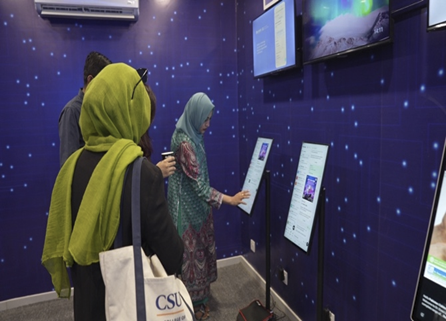
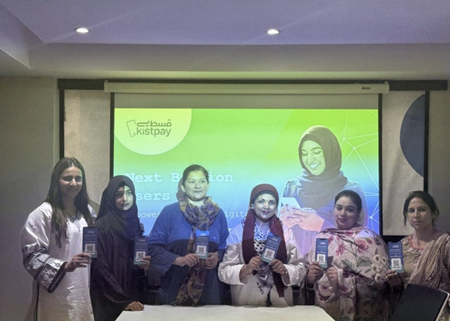
Artificial intelligence offers us the chance to rewrite this reality. If designed with inclusion at its core, AI can become a force for empowerment: enabling safer online spaces, smarter learning and new pathways to financial independence. But with women making up only 22% of the global AI workforce, underrepresentation threatens to hardwire bias into the very systems meant to shape our future, turning AI from a tool of liberation into one of limitation.
For women and girls, digital trust rests on three essentials: Representation ensures that women are at the table when AI is designed, embedding fairness and balance from the start. Safety demands platforms that prevent abuse before it escalates. Empowerment comes from making AI tools transparent, ethical and accessible so women can fully participate in, and lead, the digital economy.
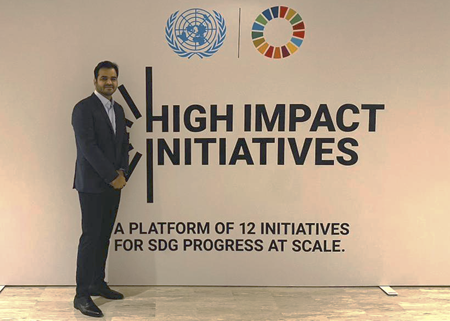

This is not a distant aspiration, it is already unfolding. At Kistpay and Eocean, we are working to ensure inclusive AI is more than a conversation; it is a reality shaping lives today. At the Artificial Intelligence for Sustainable Development Roundtable during the United Nations General Assembly in New York, Kistpay shared how AI can strengthen economic, social, and environmental resilience, particularly for underserved communities. Our dialogue focused on making AI not just a tool for big corporations or advanced economies, but a resource accessible to policymakers, small businesses and development professionals navigating real-world challenges.
In parallel, Eocean is leveraging its expertise in omnichannel communication and AI-driven engagement to help governments, businesses, and organizations build trust through secure, scalable and inclusive digital platforms. From advancing financial inclusion to enabling smarter citizen services, we are proving that technology designed responsibly can go beyond connectivity to deliver measurable social impact.
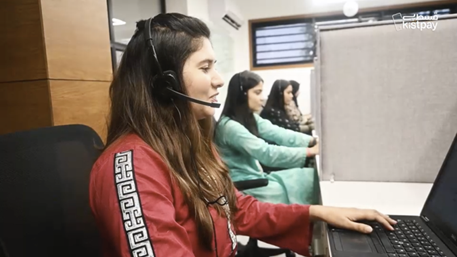
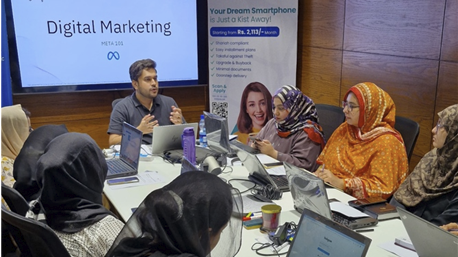
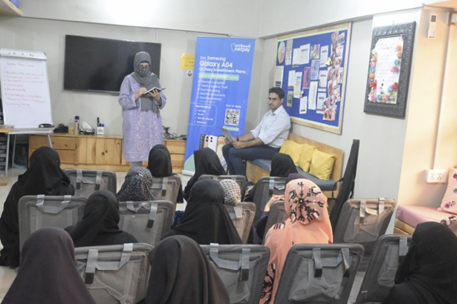
Most importantly, our work with women on the ground shows how transformative AI can be when made practical and accessible. Through our women’s empowerment programs, participants learn to use AI assistants in their own languages, experiment with crafting prompts that produce meaningful results, and apply these insights to e-commerce, digital marketing, and financial literacy. What often begins as curiosity grows into confidence and that confidence fuels entrepreneurship.
Digital inclusion, then, is not simply about connecting people to the internet. It is about building an environment where women feel safe, empowered, and capable of seizing opportunity. When women are equipped with smartphones, affordable financing and AI literacy, they don’t just participate in the digital world, they begin to shape it. They create, they innovate, and they lead.
But this transformation cannot rest on the shoulders of a few organizations. It requires a collective commitment. Governments must craft policies that guarantee women equal representation in AI and digital development. The private sector must invest in women-led innovation and embed safety-by-design into every platform. Civil society must expand digital literacy, build support networks and amplify women’s voices. Only through this shared responsibility can technology evolve into a bridge to inclusion rather than a barrier.

The future we choose will define the digital era. For me, that future is one where women’s voices are not sidelined but central. Where AI reflects the diversity, resilience, and brilliance of those it serves. Where digital trust is not passively assumed, but actively earned.
If we succeed, women like Razia will no longer be rare examples, they will be the norm. Generations of women, empowered by inclusive AI, will not just adapt to technology but shape it: leading businesses, transforming communities, and designing systems that reflect their realities and aspirations. That is the true promise of digital inclusion—not just access, but agency.
Because in the end, progress will not be measured by the sophistication of our algorithms, but by the inclusivity of the futures they create. And when women lead that future, it will not just move us forward, it will move us all closer to a world that is more innovative and more human.