


A woman’s support village — once a vital, highly functional, living human ecosystem that served as a safety net to distribute life’s burdens — has been evaporated by a culture of individualism. What was once basic community survival is now a distant myth. That warm village seems like a dream in today’s world.
But with the dawn of the AI era, the modern women are building digital buffer zones which are hyper efficient, software stacks to automate the sheer logistics of survival, turning personal motivation into purpose-driven ventures.
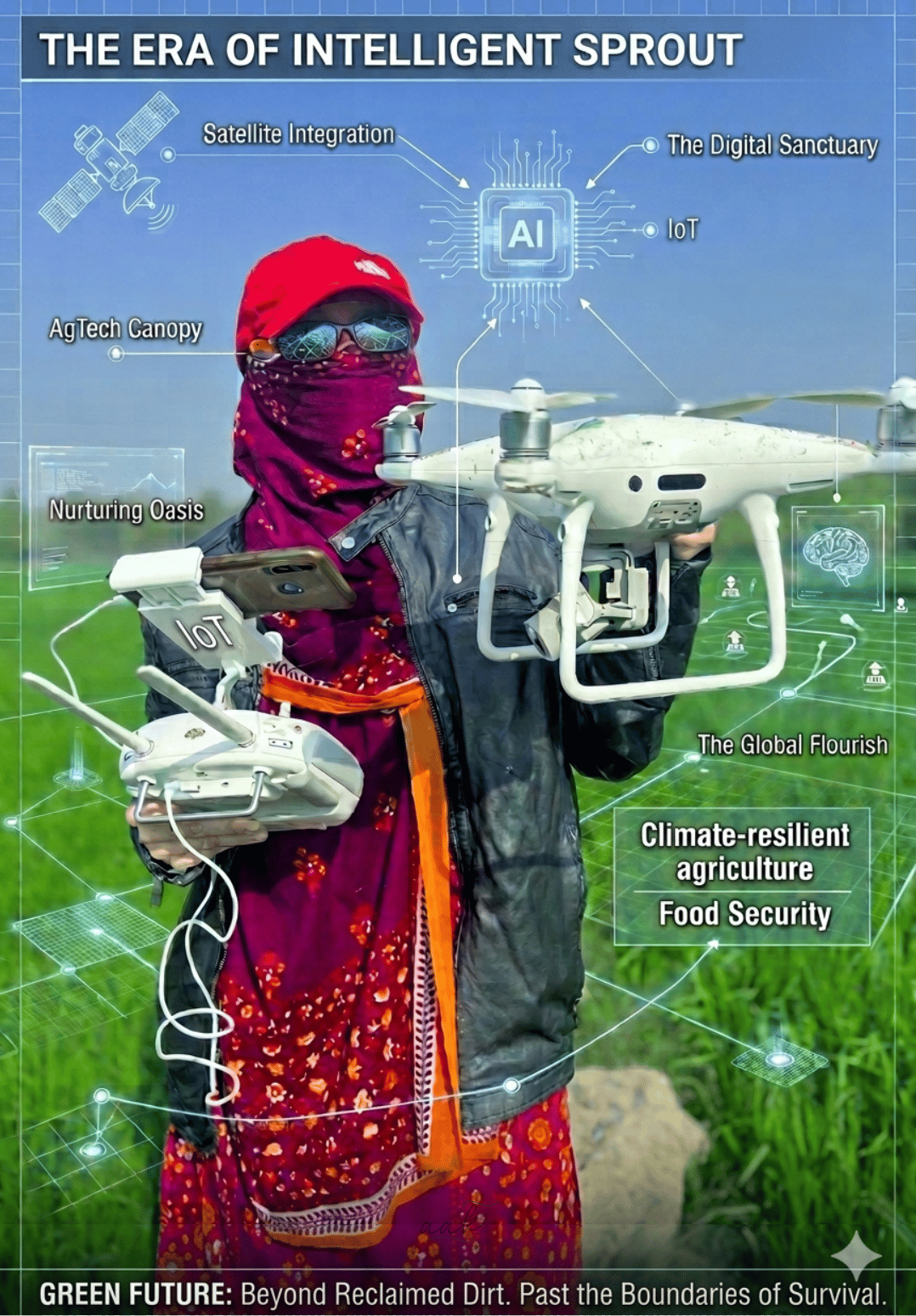
Purpose-driven ventures establish digital sanctuaries by designing intentional tech spaces that shield focus, restore human agency, and channel deep, uninterrupted connection toward meaningful growth.
The Digital Sanctuary: Food Security and Climate-resilience
My journey began with self-motivation for an eco-conscious lifestyle, which evolved into a deeper passion: supporting farmers in producing nutrient-dense crops—ensuring our collective food systems deliver health, not harm.
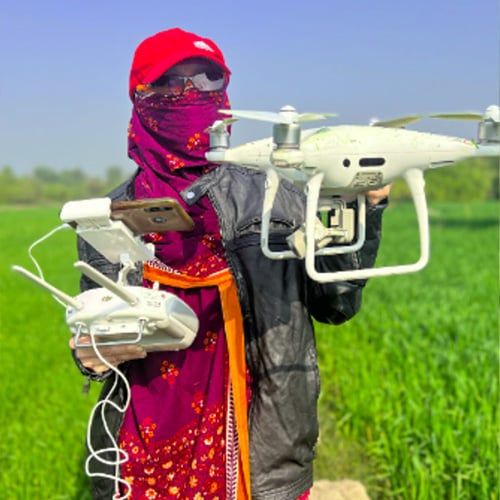
Co-founded Crop2X, an AgTech venture working towards precision agriculture ecosystem to build climate-resilient farms and ensure food security. To adapt to climate change and meet global sustainability goals, Crop2X delivers an intelligent farm management system that integrates real-time IoT data streams, satellite monitoring platform, AI analytics, and advisory. By transforming raw field metrics into precise, actionable advisory, we enable growers to make highly cost-effective decisions that optimize resource inputs and maximize harvest potential.
Optimize inputs. Minimize costs. Maximize yields.
AgTech: The Connected Canopy
Rigorous case studies and field trials are essential to detect variables beneath a tech-driven canopy, revealing the exact pivot points needed for localized refinement and map the path towards product optimization.
Case Study No. 1: Barren to Bountiful
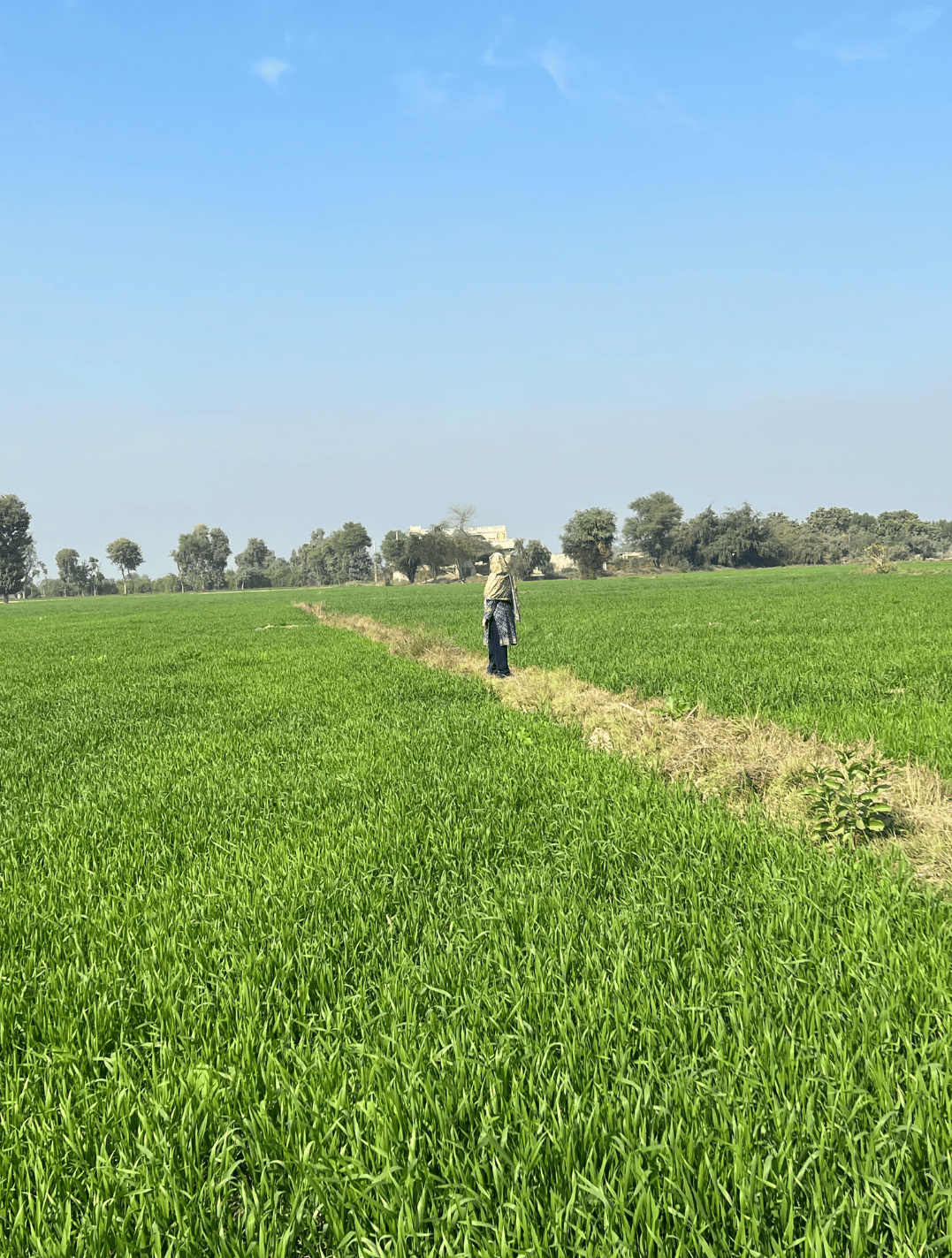
A 10-acre parcel, long rendered barren by decades of compounding climate stress and severe water scarcity, offered an ideal baseline to test our infrastructure. Through precision agriculture technology, that acreage transformed into a thriving, climate-resilient ecosystem. This ecological restoration was an iterative process; it required two years of precise, data-driven interventions to unlock the land’s true fertile potential. Today, the parcel has reached full commercial viability, consistently yields high-tier organic produce, and is actively integrated into premium supply chains.
Case Study No. 2: Flooded to Fertile
A 100-acre parcel’s history was inextricably linked to the devastating 2022 floods, an eco-catastrophe that submerged one-third of Pakistan. The macro-impact on the agricultural sector was intense: soil matrices were destabilized, seed stock was ruined, and widespread crop loss triggered an acute food security crisis, erasing the primary income streams of vulnerable, land-dependent farming communities.
As part of our land reclamation initiative, we deployed our developed technology there and provided advisory to farmers on how to prepare the degraded soil matrix for sustainable cultivation. Wheat and legumes were successfully cultivated there and validated by active market demand.
Women in Agriculture: Nurturing the Oasis
Building a robust support system and driving awareness for technology adoption among vulnerable farming communities is critical; without these foundational elements, operational efforts escalate while actual yields and impact diminish.
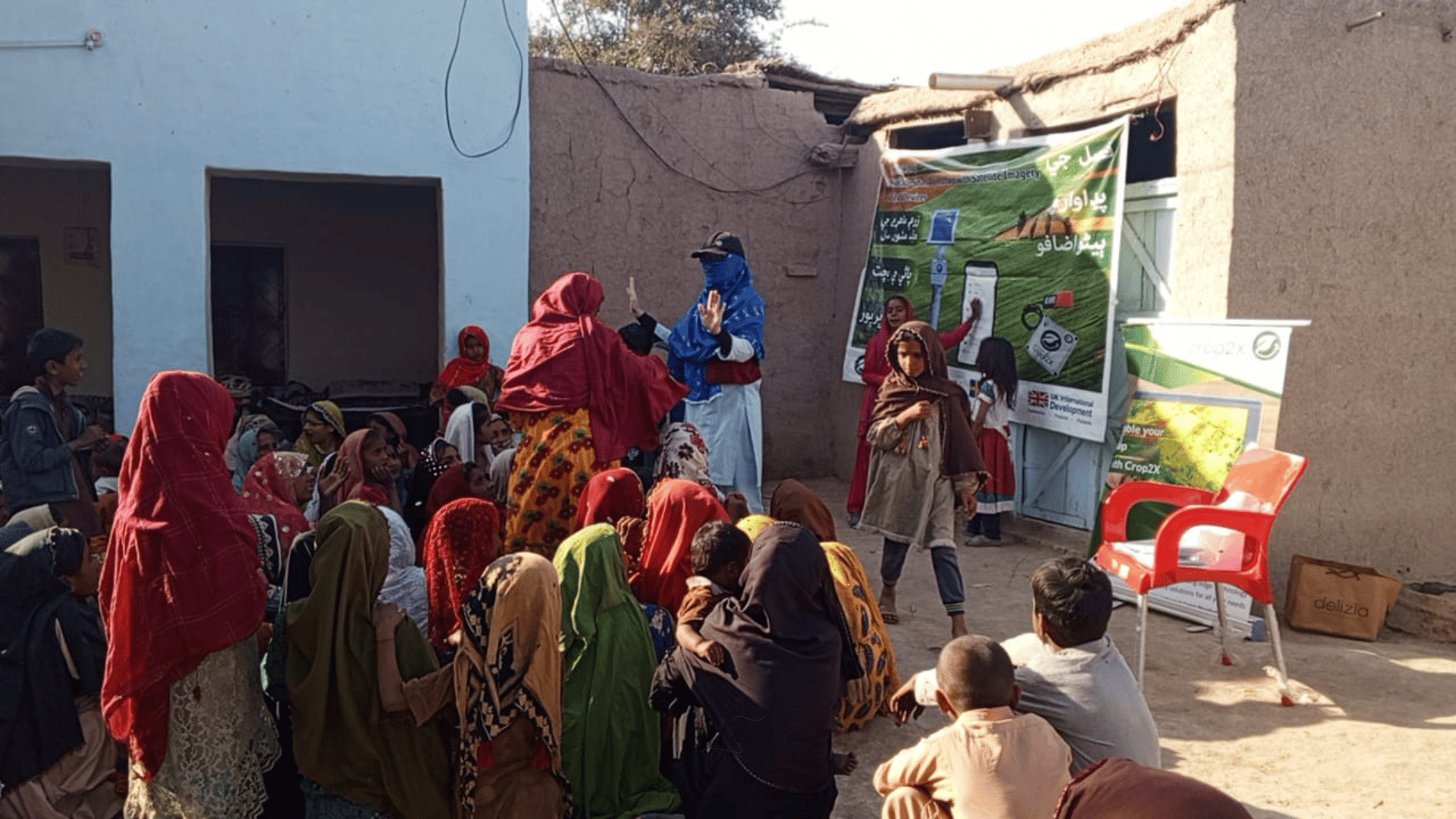
During our village outreach initiative for food security & climate-smart agriculture, we conduct on-the-ground training to demonstrate how the technology optimizes crop health and improves overall yield. At each full-day rural visit, we train at least sixty to hundred farmers including women farmers. To date, we have conducted dozens of training sessions, empowering hundreds of farmers with agricultural technology. Through these sessions, vulnerable farmer communities have been equipped to bridge the digital divide, turning precision insights into elevated crop productivity and enhanced economic resilience.
As an urban professional coming from a fast-paced tech background, collaborating with rural women offers a beautiful experience. Their connection to the land is distinct from the rush of urban innovation. Every visit begins with a warm welcome as they gather around with warm curiosity, peppering me with a mix of personal and lighthearted questions, everything from my professional background and where I live to everyday details like my attire and personal life.
The Harvest: Seed to Success
As local farmers witnessed the first green rows break through a barren landscape, the invisible barriers of isolation dissolved. A wave of these farmers began actively coming forward, presenting their own soil vulnerabilities, irrigation failures, and climate anxieties—no longer in search of temporary emergency aid, but demanding integration into our decentralized AgTech ecosystem. By deploying the data-driven tools, predictive metrics, and soil-restoration frameworks, these farmers voted with their trust—converting a localized pilot project into the regional standard for modern, resilient agriculture.
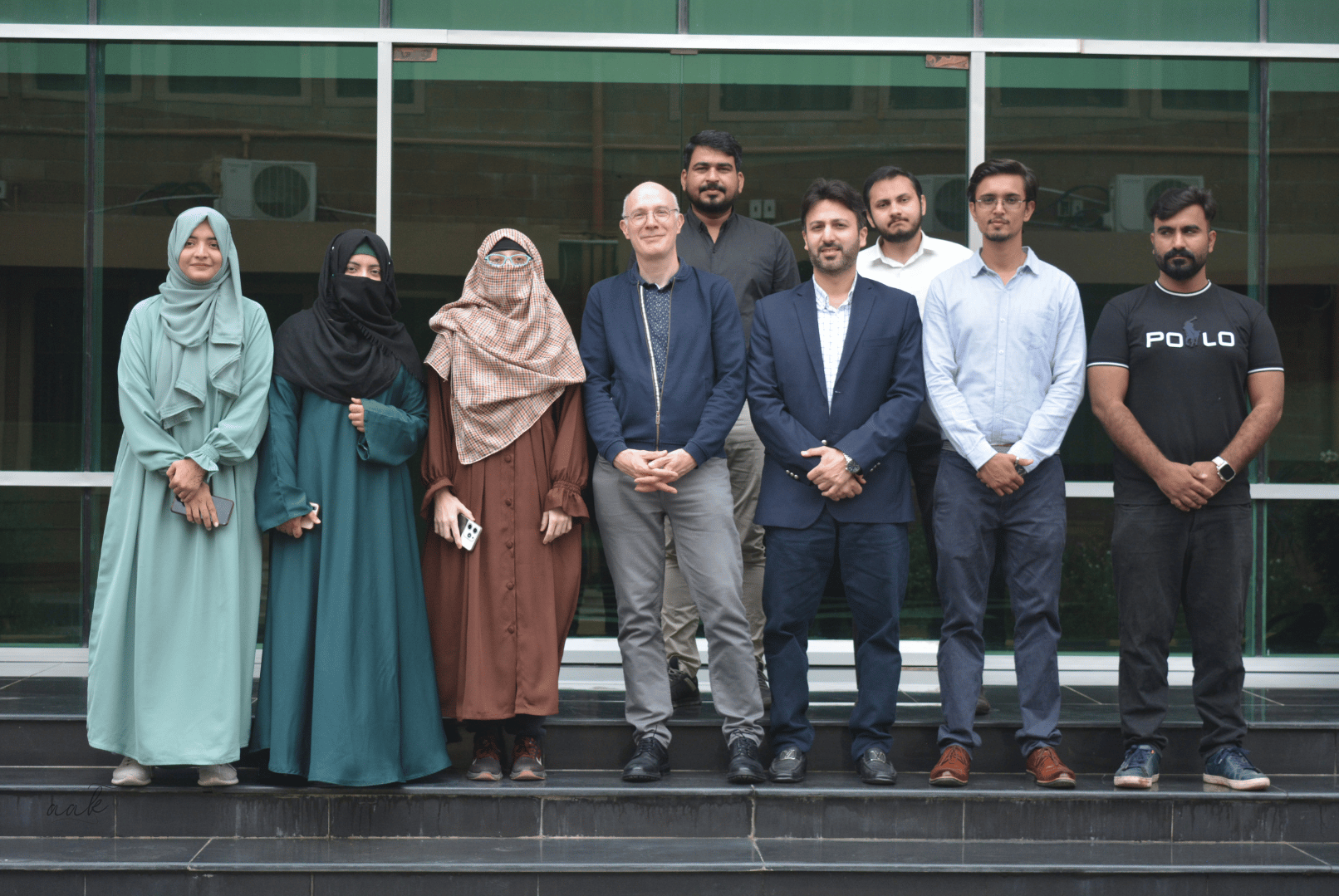
The convergence of funding, partnerships, and investment served as the deep wellspring, this vision required to take root. This collaborative influx of capital has yielded more than just crops; they have cultivated a thriving sanctuary, moving a vulnerable ecosystem past the boundaries of survival into a success. Receiving GSMA funding, Shell award, partnership with Telenor and onboarding WWF as our client are amongst the highlights.
The Global Flourish: A Systemic Awakening
‘AI for Low-Pesticide Agriculture’ leads the Silicon Valley startup accelerator Y Combinator’s Requests for Startups (RFS) list for the Summer 2026 batch. RFS serves as an explicit call to action, identifying high-priority domains that are eligible to receive funding and mentorship.
From international climate summits to decentralized agronomic networks, the global perspective on food security has shifted toward biological and technological synthesis. Forward-thinking agricultural systems are increasingly modeling their supply chains after nature’s own decentralized networks—using localized data, predictive modeling, and regenerative soil sciences to buffer against macro-environmental shocks. Global case studies reveal that when rural communities are equipped with these precision adaptation toolkits, they rapidly transition from high-risk vulnerabilities to regional anchor points. The integration of nature-positive design with local communities along with diversity and inclusion, is a workable path to outgrowing global climate volatility.
Beyond reclaimed dirt. Past the boundaries of survival.
Welcome to the era of the intelligent sprout.
Reality Check
The global conversation around sustainable living is necessary, but for the developing world, building true climate resilience and food security is easier said than done. Local farming communities face a double barrier: a steep financial hurdle to afford advanced technology, and a deeply entrenched resistance to adopting it. Moreover, the local system and relevant agencies hinder progress rather than fostering recovery and development. To heal our food systems, we must cultivate behavioral alignment as deeply as we cultivate the soil.
Furthermore, the global stage remains largely indifferent to the potential of innovators from developing regions, choosing instead to sustain large-scale, climate-destructive agricultural paradigms. If we want systemic change, we cannot just distribute tools; we must actively transform mindsets and dismantle the systemic biases of the global market.
Nevertheless, we remain dedicated to playing a constructive role in environmental and community resilience.
Bio
Ayesha A. Khurram is Director / CEO at Crop2X.com Pvt. Ltd. which specializes in capturing and analyzing real-time agricultural data along with providing expert advisory. These agricultural insights assist farmers in decision-making to optimize farm management, practice precision agriculture, reclaim degraded land, and build climate-resilient food systems. After completing her graduation & post-graduation from NED University of Engineering and Technology, Pakistan; she received HEC scholarship for higher studies. She completed Master of Engineering (research work) in Environmental Engineering from University of Auckland, New Zealand. She has been published in peer-reviewed journals. Driven by personal motivation for a health-conscious lifestyle and with a competent team including engineers, AI and GIS specialists, and agronomists, she is actively working towards climate-resilient agriculture. She brings a dynamic, entrepreneurial spirit to the team, she is dedicated to championing the company’s vision.