



While GSMA’s M360 APAC 2024 covered a wide array of transformative trends, such as next-generation networks and AI, the closing session brought a crucial reminder: none of this innovation is possible without sound spectrum policy. As data demand surges and 5G continues to roll out across the Asia Pacific region, the discussion highlighted spectrum policy’s critical role in ensuring economic sustainability, digital transformation, and even environmental responsibility.
Spectrum needs by 2030
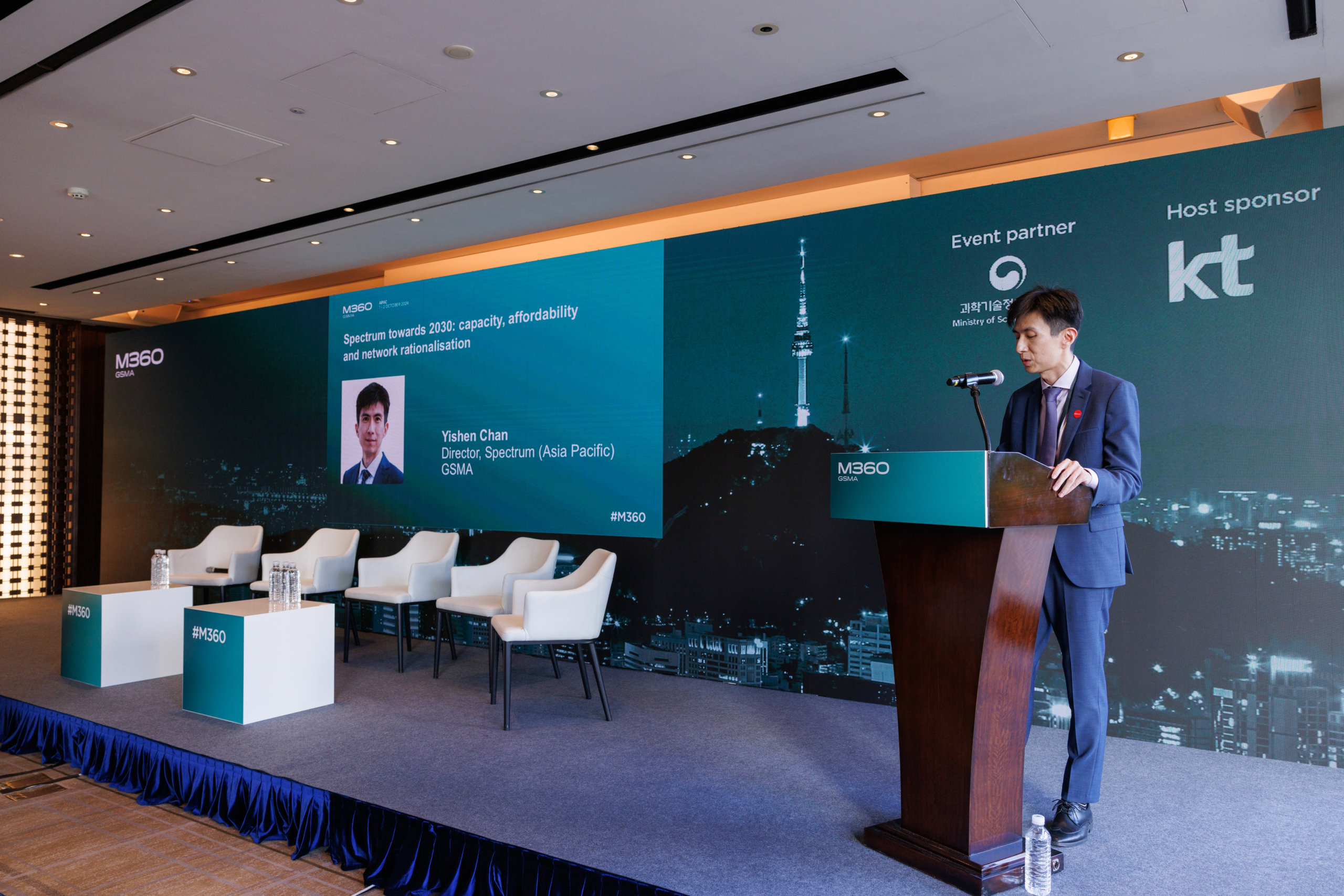
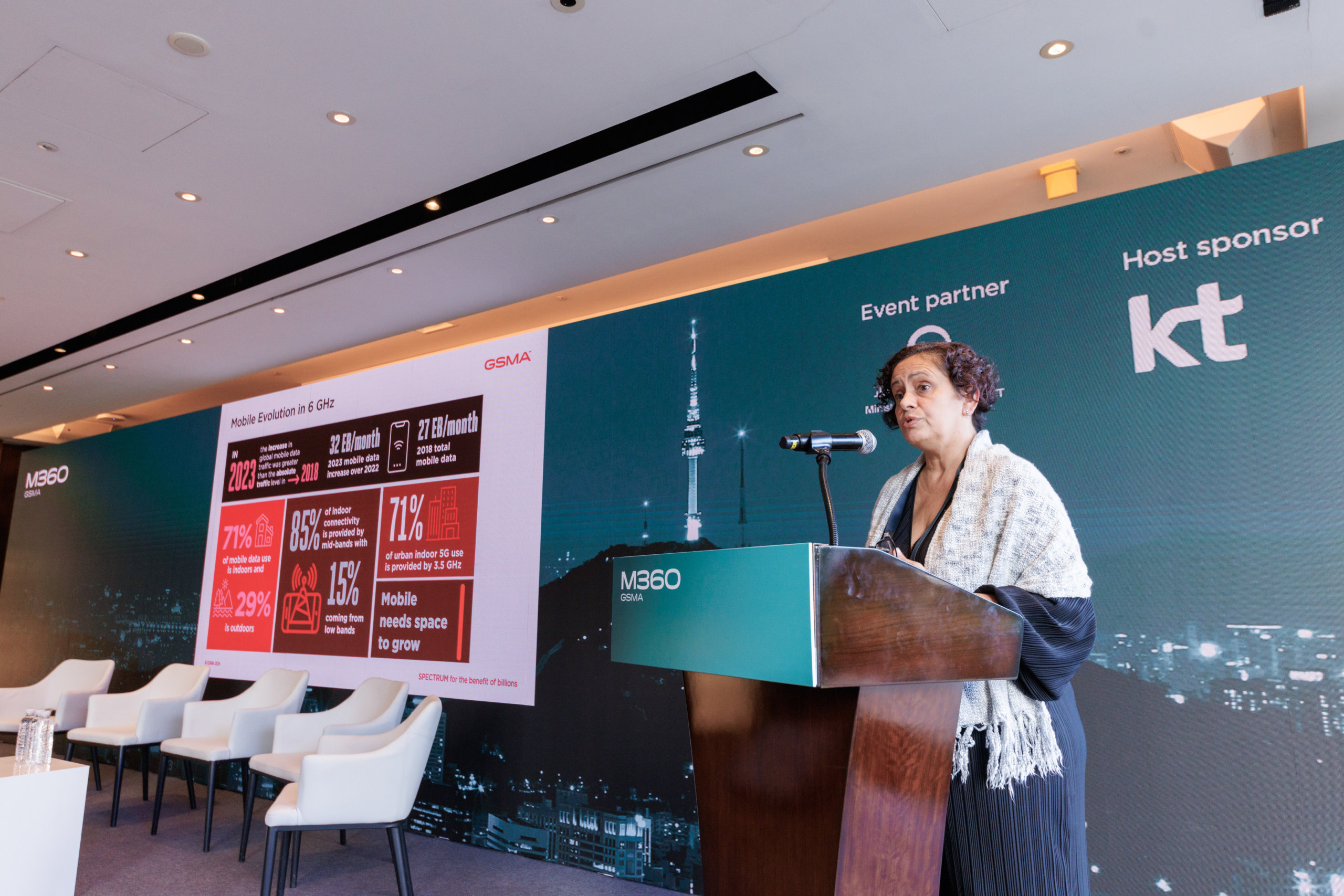
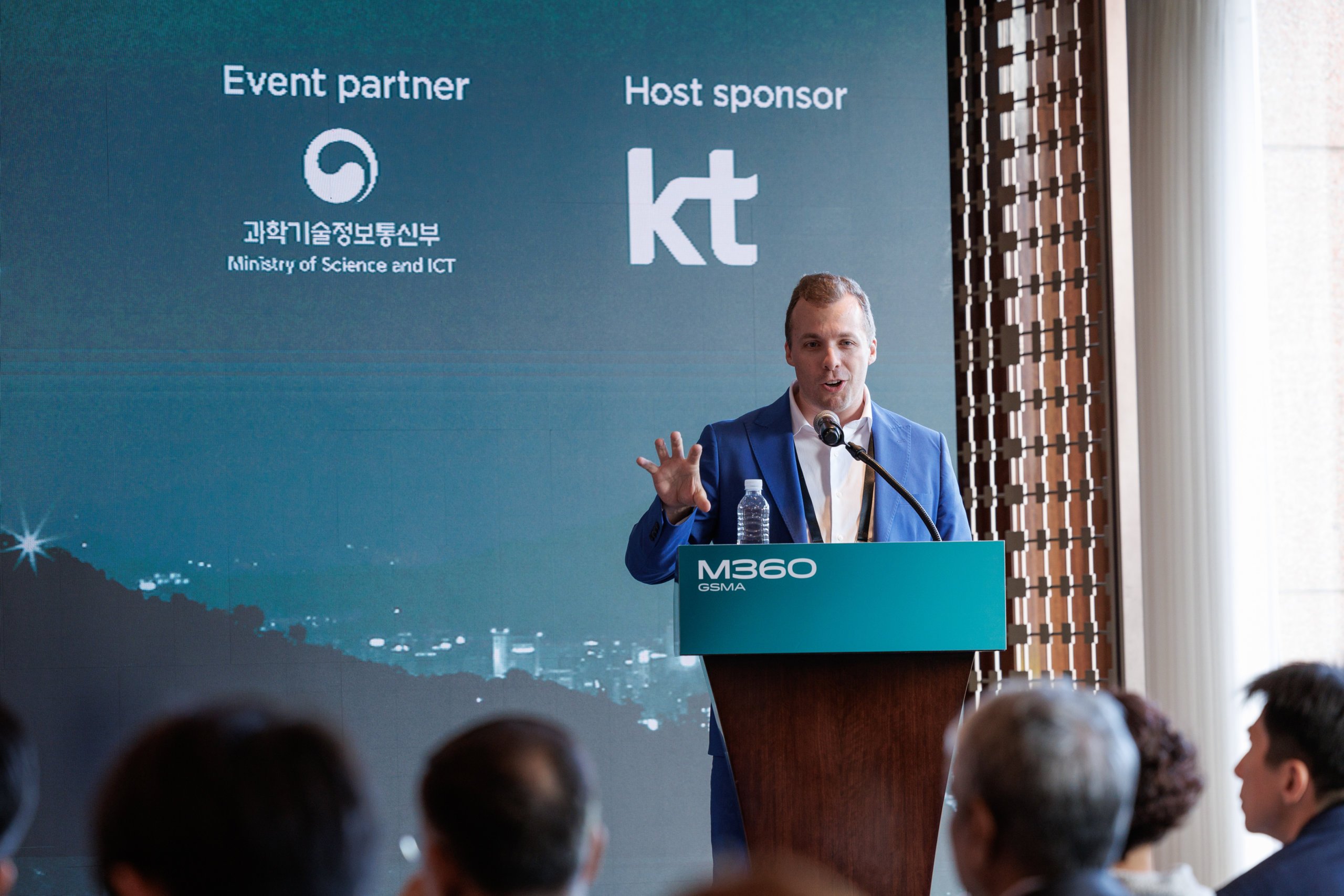
The demand for mobile data is growing at an unprecedented rate. In 2023, global mobile data traffic exceeded the total traffic in 2018. Mark Giles, Lead Industry Analyst at Ookla, explained that the younger “video streaming and sharing” demographic is driving this increase, coupled with enterprises’ demand for “always-on” connectivity.
Luciana Camargos, GSMA’s Head of Spectrum, noted that too meet this demand, 2 GHz of mid-band spectrum per market by 2030 was identified as a key target, focusing on bands like 1.5 GHz, 3.8-4.2 GHz, and 6 GHz. The 3.5 GHz band already carries much weight for 5G performance, but expanding capacity will be essential to meet future demand. With 71% of mobile data used indoors and 85% of indoor connectivity relying on mid-bands, the 6 GHz band is set to become a critical resource for future growth. These bands will play a central role in future planning, with WRC-27 exploring new bands to evolve 5G and 6G.
5G adoption varies across APAC
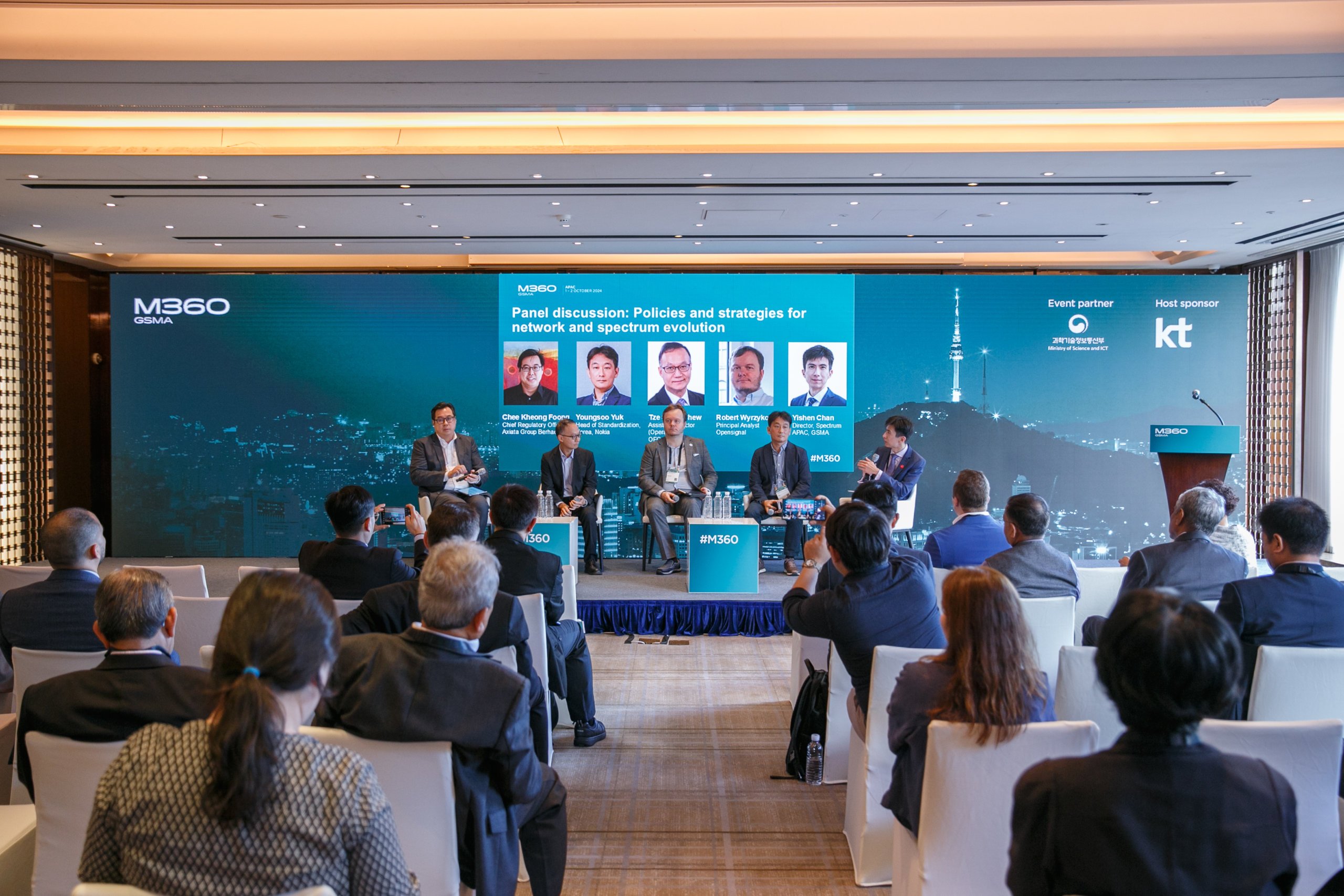
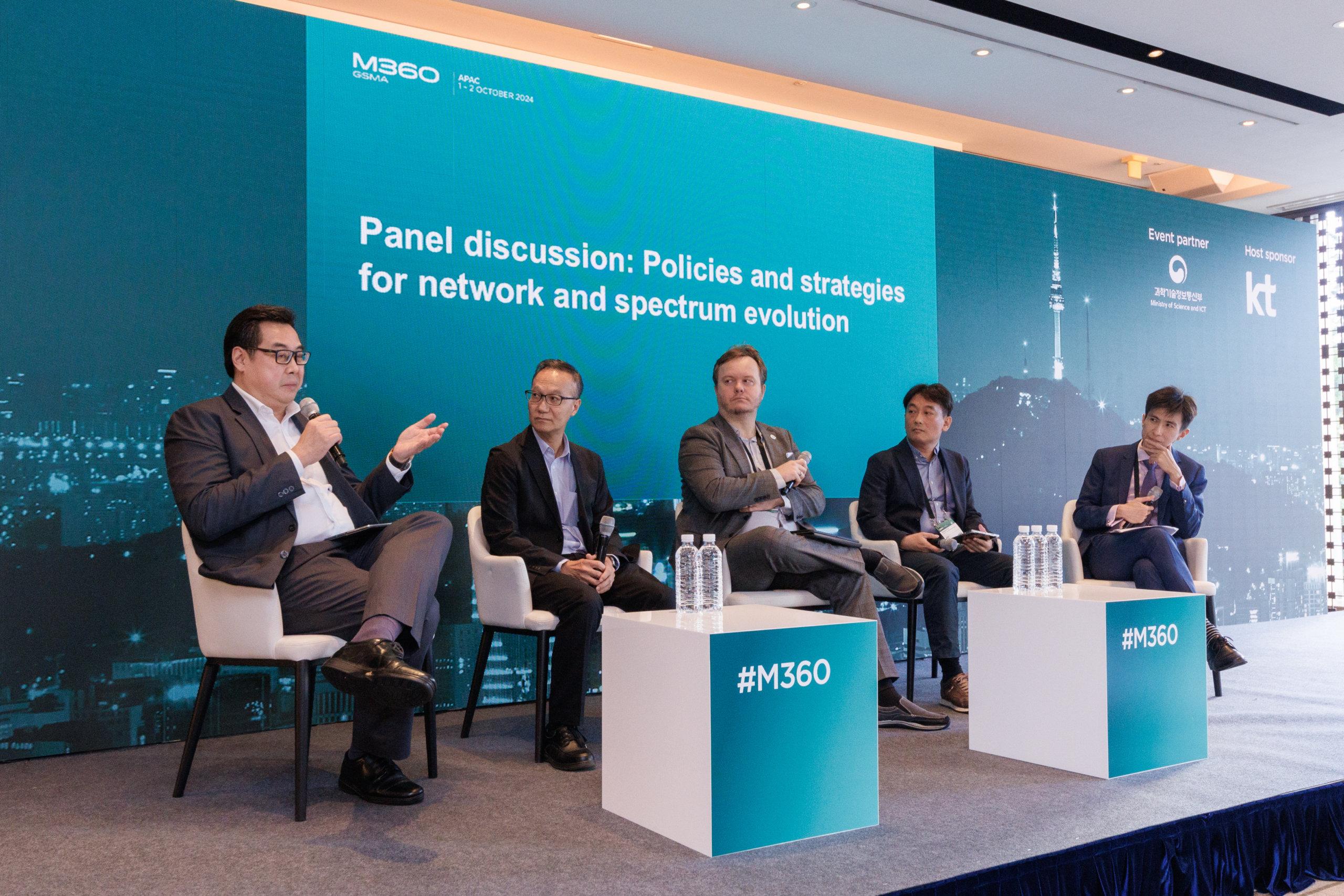

The session also highlighted the varying pace of 5G adoption across APAC. In markets like Hong Kong and Korea, where 5G penetration is high, regulators have proactively assigned spectrum at the earliest opportunity, resulting in widespread access and competitive service prices. However, in other markets such as Indonesia and Thailand, spectrum availability remains a significant challenge, with 3.5 GHz band clearance still a long road ahead.
Robert Wyrzykowski, Principal Data Analyst at Opensignal, identified three groups of markets in APAC:
- Early adopters like Korea, Singapore, and Thailand, where 5G deployment is advanced.
- Developing markets such as Malaysia and Indonesia, where 5G is nascent.
- Newcomers like Vietnam and Cambodia are just starting their 5G rollouts.
The success of 5G adoption and its applications hinges on decisions prioritising capacity, coverage, and affordability. As TS Chew, Assistant Director at OFCA, noted, regulators play a critical role in making spectrum available and promoting fair competition to ensure that 5G becomes accessible and affordable across the region. The equation “capacity + conditions = productivity and sustainability” holds. Delivering spectrum capacity at the right time and price, with harmonised power limits and well-planned licensing processes, will ensure 5G’s performance and sustainability in the years ahead.
Legacy network sunsets create opportunities
The session also touched on the importance of legacy network sunsets. As older 2G and 3G networks are retired, they create opportunities to refarm spectrum for new technologies, enhance energy efficiency, streamline device portfolios, and optimise network operations. These transitions will enable cost savings in capital expenditures (capex) and contribute to more sustainable and efficient telecom networks. However, multiple factors can affect the planning process. CK Foong, Chief Regulatory Officer, Axiata Group Berhad, shared that many users in APAC markets are still dependent on traditional CS voice calls and upgrading all networks and devices to support VoLTE before sunsetting legacy networks is critical to a smooth transition.
Spectrum policy drives sustainability
The session concluded that spectrum policy is not just an economic issue; it’s also an environmental one. Delays or restrictions in spectrum assignments increase carbon emissions, as this means the need for more base stations and lower adoption of more efficient, emission-saving technologies.
With the world’s focus on sustainability, these inefficiencies carry significant consequences. A clear, long-term spectrum roadmap and the right assignment approaches can allow digital infrastructure to thrive while benefiting economies, communities, and the planet. Countries can reduce emissions, support innovation, and lay the groundwork for future technologies by promoting efficient spectrum use.
The M360 APAC closing session reinforced a critical message: the digital future of APAC rests on sound spectrum policy. From sustainability to economic growth and AI to 5G and beyond, a well-managed spectrum is the backbone of the region’s digital transformation. By planning ahead, embracing international best practices, and ensuring that all markets—whether early adopters or newcomers—have access to the necessary spectrum, APAC can pave the way for a future of innovation, connectivity, and sustainability.
Find out more about spectrum developments in APAC here.