


ESA and GSMA Foundry Challenges 2026
At MWC Barcelona 2026, the European Space Agency (ESA) and GSMA Foundry unveiled four innovation challenges aimed at integrating satellite and terrestrial networks. The challenges focus on advancing direct-to-device (D2D), fostering 6G innovation, establishing 5G/6G testing hubs, and exploring how artificial intelligence can enhance non-terrestrial networks across the entire network lifecycle.
General Benefits for Applicants:
- Access to substantial funding to develop cutting-edge technologies.
- Opportunities to collaborate with leading organisations in the telecoms and space sectors.
- Potential for global impact by addressing critical connectivity challenges such as bridging the digital divide and supporting sustainable development.
- Project eligible to be showcased at MWC Barcelona 2027 as part of the ESA x GSMA Foundry stand.
Applicants are encouraged to submit expressions of interest that demonstrate technical feasibility, scalability, alignment with international standards (e.g., 3GPP), and potential for commercialisation. These challenges represent a unique opportunity to shape the future of global connectivity through innovative satellite-terrestrial solutions.
Application process:
- Expressions of interest and project proposals to be submitted by 30 September 2026. Only companies that have a legal entity in the following countries are eligible to apply: Austria, Belgium, Canada, Finland, Germany, Greece, Hungary, Ireland, Italy, Luxembourg, Norway, Poland, Portugal, Romania, Spain, Sweden, Switzerland, the Netherlands, UK.
- ESA and GSMA will jointly review all applications.
The challenges are run in partnership with ESA and accepted ideas will be guided towards the most relevant ESA programme. Before submitting your application, we advise you to speak with the ESA Member State Delegate in your respective country.
Please reach out to foundry@gsma.com and 5g@esa.int for any questions regarding the challenges and application process.
Below are expanded descriptions of each challenge, including key details that will benefit potential applicants:
Challenge 1: Direct-to-Device Connectivity
This challenge fosters innovation in direct-to-device communications, enabling mobile devices to connect directly to satellites without the need for ground infrastructure. The aim is to enhance global coverage, especially in remote and underserved regions.
Key Details:
- Objective: Develop solutions that allow standard mobile devices to connect seamlessly with satellites, prioritising standardised approaches over proprietary systems.
- Target Applications: Emergency response in disaster-prone areas, expanded roaming services for unconnected regions, and IoT device integration for industries like agriculture and logistics.
- Technological Scope: Solutions should align with 3GPP standards (from Releases 17 onwards), which have made direct-to-device (D2D) connectivity scalable for smartphones and IoT devices.
- Industry Context: Applicants are encouraged to address issues like latency, handover, capabilities beyond messages, power efficiency, indoor coverage limitations, and capacity constraints.
Challenge 2: 6G Innovation
This challenge focus on early-stage 6G technologies, emphasizing areas where satellite-terrestrial convergence will play a critical role. Use cases such as ultra-low latency applications, advanced IoT, and edge intelligence will be key targets for innovation.
Key Details:
- Objective: Foster innovation and validate technical solutions for future 3GPP releases that integrate satellite systems with terrestrial networks to ensure ubiquitous coverage and high performance.
- Use Cases: examples are autonomous vehicles, telemedicine, smart cities, industrial IoT, massive IoT (MIoT), and real-time applications requiring ultra-low latency.
- Technological Scope: Applicants should explore in-orbit laboratories or testbeds to validate end-to-end connectivity and interoperability between terrestrial and non-terrestrial networks (TN-NTN).
- Standardisation: Support toward 3GPP standardisation will be highly valued. This includes testing NTN functionalities for future telecommunication standards expected in the early 2030s.
Challenge 3: 5G/6G hubs
This challenge will promote the development of hybrid 5G/6G hubs that integrate terrestrial and satellite infrastructure. These hubs will serve as testing and demonstration platforms for TN-NTN convergence, supporting advanced use cases like autonomous transport, smart cities, and next-generation logistics.
These challenges increased ESA visibility in the terrestrial telecommunications community and provided many valuable prospects and contracts with industry.
Key Details:
- Objective: Develop multi-functional hubs based on the European Space Agency’s (ESA) model at Harwell Science Campus. These hubs will serve as centers for innovation in hybrid connectivity solutions.
- Use cases: examples are autonomous transport systems, next-generation logistics, smart cities, public safety networks, and environmental monitoring.
- Technological Scope: Proposals should include plans for integrating TN with satellite communications. Demonstrations of real-world applications using these hubs will be critical.
- Collaboration Opportunities: The hubs will provide a collaborative environment for academia, industry stakeholders, and policymakers to test new technologies. This includes engineering demonstrations and events showcasing the potential of TN-NTN integration.
Challenge 4: AI for NTN
This challenge will focus on the application of AI across the full network lifecycle, including:
- AI-driven resource management and spectrum optimisation across terrestrial and non-terrestrial segments.
- Intelligent orchestration of multi-orbit networks and edge/cloud infrastructures.
- Autonomous network operations and fault management.
- Security-by-design and resilient communications through AI-enabled threat detection.
- Data-driven optimisation of Direct-to-Device services and mission planning.
From Innovation Challenges to Industry Recognition
The ESA x GSMA Foundry Innovation Challenges are more than funding opportunities. They are designed to help accelerate collaboration across the mobile and satellite ecosystem, turning innovative ideas into real-world industry solutions.
Through this partnership, the GSMA Foundry and the European Space Agency work with operators, startups, enterprises, researchers and technology providers to support projects exploring the future of non-terrestrial networks, AI-driven connectivity, direct-to-device communications and 5G/6G innovation.
Selected projects benefit from industry visibility through the GSMA Foundry platform, ecosystem engagement opportunities and showcase activities across major GSMA events and channels.
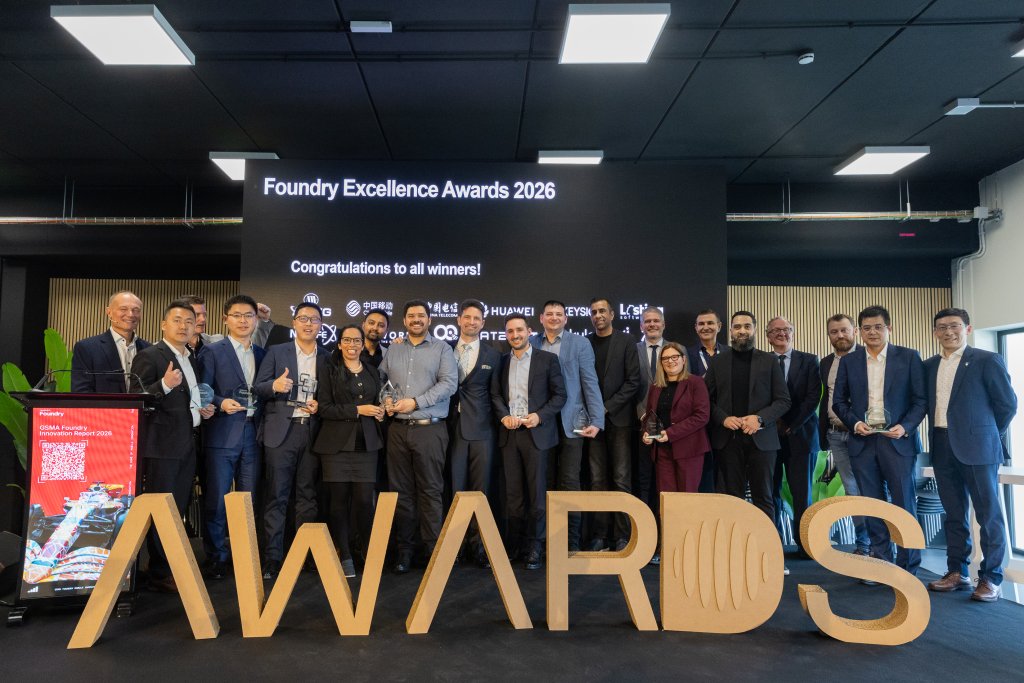
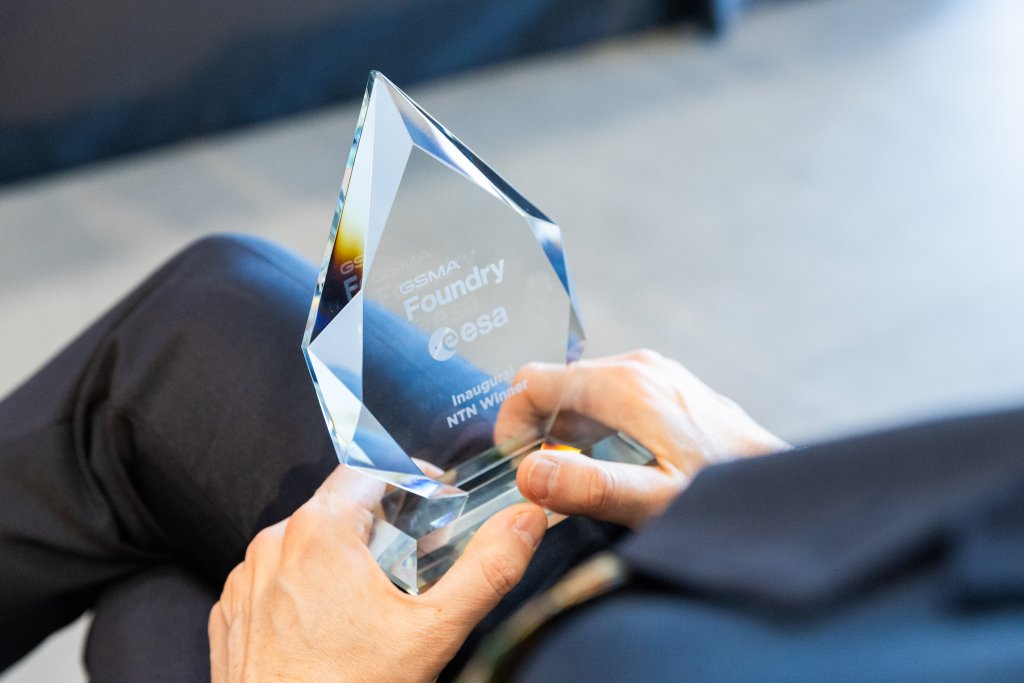
Outstanding projects are also recognised as ESA x GSMA Foundry Challenge Winners. Winning teams are highlighted through dedicated GSMA Foundry case studies, interviews, blogs and industry promotion, helping showcase practical innovation and real deployment impact across the global connectivity ecosystem.
Recent winners have demonstrated innovative use cases across sectors including smart agriculture, public safety and advanced network orchestration, illustrating how integrated terrestrial and satellite technologies can address real operational challenges.
Expression of Interest Form
——————————————————————————————————————–
Timelines for the joint GSMA and ESA challenges (2026):
(Please note: This does not include the ESA application process. Please see ESA guidance for further details)
- Challenges open: 2 March 2026
- Deadline for submissions of Expression of Interest – Cohort 3: 31 December 2026 at 12 noon CET
*Only companies that have a legal entity in the following countries are eligible to apply: Austria, Belgium, Canada, Finland, Germany, Greece, Hungary, Ireland, Italy, Luxembourg, Norway, Poland, Portugal, Romania, Spain, Sweden, Switzerland, The Netherlands, UK
Any questions about these challenges should be submitted to foundry@gsma.com and 5g@esa.int