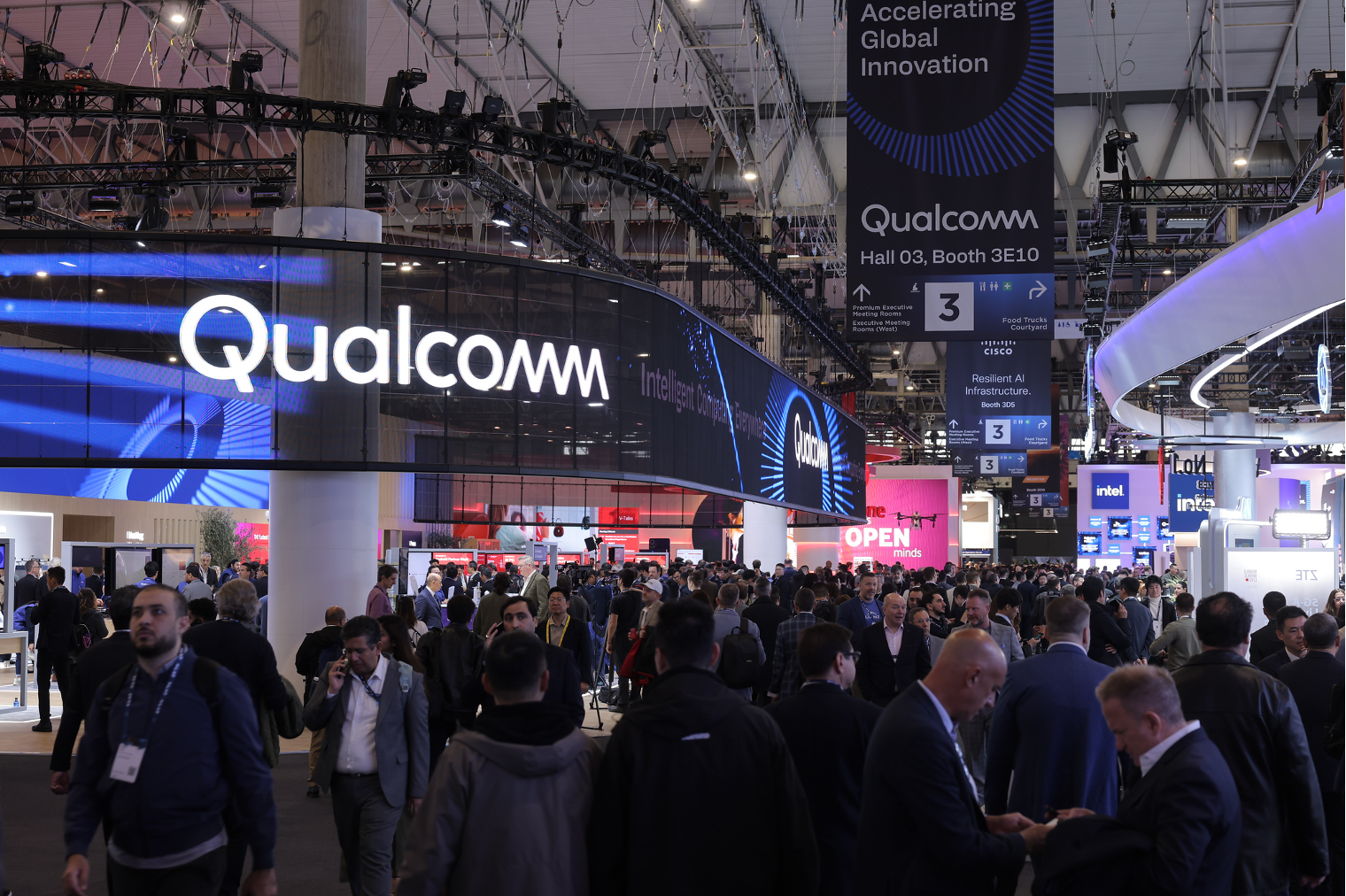
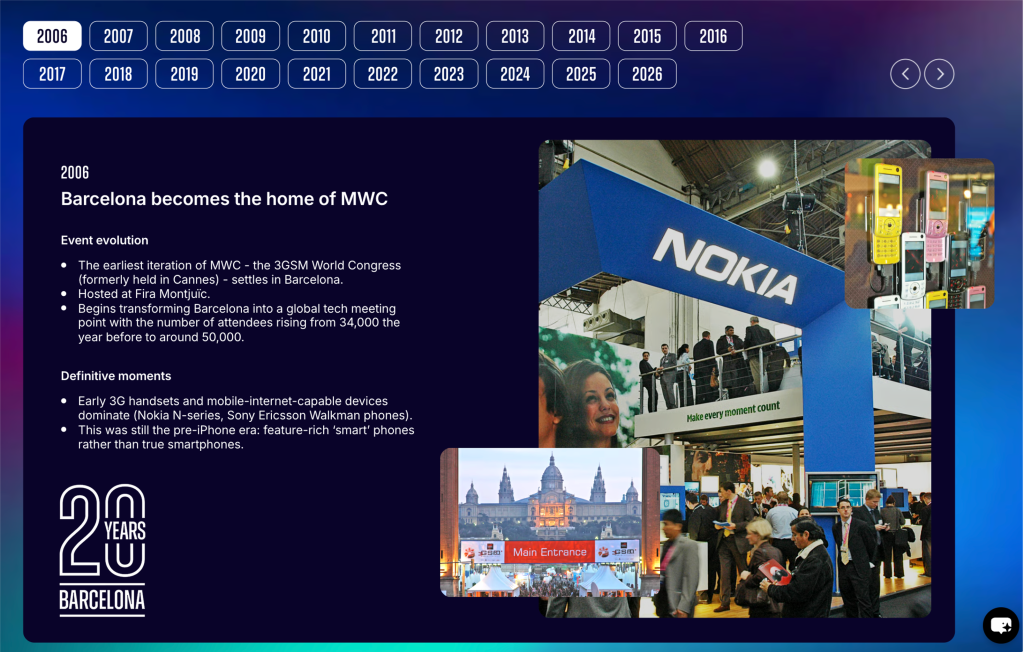
Now in its twentieth year in Barcelona, MWC26 arrives with a clear emphasis on commercial imperatives rather than technological novelty.
Two decades after Barcelona became the permanent home of what was then the 3GSM World Congress, the event has evolved from a handset-led showcase into a global platform for cross-industry collaboration and digital infrastructure strategy.
The event is, on the surface, a showcase of technical innovation. Yet these themes function as signposts of the industry’s economic relevance and its capacity for future growth, both within telecom and across adjacent sectors. In reality, mobile operators are reorganising around enterprise expansion, programmable networks and new revenue models – with AI, 5G standalone and sovereign infrastructure forming part of that broader repositioning.
Richard Cockle, Head of GSMA Foundry and Connected Industries, says “MWC26 puts smart connectivity centre stage – uniting AI, 5G and programmable networks with enterprise demand to shape the future of the digital economy.”

IoT growth underpinning the $1 trillion enterprise opportunity
The scale of the opportunity explains the speed of the industry’s transformation. GSMAi forecasts that by 2030 enterprise digital transformation across manufacturing, mobility, energy and finance could represent a $1 trillion addressable market for operators that successfully integrate connectivity, compute and AI. Consumer growth alone will not sustain margins. Enterprise demand for secure, programmable networks will.
Growth of the IoT underlies this structural change. The number of IoT devices is forecast to rise to 37 billion by 2030, with enterprise verticals driving the majority of that expansion. Building on the success of LPWAN in licensed spectrum, massive IoT continues to expand, aided by technologies such as ambient IoT and NTN, which increase both the number of connected devices and the geographies in which they can operate. Of course, connectivity is only one layer of that value chain. Securing, analysing and optimising the resulting data flows creates additional revenue pools, and we expect operators to play a key role here.
Enterprise demand signals accelerating
Recent enterprise surveys reinforce this shift. Organisations across sectors increasingly view connectivity, cloud integration and AI as foundational to their digital transformation plans, rather than optional enhancements. The emphasis is moving towards scalable platforms that combine secure connectivity with analytics and automation capabilities. For operators, this represents not only a connectivity opportunity, but a broader services play built around integration, security and performance guarantees.
Operators’ role in the smart mobility sector is a clear example of how this works in practice. AI-enabled traffic systems, vehicle-to-everything communication and predictive infrastructure analytics all depend on low latency and reliable connectivity. In manufacturing, private 5G networks combined with AI-driven robotics and machine vision improve productivity and resilience. In fintech, operators are exploring AI-based fraud detection and identity verification, using network-level data to strengthen security. Each of these use cases reinforces the role of the network as a programmable platform as opposed to a simple connectivity offering.
eSIM, security and the quantum gap
eSIM and iSIM evolution form part of this broader operator strategy. As IoT connections grow, remote provisioning and lifecycle management become central to enterprise connectivity strategy. Here, SGP.32 continues to play a key role in enabling scalable remote provisioning. Alongside this, the industry is steadily shifting towards post-quantum cryptography, which will ultimately require eSIM and iSIM to evolve alongside network infrastructure. For operators, the ability to manage secure, future-proof SIM architectures at scale in the post-quantum era strengthens their position in enterprise IoT ecosystems.
As quantum technologies gain momentum, the growing number of quantum-focused events and exhibitors suggests that awareness is reaching critical mass within the industry. This is because of the huge gap in the market quantum is expected to fill. For example, only around 8% of IoT devices currently in active use are considered quantum safe, yet the vast majority of operators believe meaningful quantum threats remain several years away.
Like last year, security will be another defining trend at MWC26. Security remains a foundation for all connected solutions. The need for collaboration is ongoing in order to overcome the persistent vulnerabilities in the broader device ecosystem. GSMAi estimates that a major security breach could equate to 2–3% of telco revenues globally. As enterprise revenue becomes more central to operator strategy, trust and resilience become commercial assets.

At the same time, AI is amplifying scam sophistication, from synthetic voice fraud to automated phishing at scale.
Anti-scam initiatives, identity APIs and post-quantum preparedness are therefore moving into mainstream strategic planning. In this context, security is a critical part of the enterprise value proposition.
Network APIs and programmable connectivity
Another core theme at MWC26 will be the exposure of network capabilities through APIs, particularly the CAMARA Open APIs backed by GSMA Open Gateway. A long-term industry goal, programmable networks allow enterprises and developers to access location verification, identity authentication and quality-on-demand. Strategically, this tilts the operator role from connectivity supplier to capability provider. This commercial importance is underscored by the growing number of organisations throwing their weight behind the initiative.
There are several reasons for this. For AI applications, access to network intelligence creates new optimisation pathways. Enterprises can request guaranteed performance for specific workloads, while developers can embed network features directly into applications. The commercial potential lies in repeatability and scale. Rather than negotiating bespoke integrations for each enterprise client, operators can offer standardised, API-driven services that integrate seamlessly with AI platforms.
5G standalone as the platform for AI-native networks
Infrastructure remains key to these ambitions. 5G standalone is increasingly recognised as the architectural base for advanced enterprise services.
Capabilities such as network slicing, quality-of-service guarantees and ultra-low latency enable industrial automation, immersive applications and mission-critical communications.
AI is also being introduced into the network itself. Operators are experimenting with AI in the RAN and core to improve performance and efficiency. However, AI introduces its own pressures. Under a base scenario, AI-driven traffic could increase operator energy consumption by around 25% by 2030. Energy management is therefore becoming a strategic consideration in AI deployment decisions. Optimising inference placement, managing edge workloads and reducing RAN energy intensity will feature prominently in telecom industry trends in 2026.
AI moves from efficiency to revenue
Over the past few years, AI has steadily established itself as one of the show’s centrepieces and as a defining theme across the industry. Customer care still accounts for almost half of AI deployments globally, reflecting the industry’s early focus on low-risk automation. However, momentum is building elsewhere. In the second half of 2025, around 50% of new AI deployments in the US were launched with a revenue objective. That pivot signals a broader shift likely to shape the discussions at MWC26. Operators are embedding AI into enterprise propositions, from GPU (graphics processing unit)-as-a-service to intelligent automation platforms hosted in their own infrastructure. The industry is moving from experimentation to monetisation.
Sovereign AI, private cloud and competitive positioning
Sovereign AI is emerging as a differentiator within these MWC26 trends. Governments are tightening expectations around data localisation and control of critical digital infrastructure. In response, operators are accelerating private data centre deployments to host AI inference and enterprise workloads domestically. Half of telco AI deployments in private data centres are now live, reflecting rapid expansion.
This positioning aligns strongly with Operator fundamentals: MNOs already run regulated national infrastructure and maintain deep, trusted relationships with governments and enterprises. While hyperscalers remain formidable competitors in AI infrastructure, making partnerships with GPU providers and model developers strategically necessary, deglobalisation is reshaping the competitive landscape in Operators’ favour.
Governments are increasingly seeking trusted local technology partners to deliver sovereign, nationally achored digital and AI infrastructure, and in many markets outside the EU and North America, MNOs are uniquely positioned to fill that role – combining regulatory legitimacy, physical infrastructure, and national trust in a way global hyperscalers structually cannot.
MWC26: From ambition to execution
Taken together, these trends illustrate an industry repositioning itself on multiple fronts within the digital economy. The assets are significant: spectrum, nationwide networks, trusted identity frameworks and expanding edge compute capabilities. The shift toward revenue-focused AI deployments suggests commercial intent above all else.
As MWC marks its twentieth year in Barcelona, its evolution from a 34,000-attendee handset congress in 2006 to a 100,000+ cross-sector technology ecosystem reflects the broader transformation of the mobile industry over the past two decades.
The next twelve months will determine whether these identified trends convert into revenue, and MWC26 will offer an early indication of who is making that transition. Enterprise customers will look for tangible outcomes. Investors will look for revenue disclosure linked to AI services. Regulators will scrutinise security and sovereignty claims. Together, these pressures signal a sector entering a more commercially decisive phase.
The opportunities are clear, and the direction of travel is visible – we hope to see you there!
Visit the MWC26 Barcelona website to find out more and to book your place.