



Tuesday 13 October, 2026
This article from GSMA Member Opensignal explores how telecom operators can unlock subscriber growth in saturated markets by focusing on local experience. As convergence accelerates and switching becomes frictionless, growth depends less on national performance claims and more on delivering reliable connectivity where customers actually live, work and move.
Growth Is Now Won Locally
Telecom competition has entered a new phase. In most mature markets, subscriber penetration is nearing saturation and growth has become largely zero-sum. Operators are no longer expanding into untapped territory — they are competing for customers who already have a provider.
In this environment, success is defined less by headline network leadership and more by retention, relevance and trust.
From the customer’s perspective, connectivity is no longer segmented. Whether streaming over 5G, working from home on Wi-Fi, or commuting across a city, users experience a single continuous journey. Performance is judged in lived moments — not national averages.
The Growth Challenge in Mature Markets
By 2026, many developed markets will have reached peak maturity. Subscriber gains increasingly come at a competitor’s expense. At the same time, switching friction continues to fall.
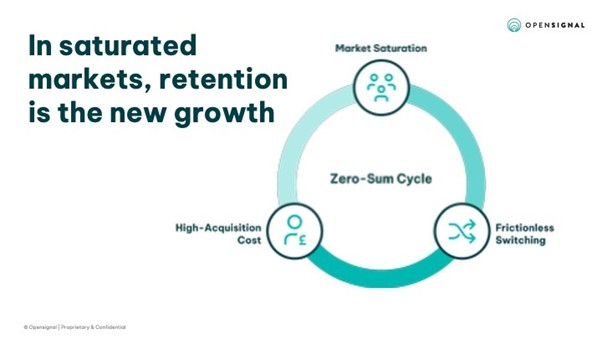
Three structural forces are reshaping competition:
- Market saturation. SIM population penetration in developed markets is already above 100%. Furthermore, mobile, broadband and Wi-Fi experiences now overlap. When home Wi-Fi fails, customers often blame the same brand that provides their mobile service. In bundled environments, the weakest link defines trust.
- Frictionless switching. With eSIM penetration exceeding 75% in flagship devices, onboarding can take minutes. Switching no longer requires a store visit — it can happen instantly.
- High acquisition cost. Acquisition costs can run 5–25 times higher than retention. Operators can no longer “buy” growth through marketing alone. They must earn it through consistent experience.
Traditional customer surveys often capture sentiment too late. Real-time experience signals — digital frustration, availability gaps, reliability drops — reveal churn risk before customers consciously decide to leave.
From National Metrics to Local Experience
Historically, performance leadership was measured through national benchmarks and peak speed metrics. These remain important — but they no longer tell the full story.
Customers experience networks locally:
- The “front door” transition between 5G and Wi-Fi
- Ability to stream Netflix when commuting, or using navigation apps to know the way
- Being able to connect to zoom/Teams calls
- Specific neighbourhoods where signal drops undermine confidence
Reliability has become a stronger driver of loyalty than peak speed. Even brief connectivity interruptions now directly affect productivity, streaming, gaming and real-time AI tools.
Local experience reflects how consistently a network supports real-world use cases in specific places and contexts. By analysing granular performance data, operators gain visibility into:
- Where experience is strong — and where it is vulnerable
- How performance compares with alternatives
- Which locations present elevated churn risk
National averages can mask local weaknesses. Granular insight reveals them.
Experience as a Retention Engine
As acquisition slows, retention becomes the primary driver of sustainable growth.
Evidence increasingly links network experience to churn, satisfaction and lifetime value. Customers who switch providers often show measurable signs beforehand:
- More time without signal
- Lower availability
- Inconsistent everyday performance
When operators combine experience data with subscriber movement analytics, churn becomes predictable rather than reactive. In competitive markets such as North America, subscriber flow intelligence — understanding where customers come from, where they go, and how local experience influences that movement — is becoming central to go-to-market strategy.
Retention is no longer a blanket strategy. It is a precision exercise.
Local Experience in Practice
Rakuten (Japan): Building Market Credibility
As a challenger in Japan’s mobile market, Rakuten faced skepticism about network quality. Rather than relying on national claims, it focused on proving competitive performance in specific locations.
By validating improvements locally and communicating tangible progress, Rakuten strengthened consumer confidence. Within six months, the operator saw a 13% uplift in Win Share. Quarterly Win Share rose from 9% in Q1 2023 to 21% in Q2 2024.
The broader lesson: challenger brands can shift perception by proving local strength — even without national dominance.
Competing Through Local Relevance
A regional operator serving rural and secondary markets chose not to compete on scale. Instead, it leaned into dependable coverage and consistent performance in the communities it served best.
A risk-free trial allowed customers to validate real-world performance. Campaigns combining independent experience validation with brand messaging achieved double-digit increases in click-through rates.
Local credibility amplified marketing efficiency.
Precision in Saturated Markets
In a highly competitive national market, one operator mapped local performance against churn vulnerability. Rather than spreading investment evenly, it focused on regions where retention returns would be highest.
The targeted approach delivered an estimated 20% improvement in retention in selected areas — demonstrating that experience-driven precision outperforms broad optimization.
The Converged Experience
Customers do not differentiate between mobile, broadband and Wi-Fi. They expect continuity.
In converged offerings, experience breakdowns during transitions — between outdoor 5G and indoor Wi-Fi, for example — can erode trust. Measuring these transitions helps identify where satisfaction falters.
Multi-product customers consistently show lower churn. But convergence increases accountability: operators must understand experience across the entire connectivity journey.
The In-Home Trust Moment
The home has become a critical test of brand reliability.
Once connectivity crosses the threshold indoors, operators often lose visibility. Many issues originate inside the home — Wi-Fi propagation, device placement, interference — yet customers attribute failures to the provider.
Advanced infrastructure alone does not guarantee strong in-home experience. Measuring real-world indoor performance enables better installation guidance, reduced support costs and improved satisfaction.
As remote work and streaming expand, indoor reliability increasingly defines long-term trust.
Turning Experience into Sustainable Growth
Across mobile, broadband and Wi-Fi, one principle is clear: experience shapes behaviour, and behaviour drives business outcomes.
Operators that understand how customers experience connectivity locally — and act on that insight — are better positioned to:
- Increase sales effectiveness
- Reduce cost per acquisition
- Strengthen brand perception
- Lower churn through targeted intervention
Granular experience intelligence transforms network performance into commercial strategy.
Interested in learning how local experience can support smarter acquisition, retention and investment decisions?
Visit Opensignal at MWC 2026 (Hall 2, Booth 2C20) to explore live demonstrations of experience gaps, churn-risk zones and the ROI potential of localized growth strategies.
To explore the topic in more detail, visit Opensignal’s website to learn more about the ONX and Subscriber Analytics solutions.
A whitepaper entitled ‘How Operators Can Drive Subscriber Growth in a Converged Market’ is also available to download.
