


Artificial Intelligence (AI) is reshaping the telecommunications sector, but no transformation is possible without people. Leveraging AI effectively goes beyond developing and deploying technology, it requires a skilled and adaptable workforce. One that can apply AI in industry-specific contexts, accelerate adoption, and ensure AI outcomes align with business goals and values.
Talent sits at the outer circle of the GSMA AI transformation framework, highlighting its essential role in enabling sustainable, long-term change.
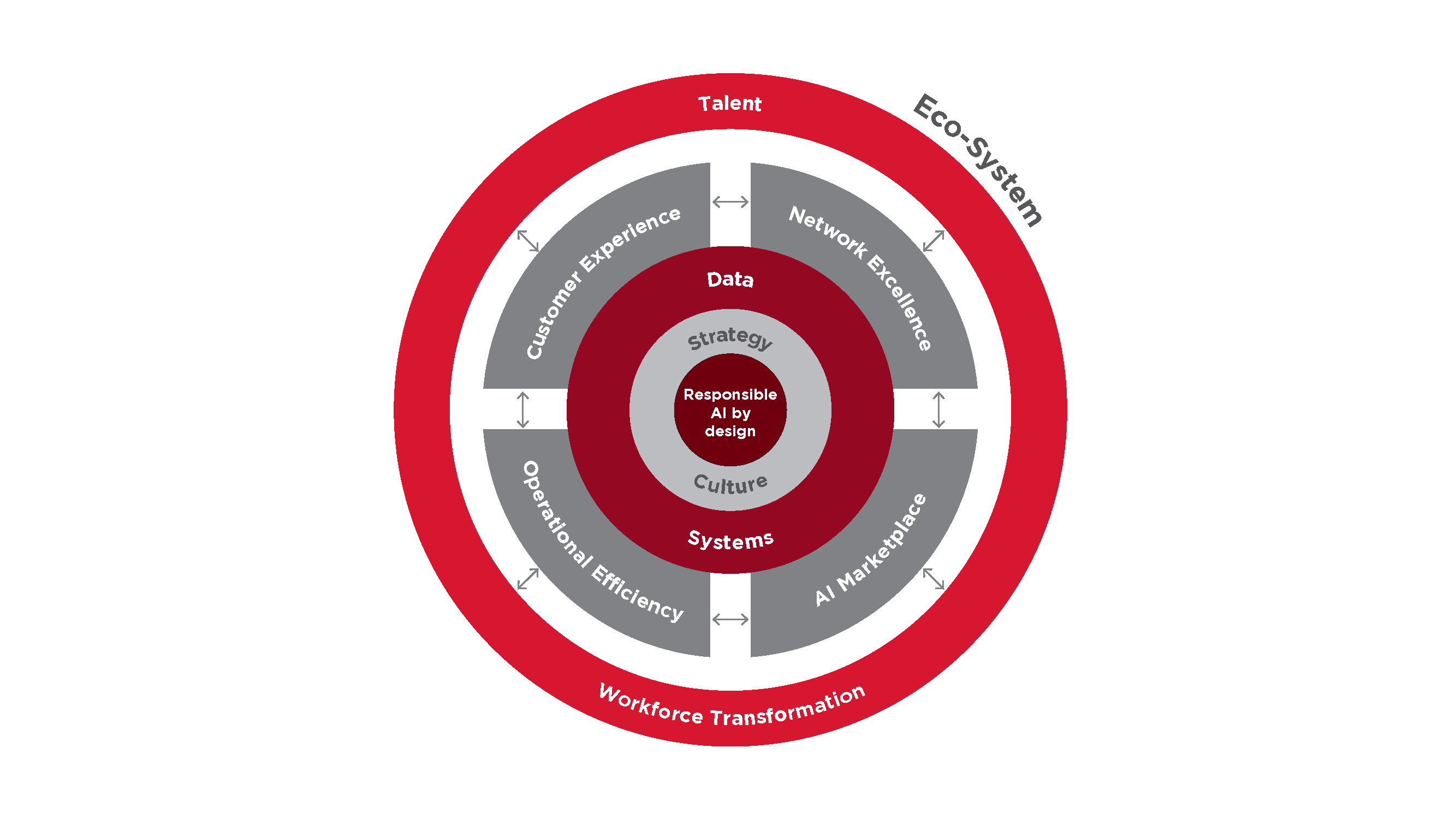
This blog, part of our Blueprint for Telco AI Transformation series, explores how telecom operators are evolving their workforce strategies to unlock AI’s full potential.
Why Talent Comes First
Telcos increasingly recognise that successful AI integration is not just about systems or models, it relies on people who are ready to adopt, adapt, and lead. The GSMA research outlines a four-stage roadmap for AI workforce development, from initial awareness to full cultural transformation:
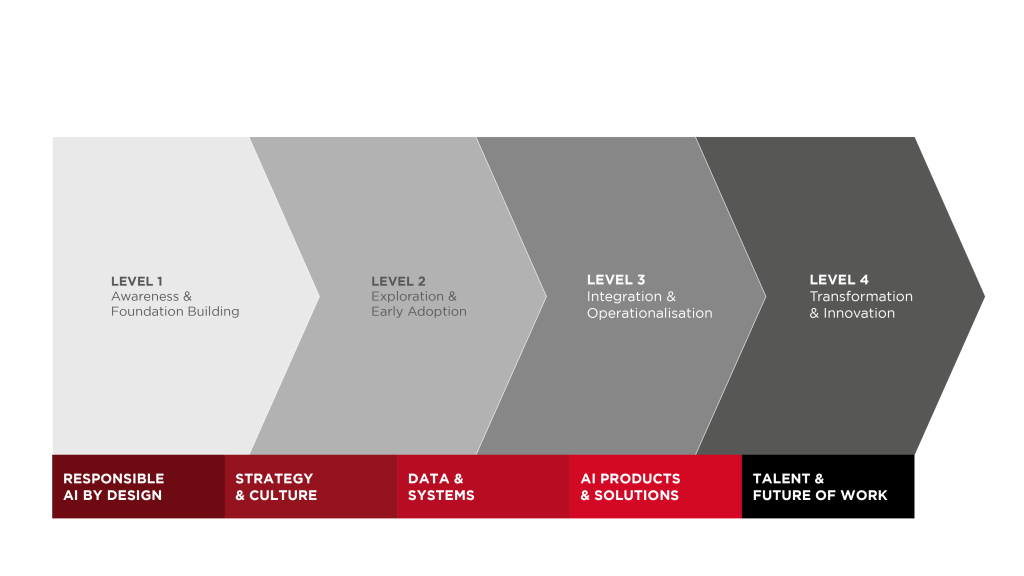
Each level builds on the one before, and each requires a tailored approach to workforce strategy.
Level 1: Laying the Groundwork, AI Literacy and Awareness
At this early stage, many telcos are taking steps to build foundational AI literacy across their workforce. These efforts often include awareness campaigns, internal communications, expert-led seminars and introductory training linked to specific business functions.
For instance, operators in Southeast Asia such as Axiata rapidly launched internal programmes designed to build understanding and confidence around AI. These were not only awareness-raising efforts, but part of wider organisational strategies to foster openness, reduce uncertainty, and prepare staff for future developments that will enable them to continuously learn, adapt and evolve with new advancements.
Level 2: Building Capability, Skills Development and Role Adaptation
As telcos progress, focus shifts toward building the practical capabilities and skills of the workforce. Training becomes more targeted, covering real tools and use cases, while teams begin to adapt roles and responsibilities to align with AI-supported processes.
Vodafone and SK Telecom both exemplify this through their internal AI academies. These structured programmes help bridge technical skills gaps, create pathways for role-based upskilling, and support long-term workforce retention. Employees are able to grow their skills within the business, while telcos develop the internal expertise needed to scale AI.
Level 3: Reshaping the Organisation, Workforce Transformation
Embedding AI more deeply into business operations calls for broader structural changes. Operators begin to redesign workflows and reorganise teams around data and AI-driven decisions. HR functions also start to evolve, with recruitment, training and performance management aligned to new AI capabilities.
SK Telecom’s dedicated AI division reflects this evolution. AI is now embedded across its operational model, and employees are supported by continuous learning opportunities. Telenor has also played a leading role in shaping thinking at this level, with its AI Skills Expert Forum bringing together internal and external experts to define future capability needs and share actionable guidance with peers.
Level 4: Future-Facing, Culture, Retention and Well-being
At the most advanced stage, operators are focused on fostering a culture of continuous learning, innovation, and responsible AI use. This involves deep collaboration across departments, strong engagement with external partners, and the use of advanced tools to support employee experience.
KT Corporation in South Korea is a strong example. Through its Aible School initiative, KT has trained more than 1,000 staff and extended its curriculum to universities and public sector bodies. This positions KT not just as a technology leader, but as a national contributor to AI capability.
At this level, telcos are also exploring AI-powered HR tools to improve staff engagement, wellbeing, and retention. These include analytics to personalise learning and development, optimise workloads, and support inclusive team dynamics.
Industry and National Initiatives
Telcos are not working alone. National policies and partnerships play an increasingly important role in talent development. In South Korea, for example, more than 1.3 billion dollars is being invested into a National AI Computing Centre, reinforcing a whole-of-country approach to AI. The UAE and the United States have also introduced national AI education strategies, helping to expand the talent pool and align workforce readiness with future digital ambitions.
Looking Ahead
The success of AI in telecoms will not be determined by technology alone, but by how well the sector develops and supports its people. Aligning talent strategies to stages of AI maturity allows telcos to unlock innovation, improve efficiency, and build long-term resilience.
The call to action is clear. Operators must move beyond aspiration and invest in their people as actively as they invest in platforms and tools. Those who do will not only transform their organisations, they will shape the future of work across the telecom ecosystem.
This blog builds on the foundation set in our opening post on Navigating AI Transformation, and leads into our next piece on how telcos are developing AI-powered products and services, drawing from real-world use cases and ongoing industry work.