


In 2024, the GSMA introduced its Responsible AI Maturity Roadmap, a framework to help operators assess and improve AI practices across four maturity levels: Foundation, Evolving, Performing, and Advanced. As part of this initiative, organisations can use a publicly available online tool to conduct a self-assessment across the maturity levels. The tool is designed solely for internal use, helping organisations reflect on and evaluate their own progress.
Using this self-assessment tool, KT Corporation, one of South Korea’s largest telecom providers, undertook a comprehensive cross-organisational review of its maturity.
KT has since advanced across the roadmap’s five dimensions, moving from ‘Performing’ to ‘Advanced’ maturity in key areas. KT has transformed its approach to AI governance and demonstrates lessons it holds for the wider industry.
Q: KT has made remarkable progress in responsible AI (RAI) maturity. What does this mean for the organisation?
Dr. Soonmin Bae: For us, it’s a shift from talking about responsible AI to living it. Reaching advanced maturity represents a fundamental shift from reactive to proactive AI governance. We’ve moved beyond simply having policies on paper to embedding responsible AI practices into our operations.
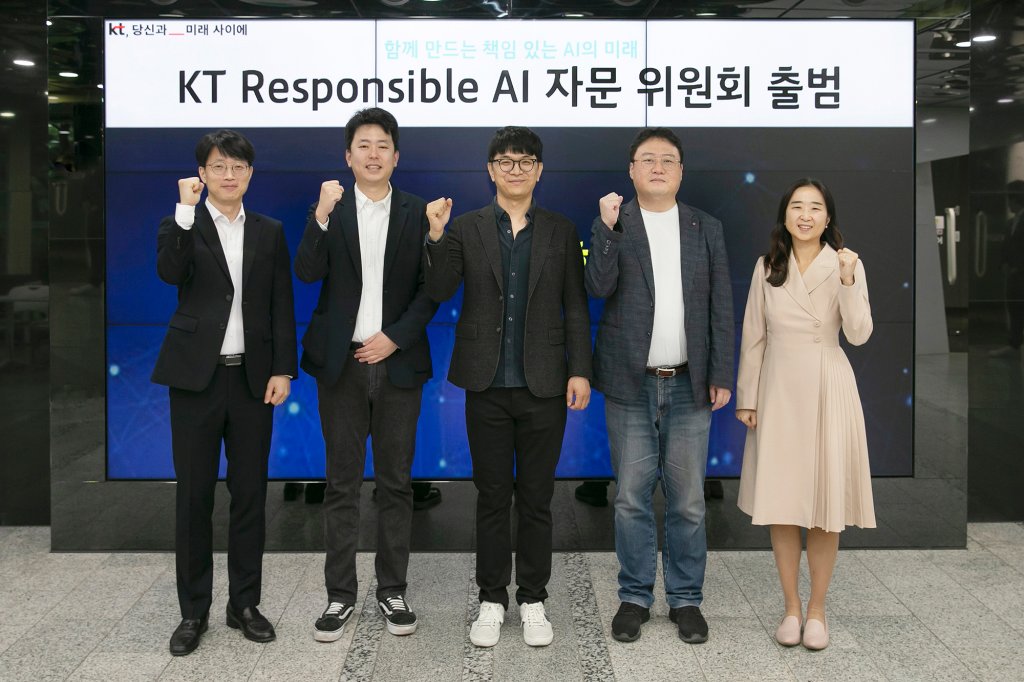
When we established the KT Responsible AI Centre (RAIC) in 2024 and appointed a Chief Responsible AI Officer (CRAIO), it sent a clear signal; this isn’t a side project or compliance exercise. It’s central to how KT operates and innovates.
Q: Let’s talk about the Vision dimension. You’ve self-assessed the organisation at ‘Advanced’ across Ethical Principles, Executive Leadership, and Regulatory Alignment. What does this comprehensive approach look like in practice?
Dr. Soonmin Bae: It starts with people. We’ve trained over 5,300 employees in AI ethics through our AX training course as of August 2025, and by October it will be mandatory for all employees. But training alone doesn’t cut it, we’ve built RAI into the development lifecycle, so every AI project considers responsible AI from conception to deployment.
On leadership, we have a Deployment Safety Board that brings C-level executives critical AI decisions. This creates real accountability. And regarding regulation, we don’t just wait for changes to come, we are actively participating in discussions about AI Basic Law with Korean government agencies, helping shape the regulatory landscape.

Q: You’ve assessed your Risk Strategy as sitting at a Level 3 (Performing), whilst other Vision elements you’ve assessed at Level 4 (Advanced). What additional steps do you think need to happen here?
Dr. Soonmin Bae: Risk strategy is inherently complex because AI risks evolve rapidly. We’ve defined AI risks and established mitigation measures, but moving from Level 3 to 4 here requires not just having measures in place but also demonstrating their effectiveness across diverse scenarios over time. It’s about proof of effectiveness, not just frameworks.
Q: In the Operating Model dimension, you’ve advanced to Level 4 in several areas. You’ve placed RAI reps in every department. How has that changed things?
Dr. Soonmin Bae: It’s been transformational. Before, Responsible AI felt like something the central team owned. Now, each product and teams related to the product has to assign a RAI officer that has to undergo impact assessment and safety evaluation before the pre-deployment review. All of these steps are documented. This distributed model means RAI considerations are part of daily conversations, not something imposed from above.
Our Deployment Safety Board review process has created a culture where teams proactively consider AI implications rather than seeking post-hoc approval.
Q: Several of your Operating Model areas, for example, RAI Tooling Solutions you’ve assessed at Level 3. What’s needed to advance these further?
A: Deeper integration and automation. For risk assessment processes, we’re working on more sophisticated risk-based prioritisation that can adapt to emerging risks. Our PMS tools for managing in-house AI development are effective, but we are developing more comprehensive RAI tooling solutions that can provide real-time guidance to developers. The future is automated systems that make Responsible AI the easiest option, not an extra step.
Q: Your Technical Controls dimension shows strong performance across Data Management and Model Risk Management. How do you ensure these technical safeguards remain effective as AI technology evolves?
Dr. Soonmin Bae: Our approach is multi-layered. For data management, we’ve established comprehensive governance with quality assessment and pre-processing policies. But the real strength is in our model risk management; every model undergoes pre-deployment impact assessments, safety evaluations, and quality evaluations.
We’ve implemented various mitigation methods, including content safety filters and model cards. We also carefully manage our use of external open-source models, ensuring they meet our standards before integration.
Q: What challenges are you facing in complex areas like Control and Monitoring?
Dr. Soonmin Bae: These are the areas where technology is still catching up with ambition. We have content safety filters and guardrails, which we plan to publish on Hugging Face, but creating comprehensive technical controls that work across all AI applications is complex. Similarly, we’re developing AI Risk Monitoring Tools and have incident response plans, but moving to Level 4 requires more sophisticated, automated monitoring that can detect subtle risks in real-time. It’s an ongoing process!
Q: Third-Party Ecosystem management is traditionally an area that some organisations lag in because of the inherent complexity of including external industry organisations, but yours appears well-developed. How do you balance innovation with RAI when working with external partners?
Dr. Soonmin Bae: For us, it’s non-negotiable. All partners involved in AI model or service development and operation must sign a pledge as part of the contract to adhere to Responsible AI principles and guidelines. However, since the overall awareness of Responsible AI is still low, it may not be widely known that safety and ethics should be prioritised over development speed, which is why we provide education and resources on AI ethics to our partner companies.
Responsible AI doesn’t stop at KT’s walls, we want the whole ecosystem aligned with our values.
Q: In Change Management and Communication, you rate highly in training and communication. How are you keeping momentum?
Dr. Soonmin Bae: Culture is the hardest but most important piece, training is step one, but culture comes from conversation. We provide role-specific training beyond our general AX course, recognising that a developer’s RAI needs differ from, say, a business manager’s. Our Culture and Change management efforts include in-person consulting for RAI process introduction and department-specific awareness events.
Communication-wise, we operate external committees with academia and incubate partnerships with RAI-related startups. We’ve also created open communication channels, like feedback tools on our homepage and through platforms like Hugging Face, so employees and users can raise concerns about AI systems. We also actively participate in government forums and GSMA-led responsible AI initiatives. This combination of training, awareness building, and open dialogue creates a continuous feedback loop that keeps us moving forward.
Q: Does Responsible AI slow innovation or speed it up?
Dr. Soonmin Bae: Contrary to the perception, we’ve found it accelerates sustainable innovation. Customers and partners are more confidence adopting our AI when they know it’s safe and transparent. When clients know we have robust safeguards and transparent processes, they’re more willing to adopt our AI-powered services.
That trust helps us scale faster. Plus, our advanced practices help protect us from potential regulatory, reputational, or operational risks that could be costly and challenging to manage over time.
Q: If we look across all five dimensions, what’s been the biggest driver for KT’s shift from ‘Performing’ to ‘Advanced’ maturity?
Dr. Soonmin Bae: Integration. We connected the dots: strategy, governance, technology, ecosystem, and culture. The Chief Responsible AI Officer role gives authority and accountability. This requires strong commitment from the management team. Technical safeguards ensure our systems are safe and reliable. Partner requirements extend our values into the ecosystem. And ongoing training and comms ensure RAI is part of daily life.
Q: What do you hope KT’s example shows the industry?
Dr. Soonmin Bae: Operators like us don’t just use AI; we provide the infrastructure that enable AI applications across industries. So, telecommunications companies are uniquely positioned to influence responsible AI adoption. When we demonstrate that advanced RAI practices are achievable and beneficial, it raises the bar for the entire ecosystem.
Our participation in GSMA RAI initiatives means we’re helping establish industry best practices, so we move forward as an industry, not just as individual companies.
Q: What advice would you give to organisations just beginning their RAI journey?
Dr. Soonmin Bae: Three things:
1. Get executive buy-in early; this can’t just sit with compliance.
2. Put governance in place from the start; it’s harder to retrofit later.
3. Don’t chase perfection immediately. Focus on embedding RAI into everyday processes and keep improving. We have several areas we’ve assessed as Level 3 rather than Level 4 and we are looking forward to improving them. The key is continuous improvement and learning from implementation.
And remember, Responsible AI isn’t a brake on innovation. It’s the trust engine that lets you innovate faster.
Q: What did you consider when assessing RAI maturity?
Dr. Soonmin Bae: We wanted to ensure objectivity and fairness in this assessment, so we involved various teams as evaluators. This turned out to have a more positive effect than expected. By communicating with many stakeholders, awareness of Responsible AI increased, and various initiatives were launched. Previously, AI ethics was not mandatory company-wide training, but based on this Maturity assessment, we collaborated with HR to make it mandatory company-wide training and worked with the procurement office to improve aspects related to partners. Then, by evaluating maturity together, we discovered more areas needing improvement. The participation of diverse stakeholders is essential and will bring positive effects.
Q: Looking ahead, what’s next for KT?
Dr. Soonmin Bae: Our focus is on automation and integration. For risk assessment processes, we’re developing more sophisticated tools that can provide real-time risk analysis. In technical controls, we’re working on next-generation monitoring systems that can detect emerging risks before they become incidents. Our aim is a Responsible AI ecosystem that’s resilient, adaptive, and always improving.
This interview highlights how a systematic approach to responsible AI maturity can transform an organisation, KT’s journey shows that Responsible AI maturity isn’t just about reducing risks; it’s about unlocking innovation. By moving from ‘Performing’ to ‘Advanced,’ KT is proving that trust and growth go hand in hand.

Dr. Soonmin Bae aims to transform AI technology into meaningful services. She holds multiple positions, including Chief Responsible AI Officer and AI Future Lab Director at KT, Adjunct Professor at KAIST, Member of the Presidential Committee on Digital Platform Government, and Full Member of the National Academy of Engineering of Korea. Prior to industrial experiences, she received her Ph.D. and M.S. in EECS/CSAIL at MIT and earned her B.S. at KAIST.