


Thursday 10 September, 2026
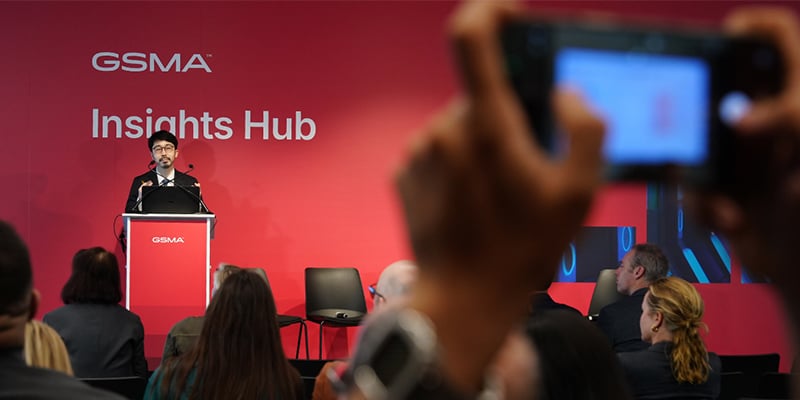
At MWC26 Barcelona, GSMA External Affairs hosted an array of session tapping into the mobile industry’s zeitgeist.
From breaking down the fundamental building blocks of AI to exploring why refurbished phones aren’t more widely adopted, a selection of industry experts gathered to deliver the latest thought leadership.
Catch-up on the conversations shaping the future of the mobile industry
– Would you buy a used phone? How to build consumer confidence in refurbished devices
– From Principles to Practice: Operationalising Responsible AI across the Ecosystem
– Building Equitable Foundations for Inclusive AI Futures
– The Business Imperative for Digital Inclusion
– How Green is Your Bottom Line?
Would you buy a used phone? How to build consumer confidence in refurbished devices
Refurbished smartphones are one of the fastest-growing segments of the device ecosystem – outpacing new-device growth in recent years and playing an increasingly critical role in operators’ and manufacturers’ strategies and sustainability commitments.
Yet despite rising demand, refurbished devices still represent less than 10% of the total mobile phone market in most countries. This leaves significant commercial value unrealised.
Held on Monday 2 March at MWC26 Barcelona, this session brings together thought leaders from across the value chain –refurbishers, mobile operators, and phone manufacturers – to explore closing this consumer confidence gap.
Timestamps:
00:00 – Introduction from the GSMA’s Head of Climate Action
02:32 – Overview of GSMA research on refurbished phones
09:23 – Panel Discussion
From Principles to Practice: Operationalising Responsible AI across the Ecosystem
As AI investment accelerates and agentic AI use becomes embedded across networks, operations, and customer interactions, mobile operators are under increasing pressure to deploy AI responsibly and transparently.
Meeting these expectations requires more than internal policies - it demands maturity, cultural change , and collaboration across the ecosystem.
Held on Tuesday 3 March at MWC26 Barcelona, this session examines what accelerates progress, where organisations commonly get stuck, and how leadership and culture must evolve to keep up pace with rapidly advancing AI capabilities.
Timestamps:
00:00 – Introduction from the GSMA’s Head of SDG Accelerator
05:15 – Overview of GSMA research on responsible AI
13:35 – Panel Discussion
Building Equitable Foundations for Inclusive AI Futures
As the initial AI experimentation buzz gives way to large-scale adoption and more mature deployments, it is leading to unparalleled infrastructural demands. With unprecedented investment flowing into compute infrastructure over the last three years, the pace of investment is only accelerating, expected to exceed five trillion by 2030.
Alongside compute and data, uneven distribution of digital and AI skills is driving a widening AI usage gap, which limits the ability of individuals, organisations, and entire global regions to benefit from AI.
Held on Tuesday 3 March at MWC26 Barcelona, this seminar explores what Inclusive AI means in practice, starting with the fundamental building blocks of compute, data, and AI skills.
Timestamps:
00:30 – Introduction from the GSMA’s Director of AI for Impact
14:54 – Keynote form CEO of Axiata Digital Labs
30:00 – Panel Discussion
52:32 – Youth Perspectives from UNICEF Youth Speaker
The Business Imperative for Digital Inclusion
The GSMA Guide, The Business Imperative for Digital Inclusion, makes a simple but critical point: exclusion creates blind spots, bias, and risk in intelligent systems. Inclusion, by contrast, is what makes intelligence credible, trusted, and scalable.
In the IQ Era, Digital Inclusion is no longer a social add-on. It is a core input into better data, better decisions, and better outcomes — for business, for society, and for the future of our industry.
Held on Wednesday 4 March at MWC26 Barcelona, this session marks the public unveiling of the GSMA’s newly published guide, ‘The Business Imperative for Digital Inclusion: Reporting and Engagement,’ which positions digital inclusion as essential to business strategy.
Timestamps:
00:00 – Introduction from the GSMA’s Head of SDG Accelerator
05:15 – Fireside chat on the ‘why’ of Digital inclusion
21:00 – Panel Discussion on ‘how’ to implement
How Green is Your Bottom Line?
As concerns about climate, cost pressures, and operational resilience converge, sustainability is emerging not just as a moral or regulatory imperative, but as a key driver of efficiency and long-term viability. Enterprises and network operators investing in greener infrastructure and processes are increasingly reporting measurable reductions in operating expenses (OPEX), lower energy consumption, and greater reliability.
Held on Thursday 5 March at MWC26 Barcelona, this session explores how sustainability strategies, from energy-efficient hardware and virtualisation, to smarter demand-response, renewable energy sourcing, and reduced hardware churn, can translate into bottom-line savings and resilient operations.
Timestamps:
00:49 – Introduction from the GSMA’s Head of Climate Action
08:00 – Panel Discussion
