


Convened once every four years by the ITU, the World Telecommunication Development Conference (WTDC) is one of the highest UN decision-making bodies on matters related to digital development and connectivity. WTDC brings together governments, regulators and the private sector to adopt international Resolutions that establish strategic priorities and define the mandate of the ITU on development issues.
In the lead-up to the two-week conference in November, which was hosted by the government of Azerbaijan in Baku, the GSMA attended 16 in-person regional preparatory meetings and over 30 virtual working group meetings, drafting sessions, and bilateral and multilateral discussions. GSMA engagements in all these meetings focused on advocating for closing the digital divide by addressing the barriers to mobile internet connectivity. Additionally, the GSMA organised 3 workshops at the regional level, where it presented evidence-based insights on the 3.1 billion people who remain offline despite being covered by a mobile broadband network.
This was all in support of the GSMA advocating for the inclusion of language, recognising the magnitude of the usage gap and calling for international action to address the demand-side barriers that drive it in key WTDC outcomes. The GSMA delegation sent to Baku to negotiate WTDC-25 outcomes was successful in this, specifically in WTDC Resolution 37 on “Bridging the Digital Divide” and the high-level Baku Declaration.
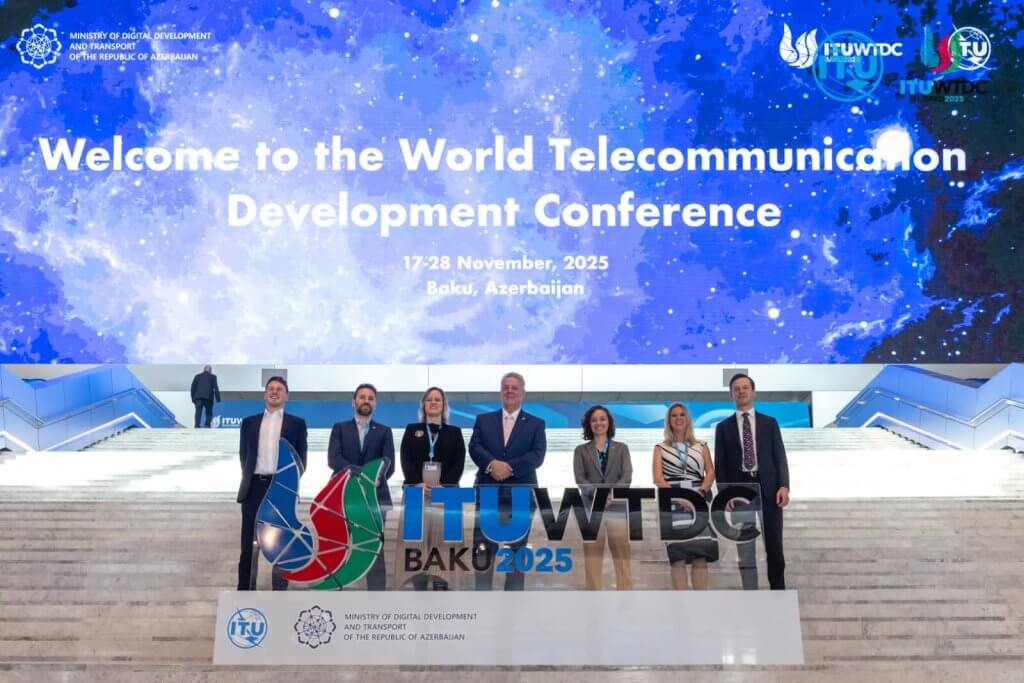
In support of these efforts, the GSMA delegation also hosted a lunch reception in week one for ITU member states and sector members on Tuesday, 18 November, which featured a high-level fireside chat between the GSMA Chief Regulatory Officer, John Giusti, and ITU Secretary General, Doreen Bogdan Martin, on driving digital inclusion for all by addressing key barriers to the usage gap.
The GSMA also moderated a Network of Women in ITU-D session featuring keynote remarks by ITU Secretary General Doreen Bogdan Martin and the Director of BDT Dr Cosmas Zavazava, which reaffirmed a shared global commitment to gender-responsive digital development.
Other key successes included the adoption of a new ITU D study group question on device availability and affordability, and countering language which represented a risk to the mobile industry across resolutions looking into child online protection, assessment and measurement of human exposure to EMF, cybersecurity, disaster preparedness, network deployment, spectrum management and others.
Following the success of the WTDC, the GSMA will continue to advocate for a concerted, collective, and collaborative approach to breaking down the barriers to mobile internet adoption and accelerating digital inclusion, ensuring that no one is left behind in an increasingly connected world.