In May 2021, GSMA launched the GSMA Innovation Fund for Digital Urban Services with support from the UK Foreign, Commonwealth & Development Office (FCDO). The fund was open to start-ups and early-stage companies providing essential urban utility services who leverage digital innovations to make these services more accessible, reliable, sustainable and affordable. Successful organisations were awarded between £100,000 and £250,000 in grant funding and were provided with technical assistance. Pitches were received from 335 organisations in 43 countries across Africa, South Asia and Southeast Asia, and from these, a cohort of nine organisations were selected. This blog series summarises the key learnings from the grant period.
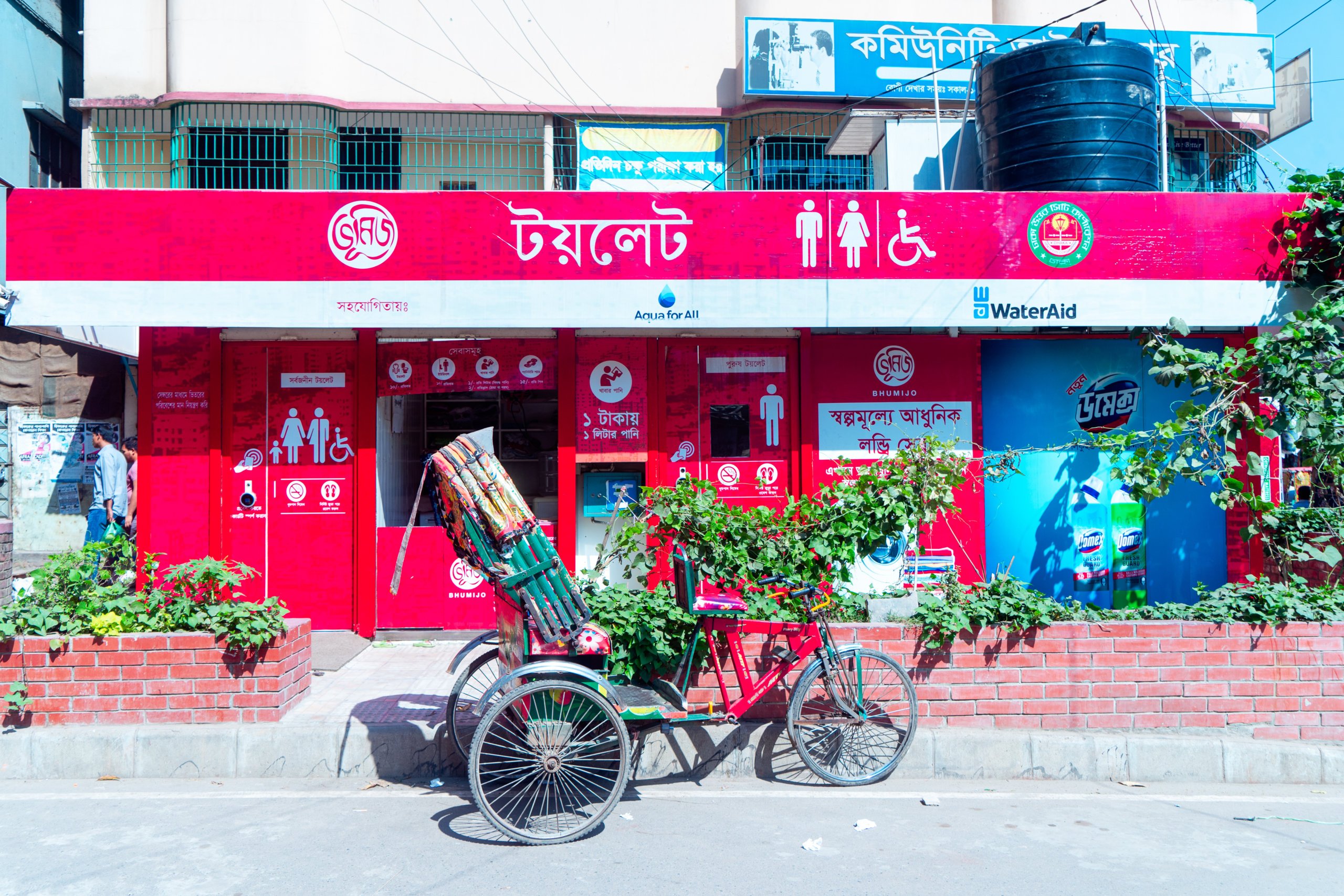
Bhumijo provides hygienic and affordable smart toilets in low-income areas by building new toilets or renovating and managing existing facilities. Bhumijo provides hygienic, inclusive and affordable smart toilets in low-income areas, with extra services such as showers, clean drinking water, laundry, refreshments and advertising space. These services are available through a subscription or pay-per-use model. Their centres offer a separate area for women to ensure their privacy and safety.
An estimated 70 million people in Bangladesh, or 41% of the population- lack access to safely managed sanitation. For the more than 5 million people who commute daily in Dhaka, there are fewer than 50 usable public toilets. This has a disproportionate impact on low-income populations and women, who often spend 12 to 16 hours a day outside their homes.
Purpose of the grant and key outcomes
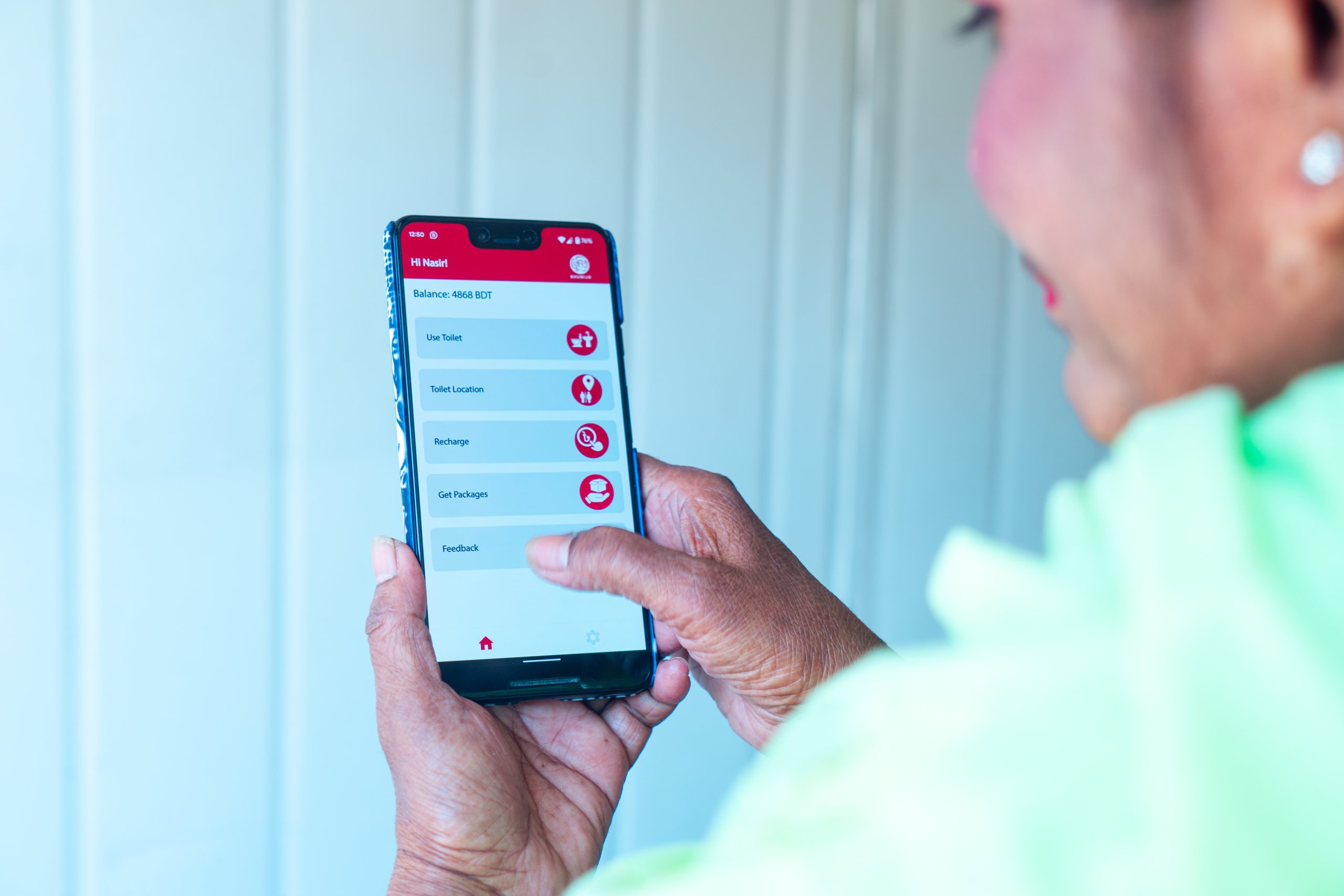
The GSMA supported Bhumijo in March 2022 to digitalise the operation of their public toilets. With the grant, Bhumijo trialled a suite of technologies, including a digital payment system, automatic entry system, sensor-based monitoring and flushing system, and a feedback-gathering mechanism. They also developed an Android mobile app for users to pay for a subscription and receive information on hygiene.
The key grant outcomes cover Bhumijo’s role in providing clean and affordable sanitation in Bangladesh:
- At grant closure, Bhumijo expanded its service offering and fully digitalised eight facilities into smart toilets, reaching over 525,000 users of whom 15% were women.
- In a grant endline survey, 95% of users reported having access to improved toilet facilities for the first time. 100% of the users mentioned feeling comfortable and secure in the Bhumijo toilets.
- At the time of the survey, among the subscribed users who had smartphones, only 26% installed the Bhumijo app and only 16% used digital payments.
- Bhumijo secured partnerships with Unilever, through the TRANSFORM impact accelerator, and WaterAid, enabling them to digitalise 24 more facilities.
Key learnings from the grant
- Improved sanitation still needs to reach the women and girls who need it the most. Bhumijo was founded with women in mind but the percentage of women using the facilities is still low, representing 13% of the total user base. Most Bhumijo toilets are located in markets where men are the main vendors. Additionally, women are still reluctant to use the toilets due to privacy issues despite Bhumijo creating gender-specific facilities. Bhumijo is conducting awareness campaigns and targeted marketing to drive more women into their facilities.
- Novel technologies are a challenge to design but offer the opportunity to create them with the user in mind. Bhumijo’s solution was a novel idea in Bangladesh and hence they found it difficult to get the right software to integrate with their solution. However, deploying these allowed Bhumijo to collect user input and make the smart solution and mobile applications, customer-centric.
- Digital payments are improving business operations but remain nascent in Bangladesh. Only 26% of Bhumijo’s subscribed users made payments through mobile money, with 24% being first-time users of digital payments. Digital payments, through platforms such as bKash, have made it easier for Bhumijo to operate more efficiently and transparently, as money collected at the point of entry is deposited directly into their account.
- For sanitation providers targeting low-income households, revenue diversification is crucial for commercial sustainability. Bhumijo has expanded their offering beyond clean toilets by providing branding and advertising space at their toilets. They also provide extra services such as showers, laundry areas and clean drinking water.
- Innovative public-private partnerships are improving access to essential services. Bhumijo’s build-operate business model involves the renovation of public facilities into smart toilets, allowing the government to tap into the private sector’s investments, expertise and technology for improved livelihoods for its citizens.
Next steps and scaling
Bhumijo have grown to operate 43 centres serving 250,000 people monthly. They plan to grow to 100 facilities by 2026 and 1,000 by 2030. Their scaling strategy involves both expansion as well as expanding the service offering at current facilities. Bhumjio are targeting busy urban centre locations such as kitchen and clothing markets, hospitals, transport hubs, and public spaces. Bhumijo estimate the total addressable market for their services to be roughly two million people, based on 10,000 facilities serving 200 people per day.
This initiative is currently funded by UK International Development from the UK Government and is supported by the GSMA and its members.