The company
E-Ride is developing affordable, electric, productive use batteries and motorbikes suitable for the road conditions of developing countries. Its flagship product, a lithium battery, can be removed from the motorbike to be charged by solar panels or the electric grid.
The problem
E-Ride is addressing the lack of affordable transport for people and goods within the Meheba Refugee Camp – Zambia’s largest refugee settlement. According to a 2022 UNHCR report, more than 35,000 people live in Meheba Camp. Although the camp has been operating for about 50 years, there is still no means of affordable transport for people or goods. Expensive fuel has also increased transport costs, which severely affects economic, social and healthcare activities. In addition, due to the lack of electricity in the refugee camp, inhabitants use diesel generators to power their homes and businesses.
GSMA project
In November 2024, E-Ride received a GSMA grant to train a local team of refugees to assemble, operate and maintain a fleet of IoT-connected electric motorcycles. The motorcycles will be sold to refugees on a rent-to-own basis to enable the drivers to earn a better income and offer affordable transport services to the inhabitants of the camp. Motorcycle usage and battery health are monitored in real time through a GSM-based data transmission system operating on Airtel Zambia’s network. This project is in partnership with UNHCR.
Founder and Lead Engineer
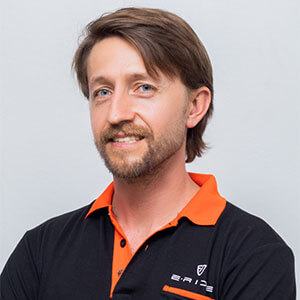
Jacob Anz
A message from the founder
“Access to transport and mobility is treated as a given for some parts of the population and for others its a daily challenge. In Zambia, being a landlocked country, fuel is imported and expensive. Switching to electric mobility comes with the advantages not just to reduce the cost but also to avoid emissions, with climate change being ever more evident in the recent droughts in Zambia. E-Ride’s team is very grateful to the GSMA and UNHCR for giving us the opportunity to explore the benefits of e-mobility in refugee camps, which are some of the most underserved areas.”
Team

Videos
Donor(s)