


This is the second of a five-part “diary series”, which will highlight lessons from the GSMA Mobile Money Leadership Group Immersive Learning Trip in the Philippines in June 2025.
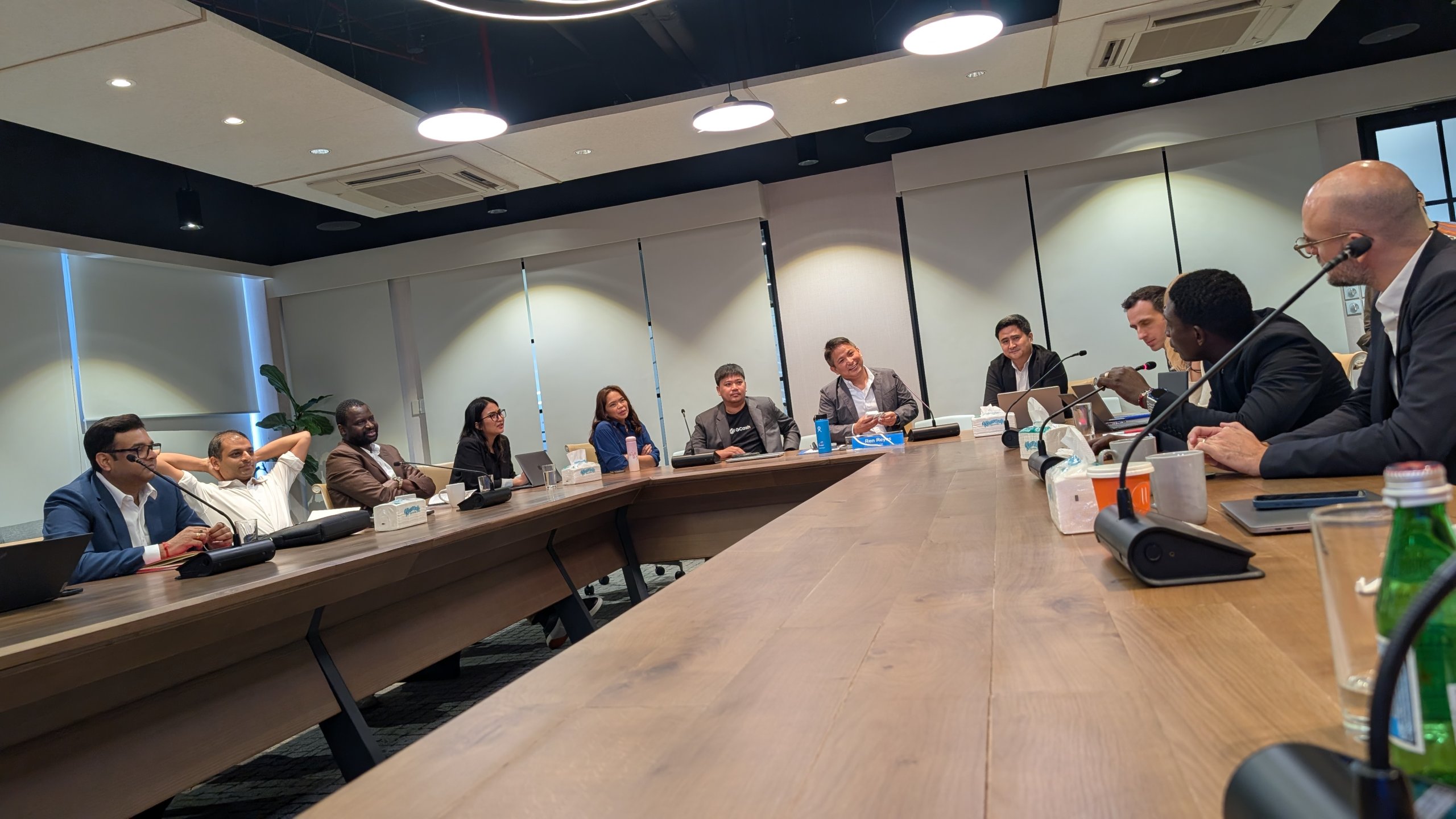
Having seen GCash in action across two locations in a hot, humid and rainy Manila, mobile money leaders from Sub-Saharan Africa were welcomed to the GCash office to learn about the service. Over a series of interactive discussions, attendees were taken through GCash’s history and growth journey, its growing international transaction footprint, its wealth management portfolio and Fuse – its lending business.

How GCash became a super app
Launched in 2004 as an SMS-based mobile money service, GCash has since evolved into a digital financial service super app. Driven by demand for digital payments during the COVID-19 pandemic, GCash’s growth over the last five years has contributed to financial inclusion in the Philippines, where 35% of adults remain unbanked. As a result of rapid uptake among consumers and businesses, GCash is the Philippines’ first and only $5 billion unicorn. Since its launch, it is estimated to have served eight out of 10 Filipinos.
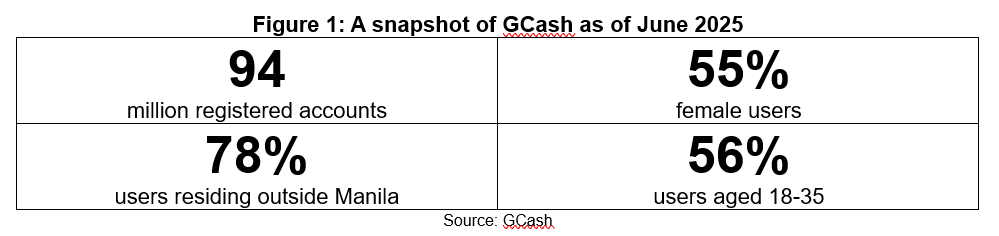
GCash’s expansion has been driven by offering additional financial products. Initially focused on payments and transfers, GCash now offers lending, investments and wealth management. Fuse, GCash’s lending arm, has evolved from traditional lending to a digital-first approach. Its aim is to lower the high reliance on informal loans, which comprise 57% of all loans in the Philippines. This strategy is complemented by products designed to build long-term financial resilience, such as a savings account that pays 12% annual interest and pension plans.
Strategic partnerships and international expansion have further amplified its impact. The Philippines is the fourth-largest inbound remittance market globally, with an estimated $40 billion in 2024, accounting for 9% of the gross domestic product. This has prompted GCash to develop an international remittance network that allows Filipinos in 145 countries to send money home and use GCash while abroad. For instance, GCash is accepted at pay points where Alipay QR codes can be used.
Comparing the Philippines to Sub-Saharan Africa
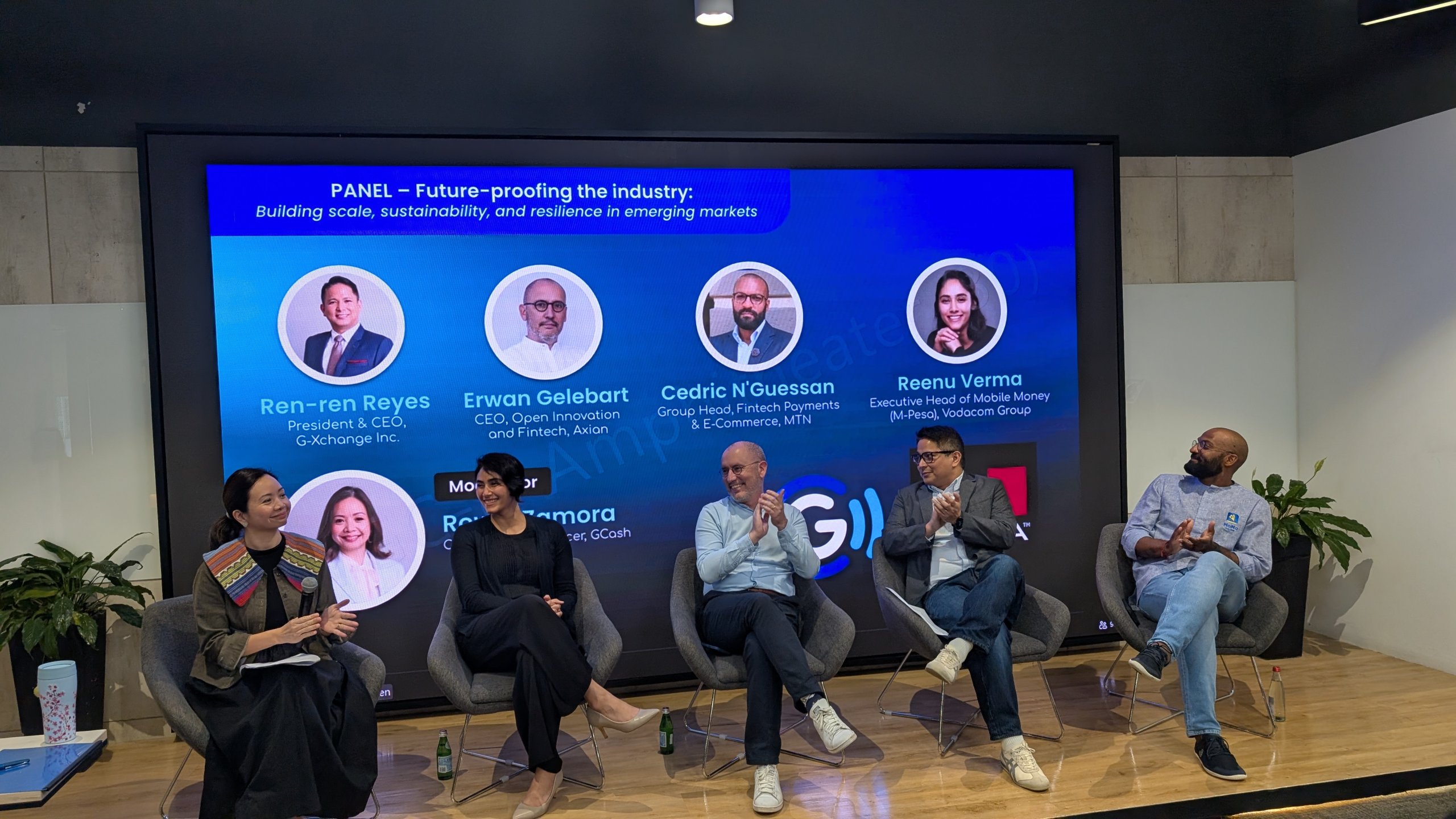
The highlight for all attendees and GCash staff was a panel session on how mobile money differs between the Philippines and Sub-Saharan Africa. Cedric Nguessan from MTN Momo, Erwan Gelebart from Axian Open Innovation and Fintech and Reenu Verma from Vodacom M-Pesa explained the lessons they had learned, while Ren-ren Reyes from G-Xchange talked about GCash’s strategy on merchant payments and becoming a digital bank.
Erwan Gelebart highlighted the unique challenges Axian faces across its diverse markets, such as difficulty sourcing talent in the Comoros and the high cost of data science expertise. Axian has built its own digital bank in Madagascar. Despite the transition, its model allows for banking operations without major organisational disruption, partnerships with telcos and third parties, and channelling value back to the bank. It has also centralised credit risk functions while allowing local autonomy and holding each market accountable for revenue.
Reenu Verma highlighted Vodacom M-Pesa’s approach of centralising strategic skills and technology, while adapting regulatory engagement to the characteristics of each market. Regulatory perspectives can vary: sometimes M-Pesa is viewed as a mobile network operator; sometimes as a fintech – depending on local conditions. Regulatory relationships are highly localised in M-Pesa’s market, with ongoing policy discussions and a recognition that regulators can evolve alongside the business, allowing for more agile and responsive innovation.
Ren-ren Reyes explained how GCash tailors its strategies to different user segments, noting that Manila’s developed merchant landscape contrasts with the less digitalised rural areas. The company targets localities with high digital adoption and recognises that attitudes toward technology can vary widely. Rowena Zamora pointed out that, unlike the regulatory challenges often seen in Sub-Saharan Africa, GCash’s main hurdle is to obtain regulatory permission before launching innovations, which can slow down product development and deployment.
Finally, Cedric Nguessan explained that open APIs can encourage partners to create new products, even across borders. While MTN MoMo does not rely on apps or mini-apps, its platform approach supports financial inclusion and enables partners to scale regionally. Cybersecurity remains a key concern, but the company has avoided major issues despite operating in 13 markets. Looking ahead, supporting small businesses, which significantly contribute to the gross domestic product in many African countries. Empowering them can drive economic growth.