


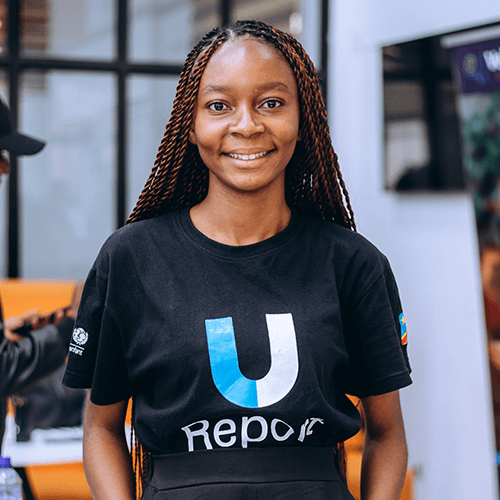
Today, my identity is no longer limited to who I am offline. It also exists online, in every word I post, every image I share and every interaction I engage in. Online safety is an essential shield for me because it protects my digital identity, which is an extension of my image, my voice and my dignity. When this is compromised, it is not just data that is exposed, but lives and futures that are put at risk. We should be able to use the Internet confidently, without fear of harassment or exploitation. It’s about protecting personal information, setting boundaries, and feeling free to learn, share, and express myself.
My commitment to online safety comes from lived experience both from my personal experience and my work with young people. I have faced different forms of online violence, including hate speech, harassment, the spread of false information, hacking and scams. These experiences create a constant sense of fear – fear of backlash, judgment or retaliation, simply for existing or expressing oneself online. As a young girl from Democratic Republic of the Congo (DRC), I am mindful of my online use and I campaign for responsible Internet use: encouraging young people to adopt safe and respectful behaviours. I also tackle misinformation by helping identify fake news and promoting critical thinking online.
In DRC, our access to digital education and adequate protection remains limited, due to often insufficient infrastructure and an unstable security situation in some regions. Internet connectivity is sometimes difficult and expensive, which limits our access to reliable resources and protection tools.
For many of us, especially girls, using the Internet happens without enough guidance, in a context where reporting, support, and protection are weak. We often face harassment, unwanted messages, and other online risks that can affect our confidence and limit our participation. It is essential to create digital spaces where we feel heard, supported, and empowered.
It was this desire to turn personal experience into collective action that led me to join U-Report – UNICEF’s community for young people by young people. Through U-Report, I found a space not only to raise my own voice, but to help amplify the voices of young people in my community. U-Report showed me that online safety cannot be strengthened without directly listening to children and young people who navigate the digital world every day.
I recently had the opportunity to contribute to the design of the global Life Online poll, developed by U-Report in collaboration with the GSMA. UNICEF has launched this poll to better understand what children and young people experience online. The poll explores their perceptions of the platforms and applications they use, how these digital spaces shape their emotions and well-being, including the growing role of artificial intelligence and how online experiences can be made safer and more positive.
In DRC, U-Report is actively deploying the poll, giving children and young people the opportunity to share their experiences and expectations. These insights are critical for informing public policies, guiding mobile and technology stakeholders and designing solutions that are responsive to local realities. The poll reinforces a key message: children and young people should be essential partners in shaping safer digital environments.
In parallel, I am engaged with the Veilleurs du Web (Web Watchers), a youth-led initiative promoting responsible and positive use of the internet. Since 2021, more than 700 young people have been trained across 17 provinces of the DRC, generating over 300,000 digital actions to counter misinformation and online violence. This collective effort demonstrates that when young people are equipped with the right skills and support, they can become powerful agents of prevention and change.
My participation in the Mobile World Congress (MWC) 2026 is driven by a clear vision: to help make online safety for children and young people a practical and measurable priority. I aim to contribute to stronger dialogue between young people, mobile operators, policymakers and technology partners, and to promote inclusive, responsible solutions that reflect the realities of diverse communities.
I firmly believe that a safer internet can only be achieved when technological innovation moves forward hand in hand with collective responsibility. MWC 2026 represents a strategic opportunity to turn children and young people’s voices into concrete and lasting action.
For more information or to participate in the poll send the word ONLINE on any of the following messaging channels:
Telegram: bit.ly/ONLINE-TG
Facebook: bit.ly/ONLINE-FB
Instagram: bit.ly/ONLINE-IG
WhatsApp: bit.ly/ONLINE-WA
Viber: bit.ly/ONLINE-VB