


IDEMIA Public Security: Industry demand for biometric aviation connectivity
Airports and governments are calling on mobile operators to enable assured connectivity for real-time biometric identification and HD video processing.
About enterprise API demands
Across global aviation, passenger volumes are rising while airport infrastructure remains constrained. To meet demand, airports are turning to biometric technologies that enable faster, seamless passenger journeys across check-in, security, border control, and boarding.
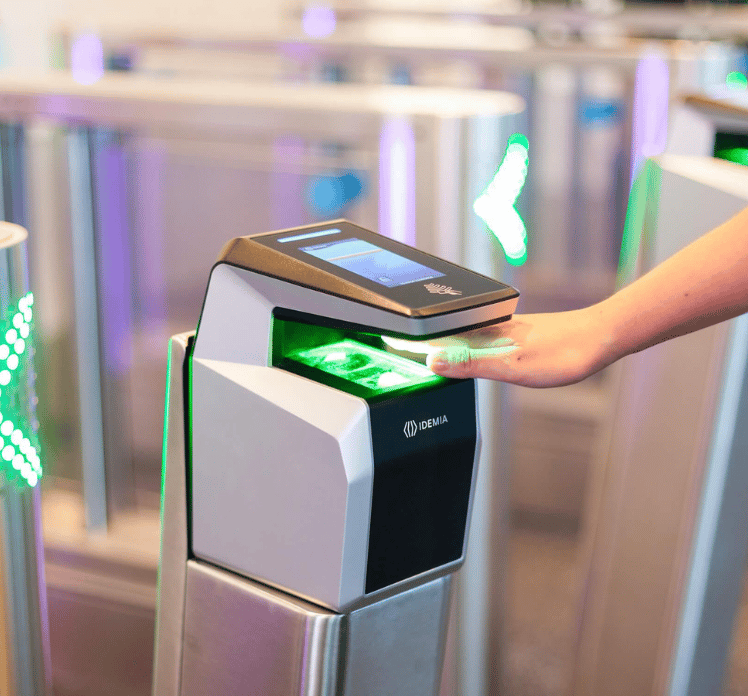
IDEMIA Public Security is leading this transformation with solutions such as PaXpress™ SmartLane, enabling real-time, “free-flow” biometric identification using continuous HD video streams. However, these systems depend on ultra-reliable, low-latency connectivity often in high-density, congested airport environments where performance is least predictable.
In many deployments, biometric data must also be securely transmitted to off-site government systems in real time, increasing the need for consistent uplink performance and minimal latency. To address this, IDEMIA Public Security is calling on mobile operators to expose Quality on Demand (QoD) and QoS APIs aligned with GSMA Open Gateway.
These APIs enable dynamic prioritisation of critical video and biometric data flows, delivering fibre-like performance over public 5G networks. The message is clear: connectivity is now foundational to secure, high-throughput airport operations. Through collaboration, the mobile ecosystem can help unlock the next generation of frictionless, secure passenger travel.
Problem

Biometric identification systems rely on high-quality, real-time video, but network congestion and variability can degrade performance during peak airport operations.
Solution

Programmable QoD/QoS APIs provide assured bandwidth, low latency, and stable connectivity for mission-critical biometric and video workflows.
API service

Quality on Demand (QoD) and QoS APIs for prioritised HD video streaming, real-time biometric verification, and secure data transmission.
Impact

Faster passenger processing, improved airport throughput, enhanced security, reduced reliance on manual checks, and new enterprise opportunities for mobile operators.
More information
What is the IDEMIA Public Security market demand statement?
IDEMIA Public Security is calling on mobile operators to enable QoD/QoS APIs globally to support real-time biometric identification and HD video processing in airports.
Why should mobile operators act now?
Passenger volumes are growing rapidly, with airports under pressure to increase throughput without expanding physical infrastructure. Reliable connectivity is critical to scaling biometric solutions.
How does GSMA Fusion help?
GSMA Fusion and Open Gateway provide a standardised framework for exposing network capabilities via APIs, enabling interoperable, scalable deployment across airports, operators, and regions.
Partners
This initiative is supported by: