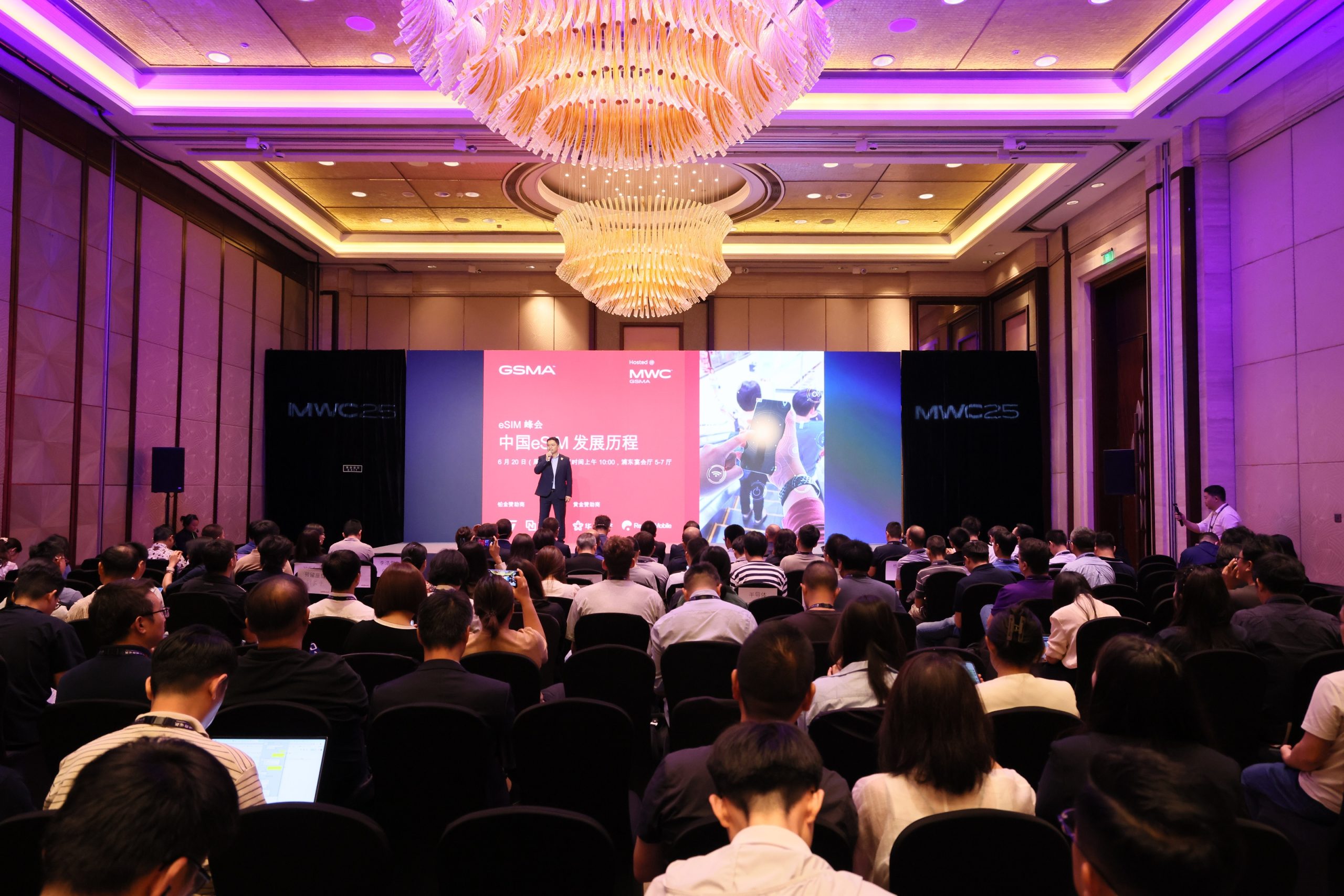
The eSIM summit at MWC Shanghai 2025 brought together leading operators, OEMs, and technology innovators to explore the next wave of connectivity. With the rapid convergence of AI, 5G, and eSIM technologies, the summit focused on how these forces are reshaping global device ecosystems and accelerating digital transformation. Experts from across the telecom and IoT industries shared strategic insights on scaling eSIM adoption and enabling intelligent, always-connected devices.
Industry leaders driving eSIM innovation
China Unicom forecasted that China’s eSIM market will enter a high-growth phase from 2025, powered by AI-driven smart terminals and seamless device interoperability. Telenor showcased its work on SGP.32 testing and readiness, emphasizing secure, flexible, and compliant connectivity for global enterprises. Valid highlighted its role as a top-tier global eSIM provider, interoperable with over 300 MNOs worldwide, and partnering with major OEMs like Xiaomi and Volkswagen Group to advance eSIM adoption across IoT and consumer devices.
Key themes included:
- Integration of AI and eSIM to enable smarter, connected devices
- Commercial readiness of SGP.32 and its impact on IoT deployments
- Global interoperability and compliance for OEMs and MNOs
- Collaboration between ecosystem players to scale eSIM adoption
Connection the future of intelligent devices
As eSIM becomes the foundation for next-generation connectivity, the summit underscored its pivotal role in unifying global communication networks and IoT ecosystems. With collaboration among operators, OEMs, and platform providers, eSIM is driving a new era of flexibility, efficiency, and innovation. MWC Shanghai’s eSIM summit continues to serve as a catalyst for industry alignment — shaping the standards, partnerships, and technologies that will define the future of connected intelligence.
Watch on-demand
Welcome, eSIM Market: China & Beyond and GSMA eSIM Services
At the MWC 2025 eSIM Summit, GSMA’s Product Director, Chris Li, highlighted global progress and future trends in eSIM technology. Since its early adoption, eSIM has expanded rapidly, now supported by 240+ devices, 400+ operators, and 120+ countries. Consumer awareness continues to rise, with more travelers and IoT manufacturers adopting eSIM for flexibility, cost efficiency, and security.
AI Opens a new chapter for eSIM
At the MWC 2025 eSIM Summit, China Unicom Deputy General Manager, Chen Fengwei forecasted that China’s eSIM market will accelerate from 2025, driven by the integration of AI and eSIM technologies. AI’s demand for constant connectivity makes eSIM vital for next-generation devices like phones, wearables, and IoT products.
With 40+ brand partners and 150+ eSIM terminals, China Unicom is leading adoption through innovation and ecosystem support. The company reported strong growth — 30× in tablets, 10× in watches, and IoT — and announced new ZTE and Lenovo eSIM-only tablets, reinforcing China’s move toward a connected, AI-driven future.
eSIM: Securing Future Connectivity
At the MWC 2025 eSIM Summit, John Zou, EVP at Tongxin Micro presented their vision for the future of secure and intelligent eSIM technology, positioning eSIM as the cornerstone of smart connectivity in the AI era. The company highlighted eSIM’s value in reducing carbon emissions, improving device waterproofing, enhancing user convenience, and lowering operator costs.
Laurent TRICHEUR, Head of Marketing and Applications at STMicroelectronics, showcased their leadership in eSIM innovation and semiconductor manufacturing, emphasizing its role in building a smarter, more connected, and sustainable future. With over 1 billion ST33 chips shipped and 90% global market share, ST is driving global eSIM interoperability and scalability.
One Chip. No limits – Facilitating China’s eSIM evolution
Nadeel Lee, Marketing Director at HED outlined their mission to strengthen China’s eSIM industry ecosystem as a leading security chip manufacturer. The company emphasized two goals of eSIM: enhancing mobile convenience for consumers and enabling faster, more efficient IoT deployment.
The CaaS Paradigm and the Rise of Global Connectivity Orchestrator
Redtea Mobile CEO Jin Hui introduced a new paradigm of “Connectivity as a Service (CaaS)”, positioning the company as an orchestrator that simplifies global connectivity through eSIM virtualization. Redtea Mobile now supports over 50 operators, 100 million active eSIM devices, and millions of monthly downloads via its GSMA-certified RSP and Entitlement platforms.
eSIM – SGP.32 Powering Nex-Gen IoT
At the MWC 2025 eSIM Summit, Telenor IoT General Manager, Kelvin Pan highlighted Telenor’s leadership in global IoT and eSIM innovation, introducing the company’s readiness for the SGP.32 standard – the next generation of eSIM technology.
With 170 years of telecom expertise and operations in 200+ countries, Telenor provides one-stop global connectivity through a single SIM card reaching over 500 networks worldwide. The company emphasized that SGP.32 combines the strengths of SGP.02 (IoT-focused) and SGP.22 (consumer-focused) standards, enabling flexible, secure, and cost-efficient global deployments.
Navigating the global eSIM adoption and interoperability challenges
Christian Fernandez, Product Marketing Manager at Valid highlighted their position as a global leader in eSIM enablement, with over 25 years in telecom and interoperability with 300+ MNOs worldwide. The company – a top 5 global SIM supplier – focuses on secure software and trusted connectivity for MNOs, OEMs, and IoT providers, offering full GSMA-compliant eSIM solutions (SGP.02, SGP.22, SGP.32). Valid collaborates with major players such as Xiaomi and Volkswagen Group, driving innovation in automotive, IoT, POS, and consumer electronics. With local R&D in China, GSMA-accredited sites, and strong interoperability, Valid is positioned as a strategic partner for global and domestic eSIM adoption.