Wednesday 22 July, 2026
At the MWC26 Barcelona 5G Future Summit, the tone was markedly different from the launch-era enthusiasm that accompanied early 5G deployments. Debate about the future of 5G networks has become more pragmatic. The question is no longer whether 5G works, but whether it is working hard enough, architecturally, strategically and commercially, to justify the scale of investment and to prepare the ground for an AI-native future.
5G standalone (5G SA) is not the end point of a generational cycle, it’s an inflection point. Ultimately, the future of 5G networks lies in programmability, AI-integration and ultimately being foundational to 6G.
Completing 5G: The standalone imperative
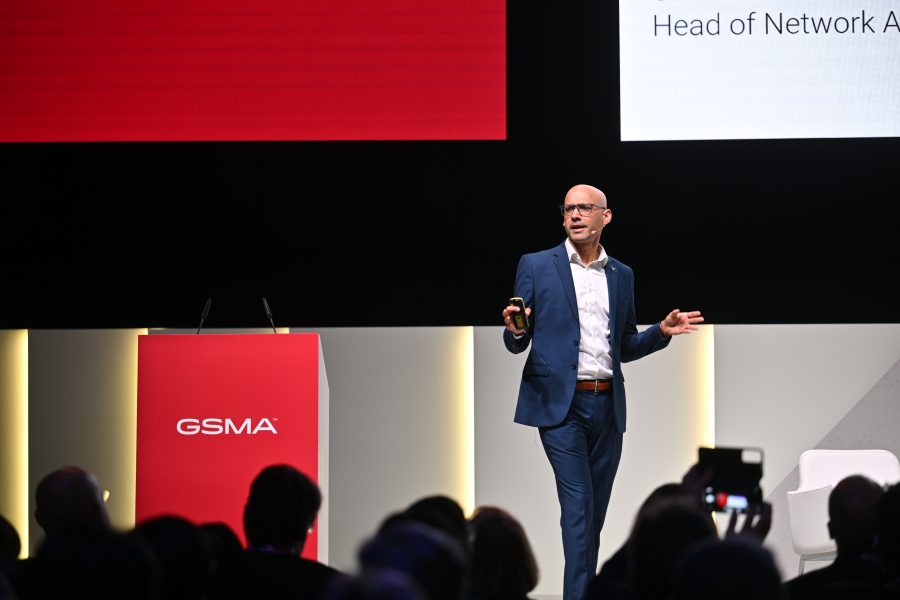
Henry Calvert, Head of Networks at GSMA, set the context bluntly. Nearly 400 operators worldwide have launched 5G, but only a small fraction have deployed standalone core networks. In his words, there is “$127 billion that we could possibly be leaving on the table at the moment,” referring to enterprise revenues from capabilities such as network slicing and network APIs that require a standalone core.
The architectural shift from non-standalone to 5G SA is structural rather than incremental. The service-based architecture (SBA) of 5G standalone moves telecom networks closer to cloud-native software systems, exposing network functions as services rather than closed hardware stacks.
Calvert described this as “a fundamental transitional change in the service-based architecture… we’ve almost gone to a cloud-native infrastructure to put software functions on top of it”.
Yet the commercial payoff has lagged. 5G has largely been consumer-led. Enterprise monetisation, long seen as a major 5G opportunity, has yet to materialise at significant scale. This tension has driven GSMA’s Open Gateway initiative, designed to expose network capabilities through standardised APIs.
The underlying logic is simple: if enterprises can provision compute and storage in minutes from cloud providers, they should be able to consume network capabilities with the same immediacy. “How do we make networks programmable?” Calvert asked. That question frames many of the issues of the day.
Network intelligence as a product
Kunal Shukla, SVP and GM, Head of Network APIs at Vonage, sharpened the enterprise lens. Mobile operators, he argued, have invested enormous capital in 5G infrastructure, but the returns have yet to reflect the kind of innovation-led model seen in cloud and software.
“There is an opportunity to monetise the existing networks and convert it from being a cost centre to a profit centre, from being infrastructure-driven to an innovation engine,” he said.
The convergence of mobile-first enterprise strategies and AI workloads is creating a new demand pattern. Shukla noted that “82% of CIOs are looking at mobile-first options”, while AI inference increasingly shifts from centralised clouds to the edge.
The missing link for the future of 5G networks, in his view, is “network intelligence”, and not from raw APIs, but from abstracted, outcome-driven services that hide telecom complexity from developers. Rather than exposing latency, jitter and throughput parameters directly, platforms should translate network conditions into business logic.
The most immediate traction is in identity and fraud prevention. Authentication APIs, particularly phone number verification, are gaining real adoption. But Shukla was clear that this is only the first horizon. Differentiated connectivity, including quality-on-demand and dynamic slicing, is next. The emphasis should be on abstraction. “It’s all about simplicity… scalability… adoption,” he said.
Quality as a premium service
While Vonage focused on the developer ecosystem, KDDI offered an operator’s blueprint for monetisation. Toshiyasu Wakayama, Senior Standardization Specialist at KDDI, positioned AI not as a feature, but as the core strategic driver of the business.
KDDI’s premium service, built on network slicing principles, prioritises connectivity for subscribers in congested environments. The proposition is clear: some users are willing to pay for a premium communications experience. This is more than marketing differentiation. It suggests there may be scope for more experience-led service tiers. Wakayama called communication quality a “sleeping giant” that APIs and AI can awaken.
Crucially, KDDI’s argument rests on standardisation. As a founding member of Open Gateway and CAMARA, it views global API harmonisation as a prerequisite for scale. Enterprise operates across borders; network capabilities must be interoperable to matter.
AI changes the traffic equation
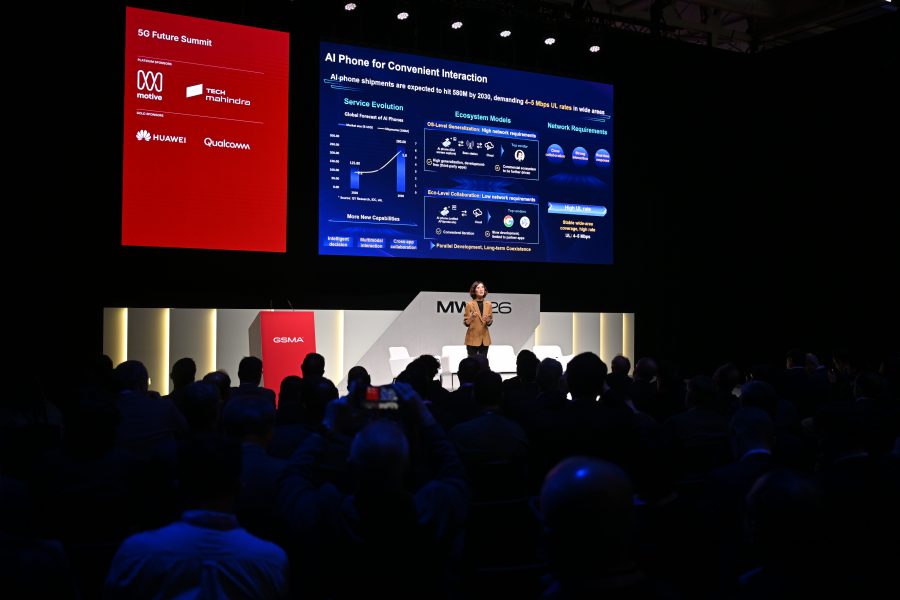
Alongside discussions of APIs and monetisation, a deeper technical theme surfaced: AI is reshaping network traffic itself. Mobile networks are moving from connecting people to connecting intelligence to the physical world. AI agents, wearables and autonomous systems are not passive consumers of downlink data. In fact, they generate, interpret and act in real time.
This development has implications for radio design. Huang Yuhong, General Manager at China Mobile Research Institute highlighted the dramatic rise in uplink demand in AI-driven scenarios, from smart glasses to embodied robotics. In some high-density events, uplink traffic already exceeds half of total load.
The historical bias toward downlink capacity, optimised for video streaming, is no longer sufficient. Deterministic latency, symmetrical performance and dynamic resource allocation are becoming critical in the future of 5G networks. And in that sense, 5G-Advanced is not just a marketing label. It is increasingly being positioned as a way to address the uplink, latency and flexibility demands of AI-driven use cases.
6G: evolution or re-foundation?
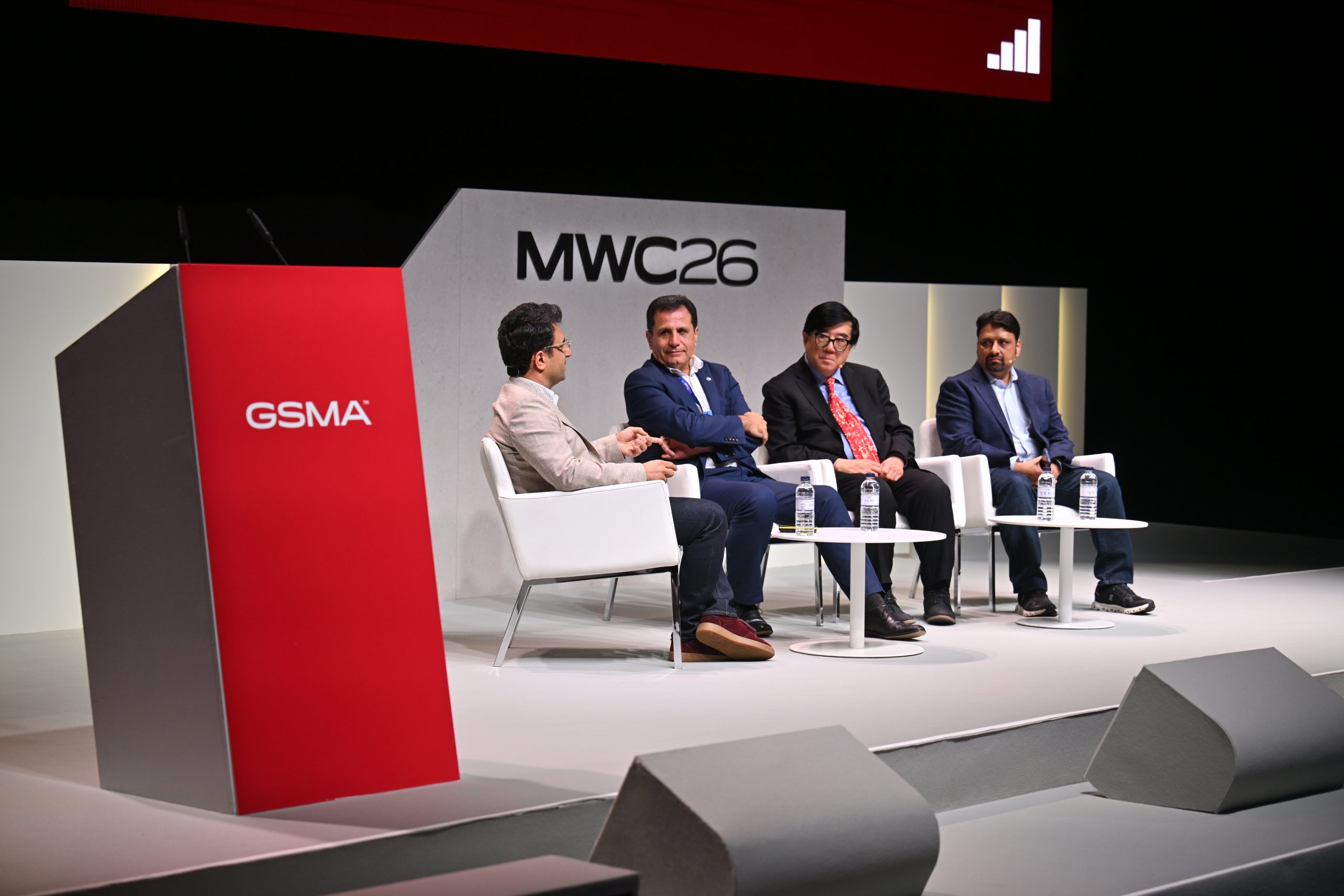
The 5G Future Summit’s final act addressed an uncomfortable question: if 5G-Advanced can evolve incrementally, why do we need 6G at all? The answer, emerging from some, is that AI-native design may require a more fundamental rethinking than incremental releases can provide. For example, Professor Rahim Tafazolli CBE, Director of the 6G Innovation Centre at the University of Surrey, argued that a new generation should only exist if it delivers capabilities that cannot be achieved through simple evolution. Integrated sensing and communication (ISAC), tightly fused with AI at the architectural level, is one such candidate.
Similarly, John Smee, Senior Vice President, Engineering, from Qualcomm described 6G as a fresh-sheet opportunity to integrate communications, sensing and distributed AI from the outset, rather than layering them on retrospectively. At the same time, caution was evident. Manish Mangal, President and Head, Americas Communication Business at Tech Mahindra warned that 6G must be business-architecture driven, not technology-driven. “If you don’t have that, then the monetisation will be irrelevant,” he argued, reflecting a broader lesson from the 5G era: spectral efficiency alone does not guarantee returns.
Future of 5G networks: strategic tension
Two tensions surrounding the future of 5G networks defined the summit, with the first being between speed and structure. AI innovation cycles move in months; telecom standardisation moves in years. The industry must reconcile agile software practices with the reliability and global interoperability that mobile networks demand.
The second is between evolution and reinvention. 5G standalone and 5G-Advanced still have untapped potential. Yet AI-native architectures, integrated sensing and programmable RAN stacks suggest that 6G may need to be more than a bandwidth upgrade. The GSMA’s Mobile AI Community and Open Gateway initiative represent attempts to bridge these tensions, aligning standards, APIs and monetisation models before the next generational leap.
A network for intelligence
Perhaps the most resonant framing came from GSMA CTO Alex Sinclair: if AI becomes the brain of the digital economy, mobile networks become its nervous system. That metaphor captures an underlying trend: the future of 5G networks is not about faster smartphones. It is about building an intelligent, programmable substrate for machine interaction, real-time decision-making and distributed AI.
The 5G Future Summit was not therefore a declaration of victory for 5G. Instead, it acknowledged unfinished business: complete standalone deployment, scale APIs, and embed AI at the core. The road to 6G has begun. But its credibility will depend on whether 5G can first deliver on its promise, not just technically, but commercially.
We’ll be continuing the conversation at MWC Shanghai during the Future Networks Summit on Wednesday 24 June 2026. Join us for an insightful event with industry leaders.