


CoNUA Displacement Toolkit (CoNUA-d)
A toolkit for exploring mobile phone use among refugees and displaced people in humanitarian settings
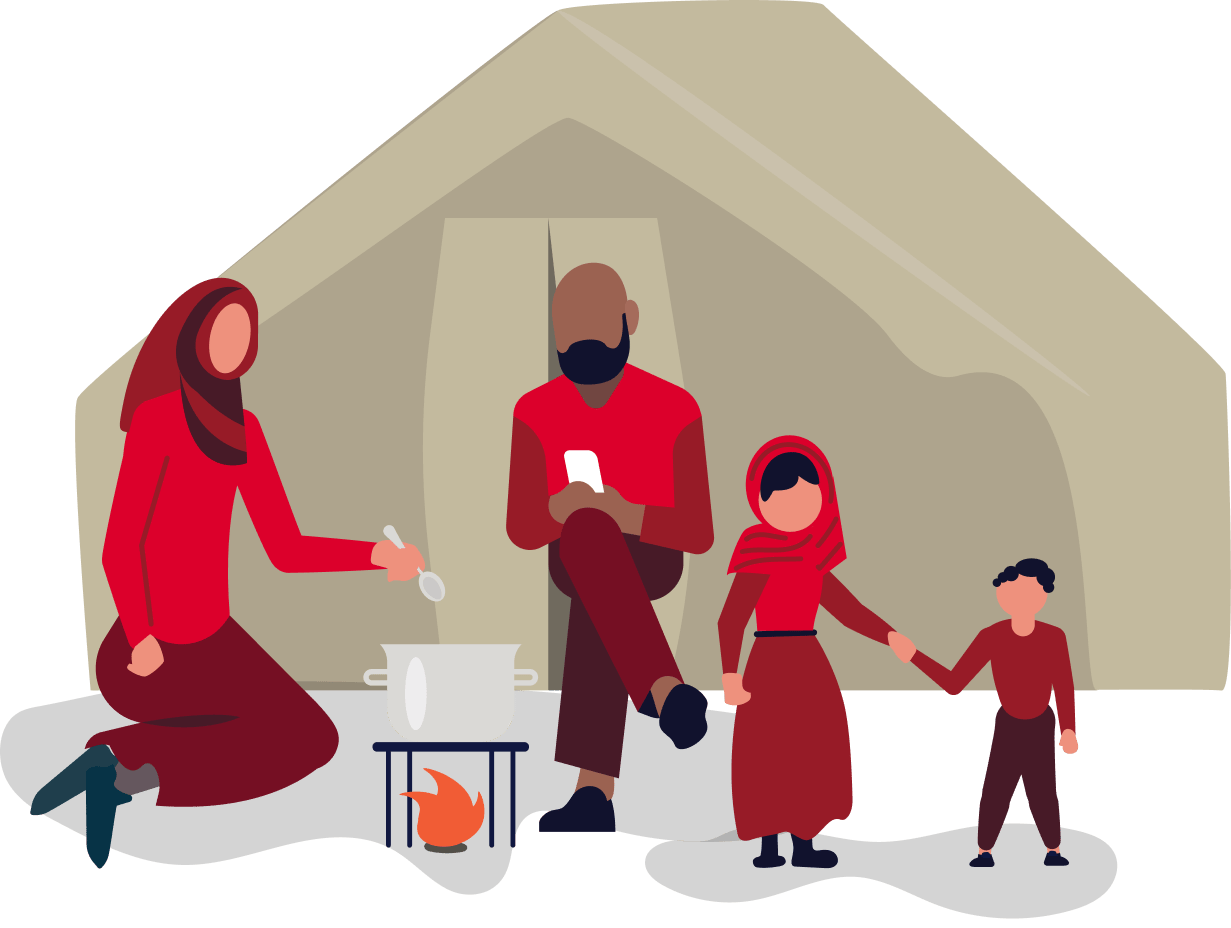
The GSMA’s CoNUA-d Toolkit builds on the foundations of the main CoNUA Toolkit, to address the unique realities of displacement settings. CoNUA-d provides a set of tools to explore how refugees and displaced populations use mobile phones for humanitarian purposes.
Together, these tools help build a comprehensive picture of mobile phone use in crisis contexts, highlighting digital divides such as those linked to gender, disability and age, while also supporting a deeper understanding of the surrounding digital ecosystem and the conditions that enable it to function.
While mobile technology can be a key enabler for humanitarian support such as cash and voucher assistance, communication and access to essential information, the CoNUA displacement toolkit does not replace specialised assessment tools already in use. Instead, it is modular and adaptable, designed to complement other assessment frameworks to produce fit-for-purpose, context-specific insights. CoNUA-d has adapted and refined a subset of tools from the original CoNUA toolkit to ensure relevance and usability in displacement contexts.
Each of the tools listed below can be used separately, or several can be combined to create bespoke assessments. They can also be inserted into other assessments as needed. For full guidance on how each tool can be used and combined for tailored assessments, we suggest downloading the guidance document provided in the CoNUA toolkit.
The End-user Survey tool
Like traditional individual-level assessment surveys, this tool is designed to collect statistically representative data meaning, that with proper sampling, findings can be generalised to entire populations.
To reduce overall length, only questions that are most relevant should be used, with others excluded. Additionally, the survey can be used as a question bank, meaning specific questions can be added to include elements of phone access, ownership, and usage in other assessments.
Data from this tool will be almost entirely quantitative, and as such should be analysed statistically. Data collection and analysis should be done in such a way that they are representative of the overall population.


Looking for CoNUA?
The Toolkit supports those who are committed to using a user-centred approach to deliver humanitarian assistance, contributing to the Grand Bargain commitment 6 – “a participation revolution”.
At present, each tool is available in Arabic, English, French, Spanish, and
Swahili. The supporting documentation is available in English and French.
We intend to add more languages as they are needed for deployments.

Resources



Download all the CoNUA-d tools
Download all the CoNUA-d tools here.