


The online world is accelerating in Pakistan. The GSMA’s supporting report revealed a substantial increase in mobile broadband coverage in Pakistan, with 81% of the adult population now in areas covered by 3G or 4G networks, up from just 15% in 2010. Additionally, smartphone ownership reached 63% by the end of 2023. However, only 23% of the population subscribes to mobile internet services, underlining the scale of the challenge to connect the unconnected. For most women, it is still a space filled with danger, harassment, exclusion, and self-censorship. A university-based study in Karachi highlights prevalent online abuses such as cyberstalking and cyberbullying targeted towards women and girls. On a global scale, most aggressive online behavior is aimed at women. UN data suggests that 95% of abusive online content is directed towards women. From a wider perspective, Pakistan has deeper issues such as low digital participation. Women are 25% less likely than men to possess basic digital skills. Although women constitute 40% of high-skill industry employees, they are scarcely found in AI and ICT sectors. A study carried out in 2025 “Exploring the Impact of Cyberbullying on Female University Students in Pakistan: A Qualitative Study” findings showed that universities should collaborate with Pakistan’s Cybercrime Wing and the Federal Investigation Agency (FIA) to organize seminars that educate students about the Prevention of Electronic Crimes Act (PECA) 2016, existing cybercrime helplines, and reporting mechanisms. As a product manager at SIMOSA, Arfa came across countless stories in online communities about harassment stories that mirrored her own experiences. Each reminded her of the fear and silence she once endured. She discussed these pain points with her team, and that conversation became the
spark behind SIMOSA’s safety innovation.
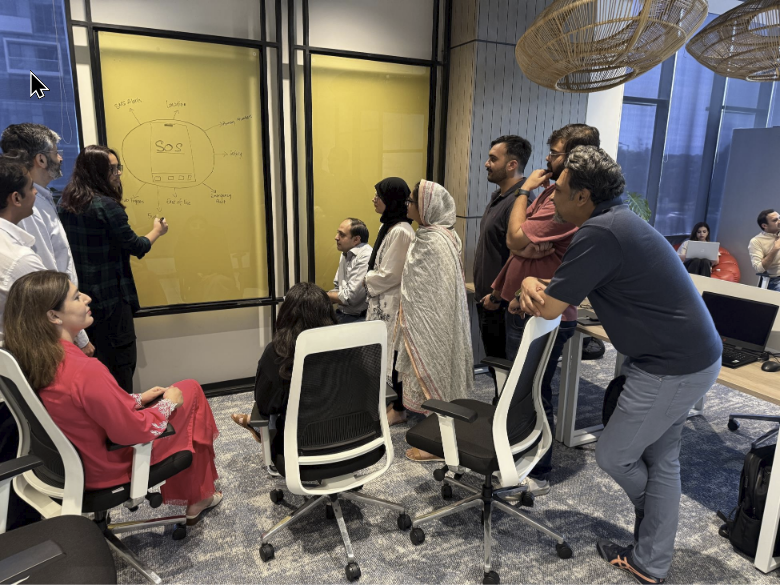
Arfa went through many of the challenges mentioned by the participants in this study and wanted to take the findings forward hence was the start of her journey to raise awareness about online safety and cyber bullying. Her work on the SIMOSA Pakistan’s leading self-care & lifestyle telecom app with more than 21 million monthly users 35% of which are females, with the launch of Social+, SOS, and SIMOSA Chaat, is embedding inclusive AI and safety-by-design to trusted digital spaces to foster women’s agency and broaden digital participation.
A Personal Story of Impact – Arfa’s Journey
For Arfa, a product manager at SIMOSA, this mission is deeply personal. Growing up, she loved technology but often faced skepticism about her interest in it. “Tech is not for girls” was a phrase she heard far too often. Later, while engaging in online communities, she experienced harassment firsthand. What stung more than the abuse itself was the silence that followed she, like many other women, chose self-censorship over participation because no safe alternative existed.
When Arfa joined SIMOSA, she began encountering similar stories from countless women who felt unsafe online. Each story reminded her of her own silence years earlier. Instead of seeing them as isolated incidents, she recognized a systemic gap: digital spaces were not designed with women in mind.
Driven by this realization, Arfa shared her concerns with her team, and what started as a conversation became a movement within SIMOSA. Her lived experience inspired the development of AI-driven safety systems in Social+ and SIMOSA Chaat, designed specifically for Pakistan’s cultural and linguistic context.
Arfa’s urgency was also shaped by painful headlines that shook the country. Stories like the murder of Sana, a young social media influencer killed by another influencer she trusted, exposed how online harassment and toxic interactions can spill over into tragic offline consequences. Similar cases in recent years—young women harassed, stalked, or even killed after online abuse escalated into real-world violence—were reminders that digital safety is inseparable from physical safety. These tragedies underscored the reality Arfa already knew: when women lack safe, inclusive digital spaces, their voices are not only silenced online but their lives are put at risk offline.
Safety by Design
SOS Feature:
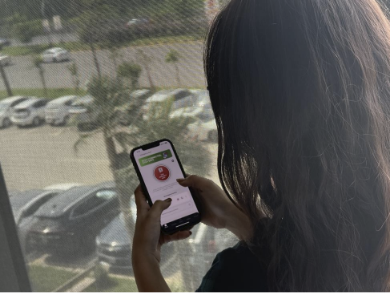
Understanding that safety isn’t just about technology, SIMOSA launched SOS, a free emergency tool that lets users share their location in real time and instantly notify trusted contacts. Despite being non-AI, this feature demonstrates SIMOSA’s dedication to comprehensive safety by empowering women to confidently manage risks both online and offline. The SOS feature has had 59K activations since it’s launch in 2025.
For Arfa, this feature carried personal meaning. As someone who often faced street harassment while taking public transport, SOS became more than a tool, it represented the peace of mind she once lacked.
AI for Inclusion
SIMOSA Chaat:
Access is the first step toward empowerment. SIMOSA Chaat is a chatbot that uses conversational language skills to help women with digital tasks and self-care. It supports English, Urdu, and Roman Urdu, and is being trained to be sensitive to cultural differences and steer clear of gender bias.
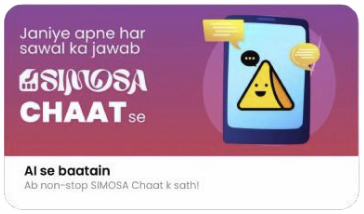
Research shows that AI can be a democratizing tool for women when designed inclusively and Arfa with her team ensures that biasedness is avoided by regular feedback sessions from all diversity and inclusion angles. SIMOSA is filling digital literacy gaps and fostering confidence by providing a warm, approachable AI companion one that reflects local realities instead of erasing them.
With collaborative effort, she and her colleagues are continuously overseeing the creation of AI-driven safety systems for Social+ and SIMOSA Chaat, customized for the local environment. These resources are not just features; they are tools of empowerment—designed to promote user autonomy, honor cultural nuances, and preserve women’s voices.
https://aimagazine.com/ai-strategy/girls-in-ict-day-the-need-for-equal-opportunities-in-tech
https://www.ft.com/content/7f0fbd7d-011a-448d-9d23-8a8db2006df4
https://www.itu.int/hub/2025/05/wtisd-25-gender-equality-in-digital-transformation/