


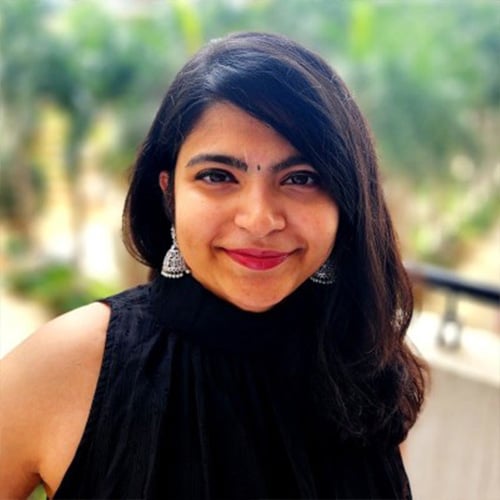
Building Systems, Communities, and Opportunities That Serve Everyone
As a GenZ, I am yet to have experienced a lot – personally and professionally – compared to many others but I have to an extent experienced every stage of AI’s recent transformation firsthand – from being one of the few women in an emerging AI degree, to navigating the uncertainty of the AI job market, to building inclusive AI systems, and now helping others adapt to an AI-first world. Along the way, one question has stayed with me: as AI reshapes the future, who gets included in building it, benefiting from it, and belonging in it?
The answer might be simple – “everyone” but some things are easier said than done.
In 2025, when Zootopia 2 had just come out, I recall watching a YouTube video of Molly Burke, a popular motivational speaker, activist, digital content creator and many more, titled “Why Did A Kids’ Movie Get Accessibility Right Before We Did?”. It talks about how the world of Zootopia was built to be accessible by creators of all familia, shapes and sizes without any questions asked, as if anything and everything that was done was by default accessible and inclusive. No add-on programs or initiatives that had to be created in order to reach everyone. Funnily enough, it was around the time when I was wrapping up a lot of inclusive AI work and the video made me smile. Before I get into more details on that, let me take you a few years back in the past – three years post Zootopia 1.
2019 – Starting AI Before It Was Mainstream
“Before it was mainstream” might not be the correct term, but it was around this time when everyone was starting to talk about “AI”. Everyone had come across the term in some capacity but majority of them did not know what it was or what it does. Often, “AI” was associated with fancy robots and gadgets. For a lot of folks, 2019 was a crucial year because GPT-2 had just come out. For me, it was an important year as I had to make a decision regarding which university and degree I wanted to join. Influenced by the buzzword thrown around, I decided to join one of the universities that was offering one of India’s very first Bachelor’s In AI degree while it is usually a specialization offered in postgraduate programs.
To my surprise, AI wasn’t all robots. There was more to it and it was thrilling to learn and understand the ocean of it. The even bigger surprise was, out of the 73 students in that first batch who were chasing behind the popular term, only 13 of us were girls. Absence of seniors and the small support group of us AI girlies made it hard to keep up or find someone who can relate with us and help us navigate the AI race.
2021 – Realizing Language Inclusion Matters in AI
This was the year we were introduced “Natural Language Processing” in our class. While playing around with different ideas for our semester projects and assignments, I came across the area of multilinguality in AI. My professor and institute actively worked and researched a lot in the space and over the first few classes, I happened to gravitate towards the subject as well. Coming from a country with diverse cultures and languages, I came to know that not a lot of the languages spoken in India were supported by a lot of the models that were out there. Some of the most spoken languages in India were also not supported or well supported by a lot of these models including my native language of Tamil and it made me feel a bit left out when trying out different use cases with multilingual models. This motivated me to pick up projects and work in the space of NLP, specifically multilingual AI.
2023 – Helping Others Navigate the AI Wave
2023 was the year of a lot of things. First, my entire batch had to come back to university as the world had begun healing from COVID but it happened to be at the same time as the placement season which meant that we had to get accustomed to being back in the classroom physically and facing companies in person as well. Given that we were the first batch in our stream, we had no idea what to expect but what we did know was everyone was trying to get on the same boat. Irrespective of which stream you came from, everyone wanted an AI job.
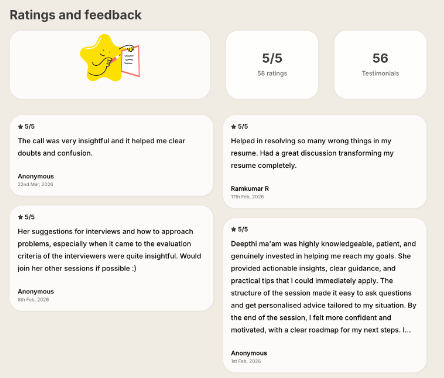
Two things happened then – I helped start the very first AI club of my university so that learning AI is accessible to all and secondly, I was stuck competing for the same roles as thousands of others from within my college and across colleges. I ended up landing a role with a Big 4, PwC India, and I helped built AI PoCs for clients. It taught me how to cater to the AI needs of di]erent clients based on their use cases, applications and requirements. While I was at it, I slowly started mentoring my juniors to help them navigate the job market, upskill themselves in AI and what started as a small initiative to help those in the stream that I graduated out of, ended up being something larger. Through word of mouth, I started mentoring everyone – students, early in career professionals and even senior leaders on how to upskill in AI and incorporate AI into their existing systems and workflows (only if required).
Note from 2026 me: I still continue to mentor every weekend and even somehow end up having my own “AMA Desk” at every networking mixer or event especially Women In Tech events and conferences where I end up guiding more folks and helping them on their journey than networking. Whew, the social battery that I need to prepare myself for!

ChatGPT came out around the time I wrapped up my internship and was about to transition into my full time job and everything changed. Everyone who wanted AI, suddenly wanted Generative AI even if their use case warranted it or not.
A couple of months post the launch of ChatGPT, I started my fixed term contract role at Microsoft Research India. In the first year, I was tasked with creating LLM based solutions to make a hybrid interaction platform not leave anyone present – physically or virtually present feel left out. It had to cater to the needs of anyone who wants to interact in the platform and the most important component of it all was the ethical and responsible AI side of things. It felt interesting and important to be a part of something that cared for the end users both from privacy as well as inclusion.
2024 to 2025 – Truly Inclusive AI
In my second year at Microsoft Research India, I worked predominantly with the Technology and Empowerment (TEM). I got to work in the intersection of Culture + AI, ASR and TTS (Automatic Speech Recognition and Text to Speech) for extremely endangered languages, AI in underrepresented communities, etc. and that is when I truly saw the gap that was there and that I was trying to help fill.
It started with a hackathon – actually two hackathons over the two years. In both of them, I was trying to work on training and aligning speech models on low resource and extreme low resource languages. In one of the hackathons, the team won the social impact award. The concept was simple yet powerful. With the help of our collaborators at Digital Green and Karya, we were trying to create a chatbot to help farmers that supports Swahili and Kikuyu in both text and speech modalities. It felt like I was back in my 2021 self but working on the problem in a larger scale with bigger impact.
The social impact and inclusive AI projects that I worked on started from there. I ended up working on different interesting problem statements with collaborators who truly cared for social impact as much as we did.
- UPDESH: Synthesizing Grounded Instruction Tuning Data for 13 Indic Languages. [ACL 2026 Main] [HuggingFace] [AIKosh]
- Agentic Framework for Culturally Grounded Visual Story Generation. [AAAI EGSAI 2026]
- Community-Centered Measurement of Cultural Appropriateness in AI Images [FAccT 2026][ACL EvalEval 2026]
- Position: To Make Text-to-Image Models that Work for Marginalized Communities, We Need New Measurement Practices for the Long Tail. [Preprint]
- ELR-1000: A Community-Generated Dataset for Endangered Indic Indigenous Languages. [IJCNLP – AACL 2025]
- What’s Not on the Plate? Rethinking Food Computing through Indigenous Indian Datasets. [MMFood 2025]
- Kahani: Culturally-Nuanced Visual Storytelling Tool for Non-Western Cultures. [COMPASS 2025]
It was great to work towards building systems or ways to fix systems from being biased towards specific cultures, communities, and languages or ensure they are not left behind!
2025 to 2026 – Impact All-rounder
“All-rounder” made me laugh especially with IPL (Indian Premier League – Cricket) running in the background. Fag end of 2025 was when a lot of my works with Microsoft wrapped up and I was transitioning into FinTech. A lot of the research work I did got submitted, accepted and rejected at top conferences. But the impact kept going strong.
The reason why I would call this period, “Impact All-rounder” is because as the name suggests, I saw impact in different ways.
- Social Impact: In the start of the year was when I did my on-field study for my agentic cultural visual storytelling work. The goal: We generated the financial stories that we generated with our culturally nuanced visual storytelling pipeline and went on-field to see if it helps people from rural communities learn personal finance. From the smile on their face when they heard that the AI stories had generated stories that they found relatable with – the characters, their appearances, the names of the characters, their occupations, their struggles was the first sign that we did something right! This study and project was done in collaboration with Karya. Before given the stories, Karya promised the participants compensation for reading the story out loud in order to get annotated speech data in the local language. Hence, not only did they tell us their takeaways on how they were going to save up, they earned money by learning how to save and the smile they had post the study interview when they were compensated for their e]orts and when they asked when they could do it again, we knew the direction we were heading was right!
- Research Impact: Our work on visual storytelling was ingrained in the minds of a lot of researchers especially in the HCI space that we happened to get opportunities to present our work in a lot of places and we knew our research had made good impact. Some of my other works like Updesh ended up garnering a lot of interest and we saw over 40K+ downloads across different channels by researchers interested in our multicultural and multilingual dataset!
- Community Impact: The above two opened many doors including opportunities like McKinsey’s Next Generation Women Leaders Program and GHCI (which I attended as an Advancing Inclusion Scholar) which in turn opened doors to many women in tech communities that I got to be a part of and where I got the wonderful opportunity to be an ambassador for some Women In Tech communities and even mentored early in professional women into navigating and landing AI roles in big companies! I am glad to have mentored over 100+ mentees till date from all backgrounds and work experiences and I am proud to continue guiding and helping one and all!
- Professional Impact: In 2026, for Women’s Day Celebrations, Google Developer Groups India featured me alongside incredible women. In their words, “Today, we celebrate five women who are scaling systems and ensuring no community is
left behind.” and I was glad to be one of them. - Personal Impact: The opportunities and learnings till date have been like no other. The amount of skills, technology, values that I have picked up along the way and that I continue to foster and nurture is endless. I am glad to be continuing the impact in every form and shape.
Conclusion
As I continue on my journey in creating in impact in every shape and form, my only wish is that like the world of Zootopia, we create AI that caters for everyone and we create opportunities and applications that help keep AI within reach of everyone.
If you have made it this far, I am proud and glad you were able to keep up with this long story, but our job is not done yet. It is just beginning.
To answer the question that I opened this long article with, I believe that everyone should be included and benefited as a part of this AI race, no doubt about that. It is also going to be difficult to please all, and that is okay. What matters most is that when designing technology and communities, inclusivity should be considered by default from the very start, not as an afterthought – building systems that are inherently accessible and beneficial to diverse communities from the very beginning, rather than retrofitting inclusion later through separate initiatives.