


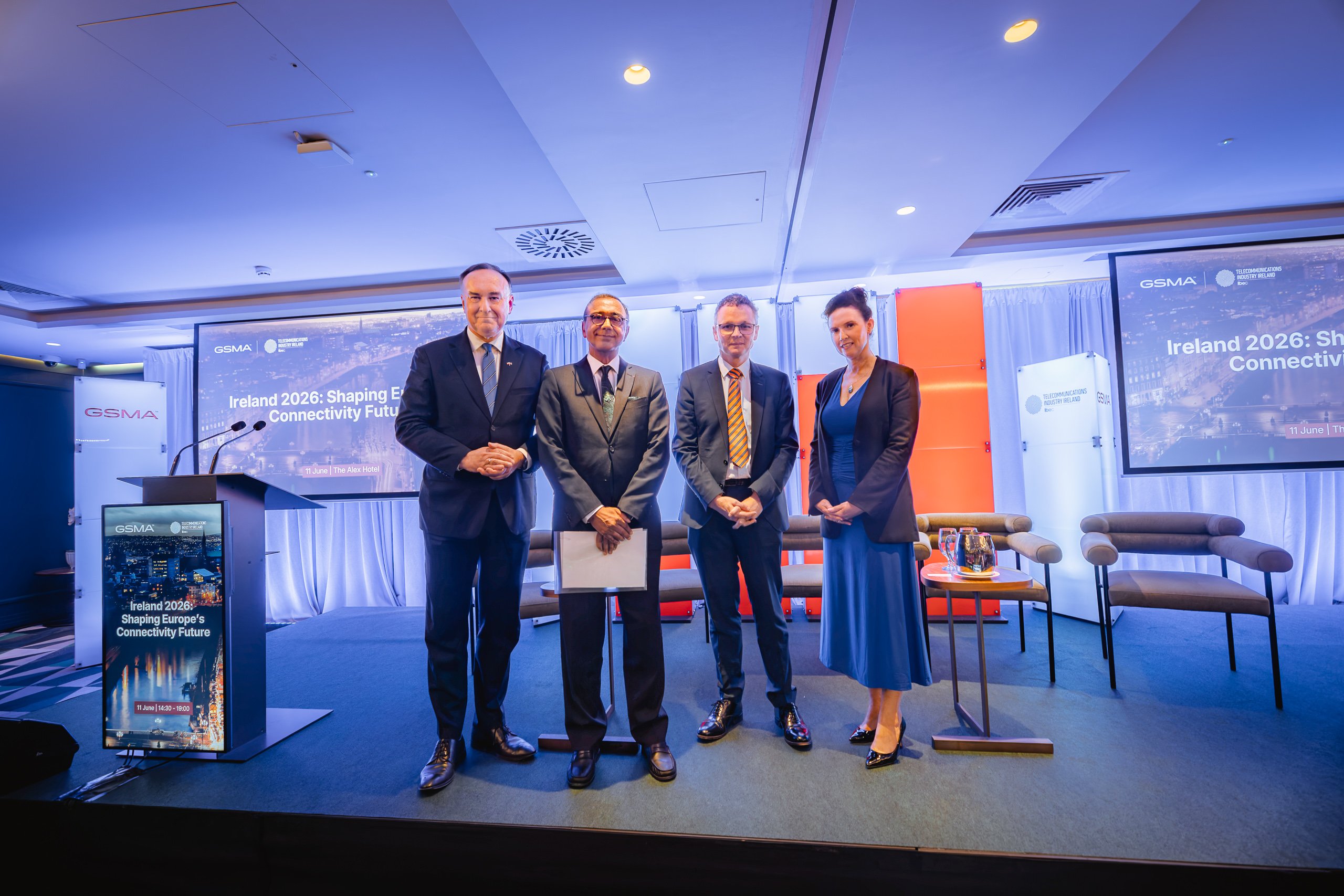
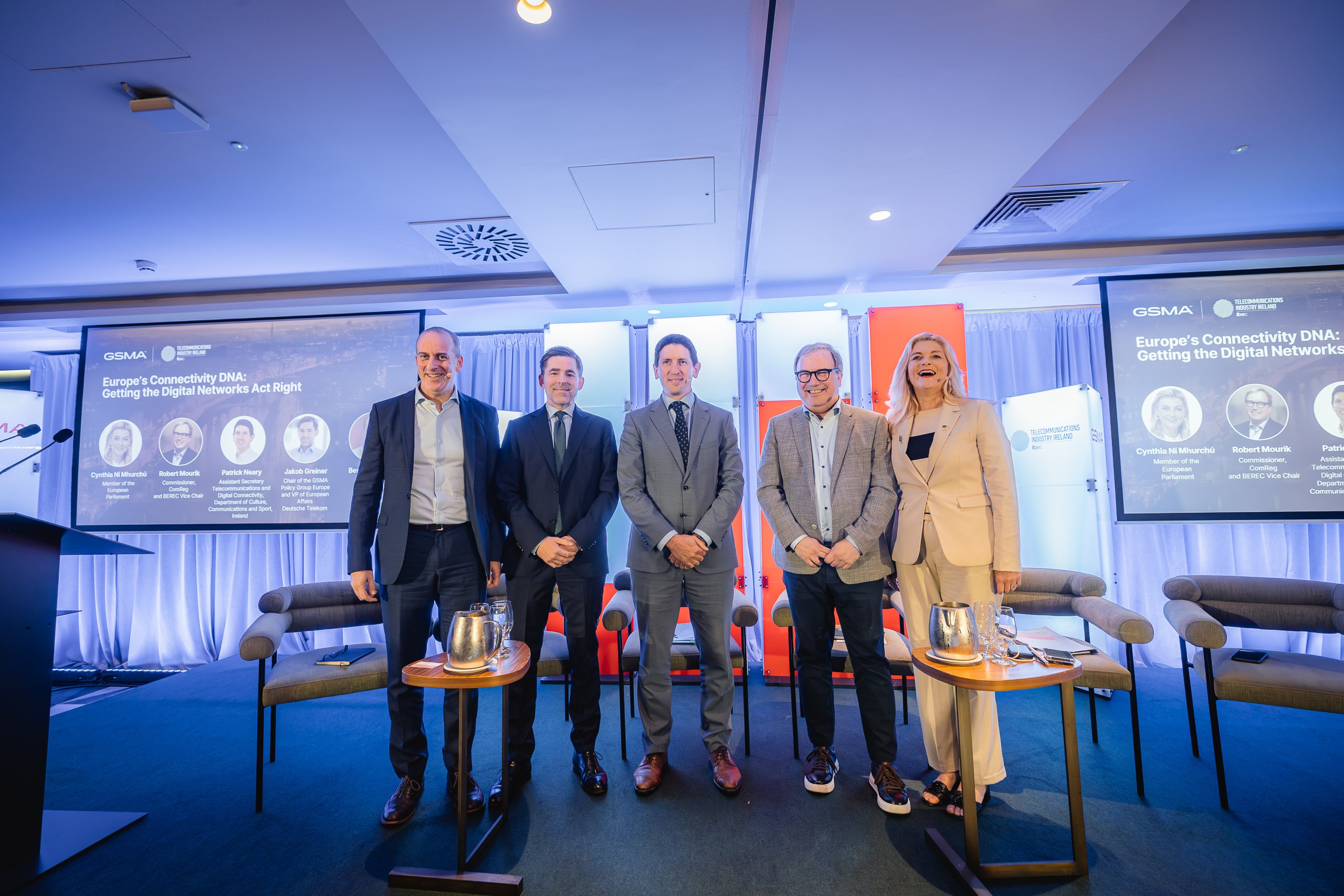





As Ireland prepares to assume the Presidency of the Council of the European Union, telecoms policy is moving to the centre of the European agenda. At a recent forum convened by the GSMA and Telecommunications Industry Ireland (TII), industry leaders, policymakers and EU representatives gathered in Dublin to discuss the proposed Digital Networks Act (DNA) and the wider future of Europe’s connectivity landscape.
Europe is at a strategic crossroads. Decisions taken over the next year will shape telecoms regulation and Europe’s competitiveness, innovation capacity and digital sovereignty.
Connectivity is strategic infrastructure
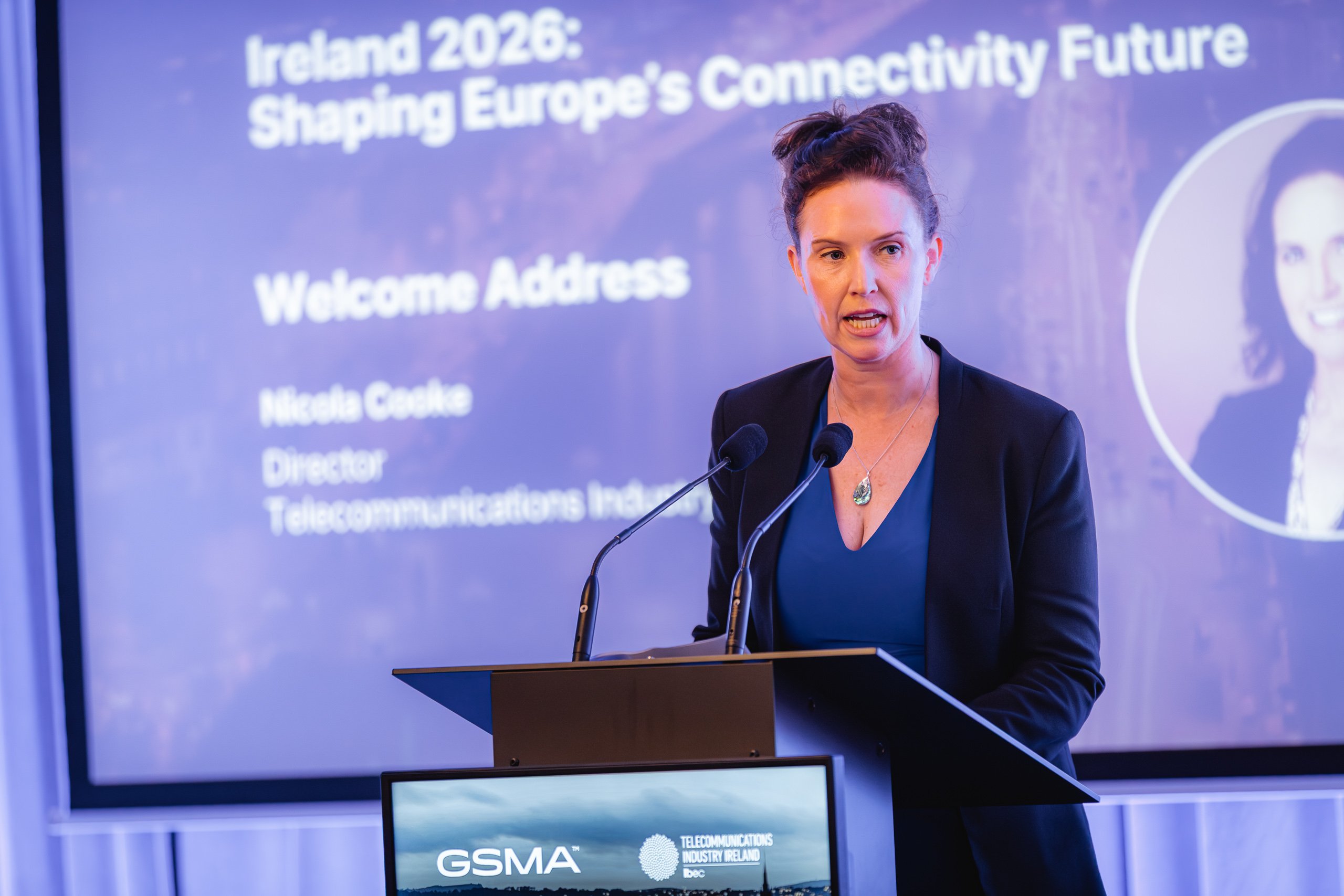
Opening the event, Nicola Cooke, Director of TII, argued that telecoms must be recognised as critical national and European infrastructure. That means creating a more enabling policy environment across Europe reducing unnecessary complexity, improving spectrum policy, balancing cybersecurity requirements, and building a clearer narrative around the value of connectivity for economic growth and societal resilience.
Europe’s regulatory framework is too fragmented
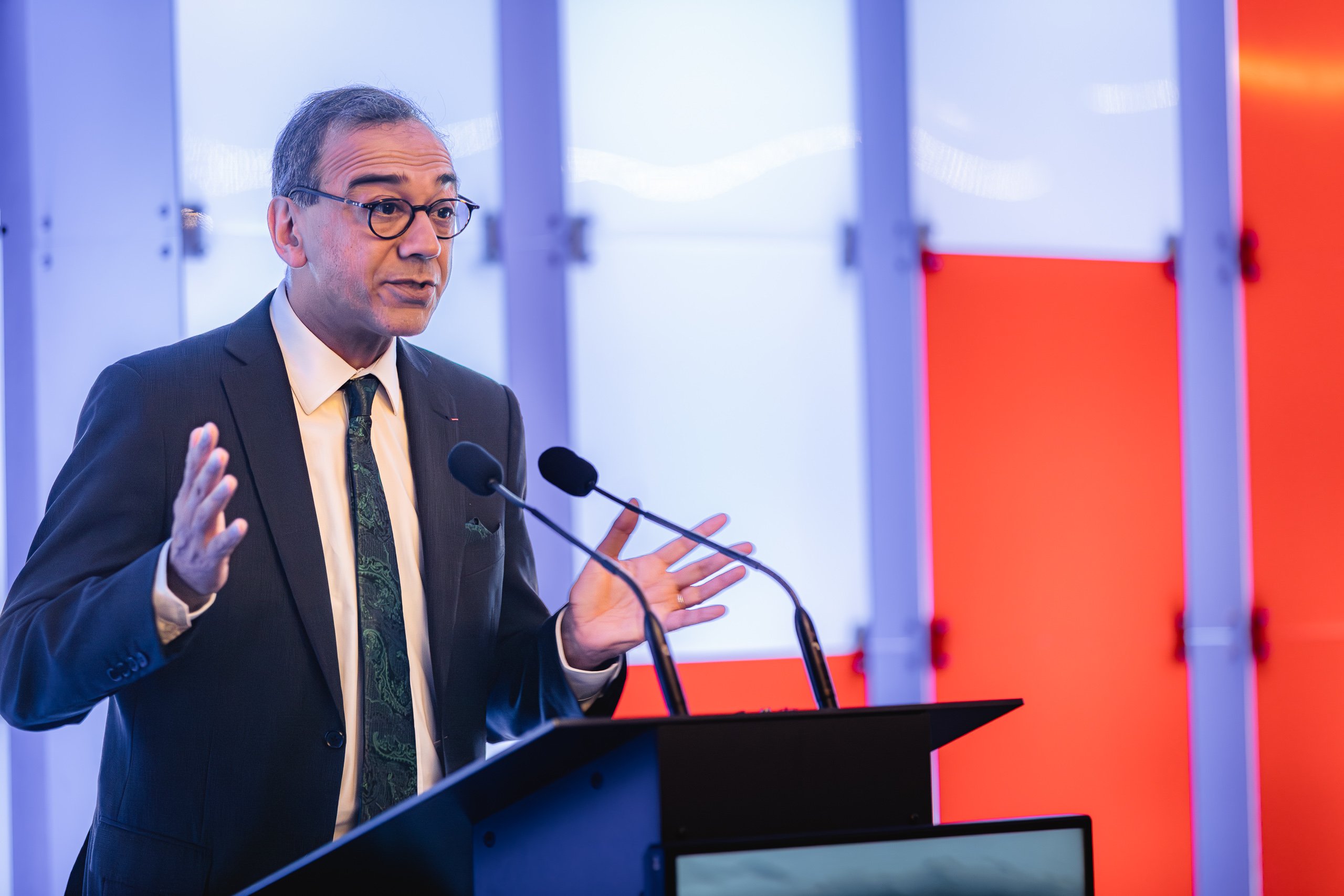
In his keynote, Vivek Badrinath, Director General of the GSMA, called for a more ambitious regulatory approach to create a true digital single market.
He highlighted several structural problems. Hundreds of spectrum licence renewals create administrative inefficiency and investment uncertainty. The sector faces a patchwork of 28 sector-specific regulations and dozens of reporting obligations. Current merger rules and market fragmentation limit operators’ ability to achieve scale.
Badrinath argued that smarter spectrum licensing alone could free up an estimated €30 billion over a decade for network investment. He also called for updated net neutrality rules that support innovation, a level playing field across the digital ecosystem, and a rethink of cybersecurity rules that may divert resources from network upgrades.
Ireland’s EU Presidency could become a defining moment
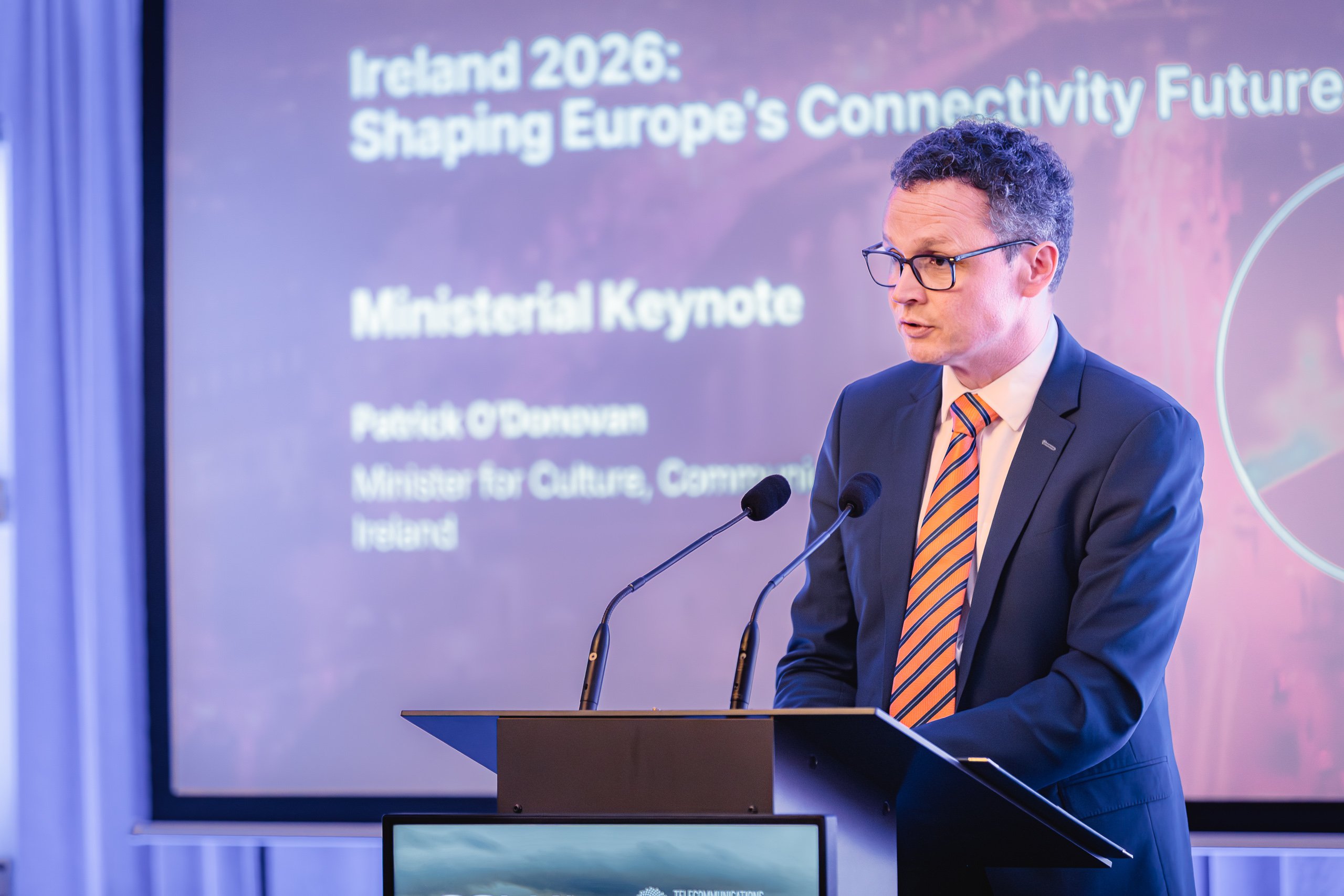
Patrick O’Donovan, Ireland’s Minister for Culture, Communications and Sport, described the upcoming Presidency as a defining period for digital policy.
While issues such as online safety, social media regulation and artificial intelligence will feature prominently, the DNA is expected to be a major priority. The Presidency’s ambition is to simplify rules, harmonise regulation across member states and strengthen the investment capacity of European digital players.
O’Donovan emphasised the need for faster legislative processes that can keep pace with technological change and market dynamics. That urgency was echoed repeatedly throughout the event: policy cycles measured in years no longer match the speed of digital innovation.
The next six months will shape the DNA
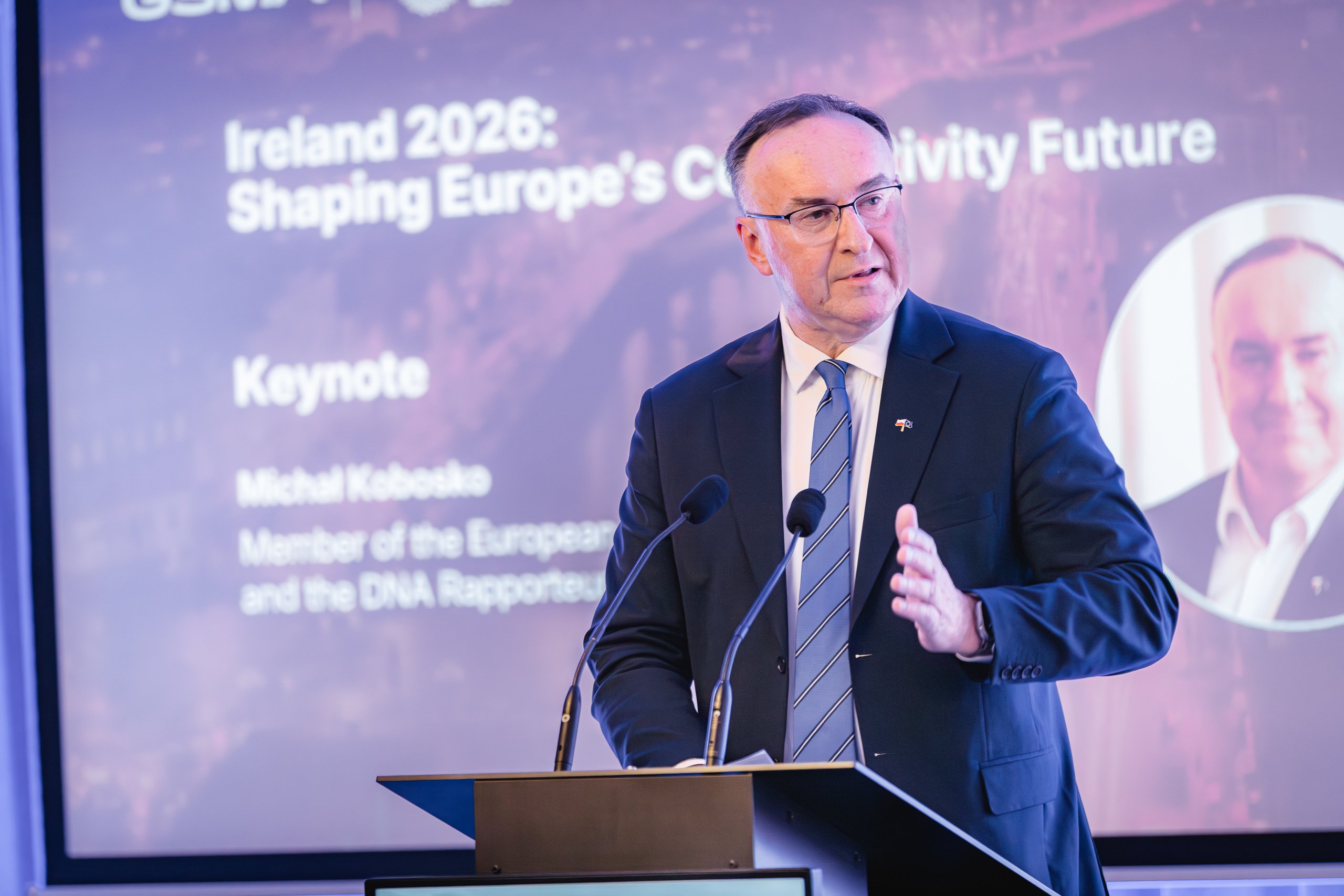
The clearest signal came from Michał Kobosko, Member of the European Parliament and Rapporteur for the Digital Networks Act.
He described the coming months as “crucial”, noting the tension between high expectations for reform and the more conservative instincts of some member states. His goal is to deliver a draft report in October, with several priorities at the centre of the work: simplifying rules and reducing reporting obligations; ensuring “same service, same rules” across the digital ecosystem; achieving real harmonisation across Europe; and positioning the DNA as an enabler of investment and innovation.
Investment certainty is the industry’s overriding concern
CEOs from Ireland’s mobile operators pointed to the industry’s economic importance and Europe’s investment gap relative to the United States. Capital expenditure per capita remains significantly lower in Europe, while operators face growing demands to deploy 5G, strengthen resilience and support AI-driven connectivity needs.
Several themes emerged repeatedly: regulatory certainty is essential for long-term infrastructure investment; spectrum policy remains central to unlocking 5G standalone deployment; overlapping cybersecurity obligations risk increasing costs without improving outcomes; and Europe’s fragmented market structure limits scale and efficiency.
The second panel broadened the discussion to the wider digital rulebook, including the Digital Markets Act (DMA) and Digital Services Act (DSA). Participants argued that Europe needs a more coherent “connectivity union” approach, with clearer guidance from the European Commission and more streamlined processes across member states.
There was also a growing consensus that net neutrality rules may need to be updated to accommodate new network capabilities and innovative services without creating legal uncertainty.
The event closed with a sense of both opportunity and urgency. Ireland’s Presidency arrives at a moment when Europe is reassessing its industrial competitiveness, strategic autonomy and digital future. Telecoms networks sit at the heart of all three. There was a clear alignment across industry and many policymakers on the direction of travel. Simplification, harmonisation and investment predictability are increasingly framed as prerequisites for Europe’s wider economic competitiveness.