As Europe approaches a critical period for digital competitiveness, the conversation underscored a clear imperative—spectrum decisions made in 2026 will heavily influence Europe’s network capacity, investment climate, and leadership in 5G, 5G-Advanced, and 6G. This was the key message at GSMA Europe Winter Reception on 9 December.
The event brought forward a robust set of insights and recommendations from policymakers, industry leaders, and researchers. Together, they outlined what Europe must prioritise to build sustainable, future-proof connectivity ecosystems.


Setting the stage: Timely, harmonised, investment-friendly spectrum decisions
In his opening remarks, Laszlo Toth, GSMA’s Head of Europe & CIS, emphasised that Europe’s digital future will hinge on spectrum policies that deliver timeliness, harmonisation, and investment certainty. Without predictable and coordinated decision-making across Member States, Europe risks slower network rollouts, fragmented innovation trajectories, and higher costs for consumers and businesses alike.
Streamlining procedures to reduce fragmentation and unlock investment
MEP Pilar del Castillo highlighted the growing need to avoid over-regulation and national divergence. She called for streamlined spectrum assignment processes and simplified licence renewals—measures that would materially reduce administrative burdens and accelerate deployment cycles. According to her intervention, reducing unnecessary fragmentation is essential not only for investment incentives but also for ensuring networks can scale to meet rising societal and industrial demands.
The road to 6G: Intelligent networks require more spectrum
Thibaut Kleiner, Director, Future Networks, DG Connect, underscored an important shift: mobile networks are rapidly evolving from connectivity layers into intelligent, integrated platforms that will support automation, real-time systems, and distributed computing. This evolution will require significantly more spectrum. With 6G expected to need up to three times the spectrum allocated today, Europe must begin preparing additional bands and harmonisation frameworks now to stay globally competitive.
Economic evidence: Renewal policies could unlock €30 billion in investment


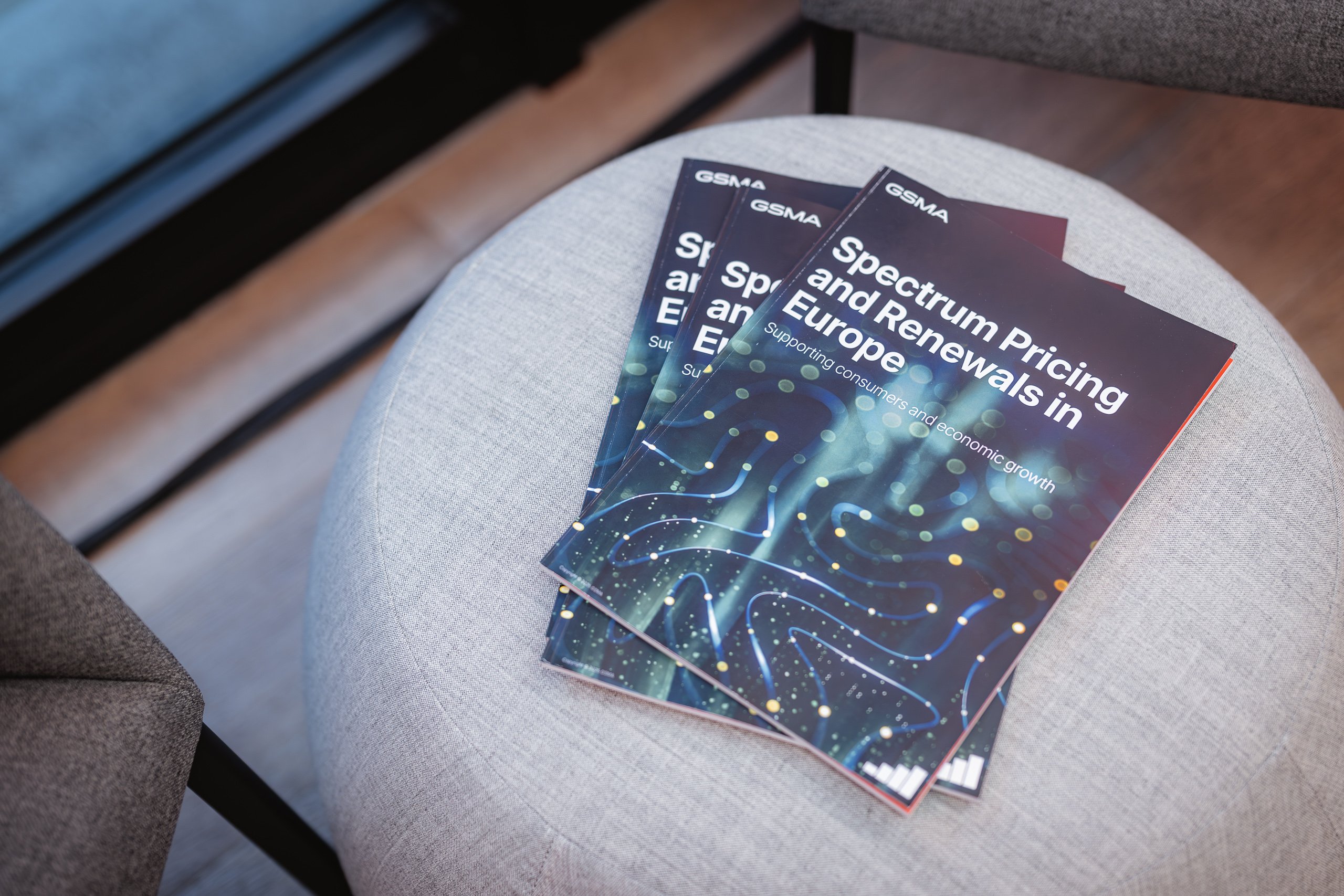
Presenting new findings from the report Spectrum Pricing and Renewals in Europe, Kalvin Bahia from GSMA Intelligence demonstrated the tangible economic impact of more investment-friendly spectrum policies. The analysis shows that forward-looking renewal frameworks could unlock €30 billion in additional investment—sufficient to upgrade all existing European 5G networks to standalone architecture (5G SA). The resulting productivity gains could add €75 billion to Europe’s GDP over the next decade, reinforcing the link between spectrum policy, economic growth, and digital competitiveness.
Watch the report presentation:
Predictability, longer licences, and the path to EU 6G leadership









In a panel moderated by GSMA’s Luiz Felippe Zoghbi, experts Gerasimos Sofianatos (Head of Unit – Radio Spectrum Policy, DG Connect), Julia Inmaculada Criado Casado (RSPG Vice Chair), Eiman Bushra Mohyeldin (Head of Spectrum Standardization, Nokia), and Giacomo Robustelli (VP, European Affairs, TIM) examined how the Digital Networks Act (DNA) could catalyse more coherent and investment-friendly spectrum management across Europe.
Key points included:
- Longer licence durations, such as the model recently implemented in Spain, provide much-needed predictability and lower investment risk.
- Stable, transparent assignment and renewal processes are essential for ensuring that operators can plan multi-billion-euro investments with confidence.
- Technical harmonisation of additional bands, including the upper 6 GHz, will be crucial to scale capacity for emerging 5G-Advanced and future 6G use cases.
- The EU has a genuine opportunity to secure global leadership in 6G, provided spectrum frameworks advance in step with the technology roadmap.
A forward-looking debate at a pivotal moment
Europe’s ability to remain competitive in the global digital economy depends on decisive spectrum policy in the coming years. Timely renewals, harmonised approaches, investment-oriented pricing, and long-term predictability are not administrative choices—they are strategic levers for growth, resilience, and technological leadership.