


Monday 6 July, 2026
This report examines France’s FR-Alert and demonstrates how effective collaboration between governments and mobile network operators (MNOs) can strengthen early warning systems (EWS) worldwide.
The national FR-Alert system represents significant modernisation of the country’s EWS. In response to the 2018 European Union directive mandating all Member States to implement national EWS with mobile alerting capabilities, France transitioned from traditional siren-based alerts to a comprehensive mobile-based alerting mechanism.
The success of this system is largely attributed to the instrumental role played by MNOs, who have collaborated closely with public authorities from the outset to – design, build and deploy the system. MNOs are responsible for maintaining the core infrastructure, conducting system upgrades and ensuring interoperability across networks.
France’s EWS utilises a combination of cell broadcast (CB) and location-based SMS (LB-SMS) technologies, ensuring timely and reliable alerts reach populations across both mainland and overseas France.
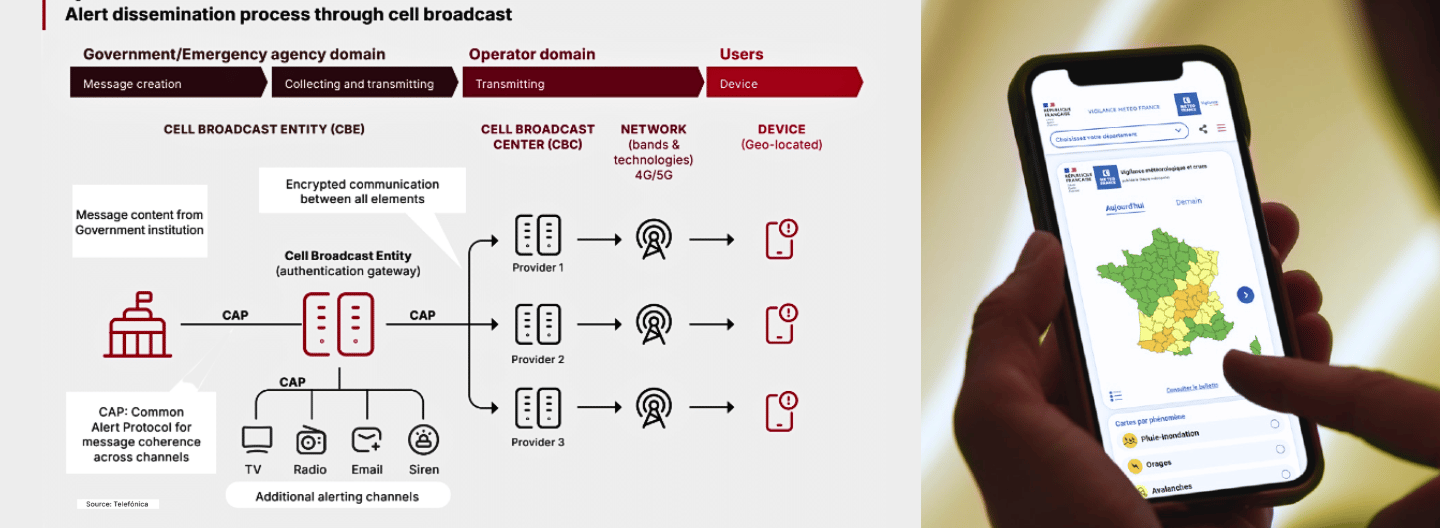
Based on insights from FR-Alert, the report identifies 10 key considerations for effective MNO engagement in mobile-based early warning systems. These lessons are aimed at government agencies, policymakers MNOs and humanitarian actors and donors seeking to enhance national early warning capabilities through effective public-private collaboration.
Download the full report below in English or French languages, and explore how mobile-enabled alerts can transform emergency response and save lives.
