


Governments continue to take a keen interest in the interplay between mobile and satellite: the technology path of D2D can help fulfil policy goals for regulators and politicians, offering a wide coverage layer for people with mobile handsets. The message at the GSMA Ministerial Programme – the policy wing of MWC Barcelona – was upbeat on its impact but emphasised that thorough and realistic understanding of the strengths and limits of D2D is vital to maximising the benefits of space/terrestrial convergence.
D2D remains a fast-moving area. Head of GSMA Intelligence, Peter Jarich, and SpaceX VP for Satellite Policy, David Goldman both discussed the rapid evolution of the technology. Goldman explained that SpaceX expects development through multiple iterations of the service offering and believes in the importance of reaching scale, saying: “Our ultimate goal is to make sure everyone on Earth has access to coverage, and we want to get there as quickly as possible.” Jarich highlighted the physical limitations on D2D compared to terrestrial networks – in terms of spectrum re-use and high free space path loss – but underlined the role for D2D in areas of very low or no population density. “What we’ve built with terrestrial mobile networks is a great amount of spectrum re-use, and a great ability to leverage those spectrum assets,” he said. “D2D technology has moved at such a rapid pace, and I think we’re all amazed at what’s possible now. But then solving some of those other issues is critical.”
Spectrum management
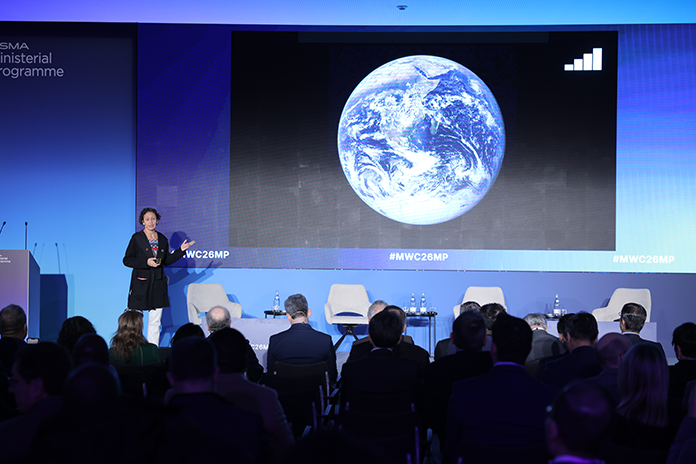
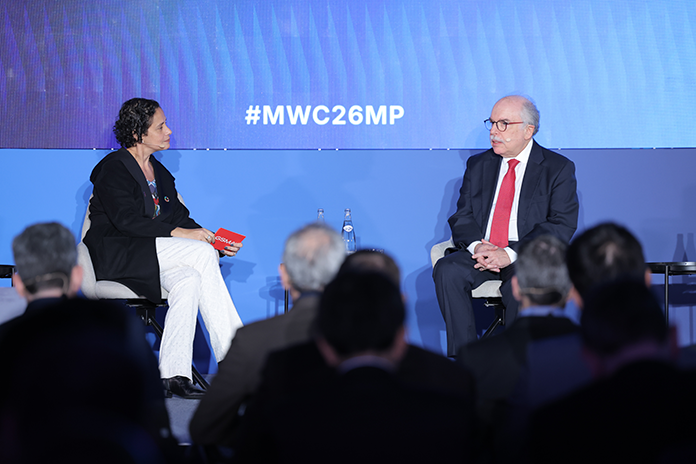

ITU-R Director Mario Maniewicz discussed the role of international frameworks and spectrum harmonisation, and their impact on digital impacts. “Affordability is a precursor to accessibility,” he said. “Spectrum management remains central. Whatever spectrum is going to be used has to be compliant with the Radio Regulations.”
Maniewicz pointed out the complex work being carried out through the WRC process to ensure that new mobile satellite services using terrestrial mobile (IMT) spectrum do not interfere with the very services they are designed to supplement. “Using IMT spectrum bands signals a significant shift with large technical and regulatory challenges – harmful interferences, both co-channel and adjacent-channel interference, and cross-border – and the aggregation of satellite interference adds to this,” he said.
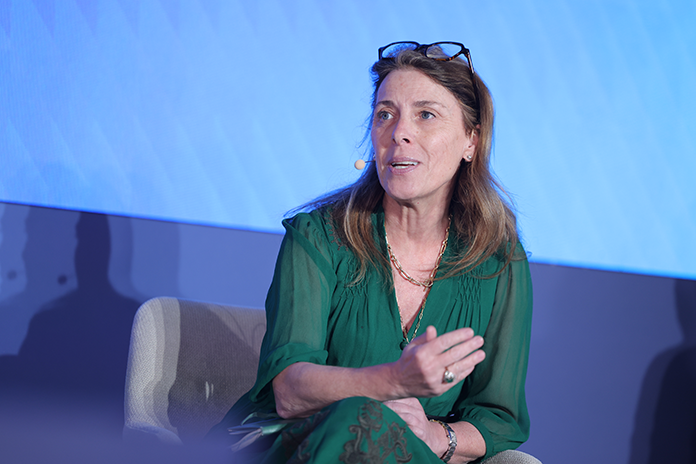
Satellite and mobile representatives both agreed that whether D2D uses satellite or mobile spectrum will ultimately not be of interest to consumer and business customers. Hybrid services are likely, meaning operators and governments will need to ensure both models are properly regulated. “The user is going to be the decider on the success of D2D,” said GSOA Secretary General Isabelle Mauro. “The two main factors are ease of use and affordability.”
Satellite and mobile partnership
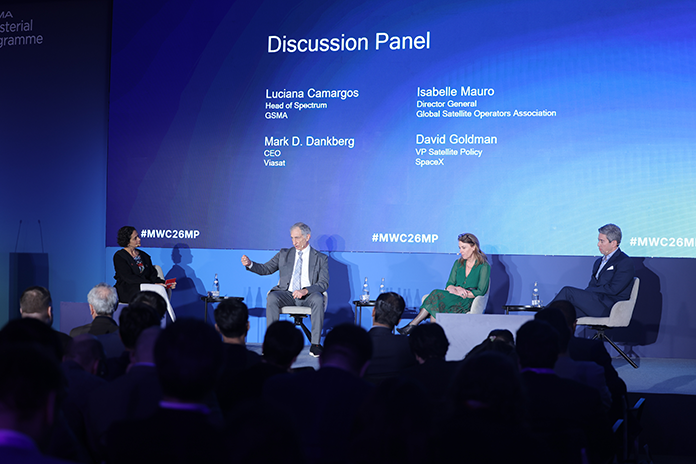
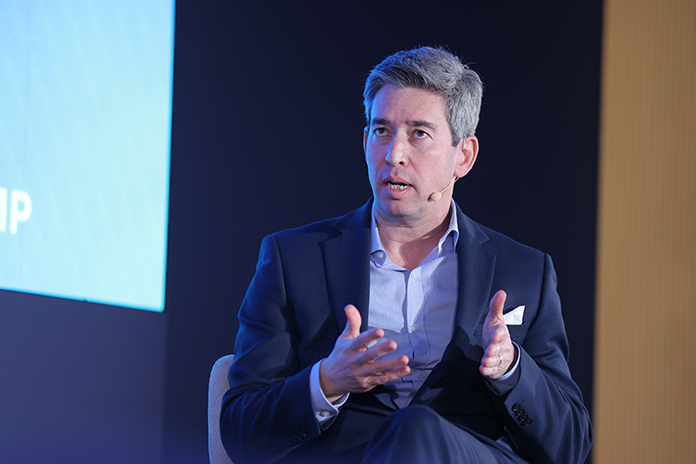
“Viasat’s vision [for D2D] is to have a service that augments and perfects terrestrial,” said Viasat CEO Mark Dankberg. The business relationship between satellite and mobile was a common discussion during the Ministerial Programme. Isabelle Mauro echoed this: “GSOA sees satellite as a means of extending coverage and bringing coverage to areas where, economically, it is not viable for terrestrial”. David Goldman, meanwhile, implied that this partnership is a business advantage. “We want to work with mobile operators because it’s the fastest way to augment service,” he said.
Satellite experts all spoke of the need to ensure that the correct regulation is in place. “Satellite is a powerful tool for good but a dangerous tool if not aligned with national policies,” said Mark Dankberg.
The cautious positivity was summarised by Mario Maniewicz: “There will need to be partnerships forged between satellite operators and mobile operators, but everything is ready for this and the right decisions at WRC can make it happen.”
Read more takeaways from the Ministerial Programme here.