


The GSMA Ministerial Programme convened policymakers, regulators, industry leaders and international organisations to confront a shared reality: the digital economy has entered a new strategic phase. Connectivity is no longer just infrastructure — it is a geopolitical asset, a driver of economic competitiveness and a pillar of societal resilience.
Across the week’s discussions, three themes consistently emerged: the growing geopolitical dimension of digital policy, the scale of investment required for the next generation of infrastructure, and the challenge of maintaining trust and security in an increasingly complex digital ecosystem.
Digital policy in a more geopolitical world
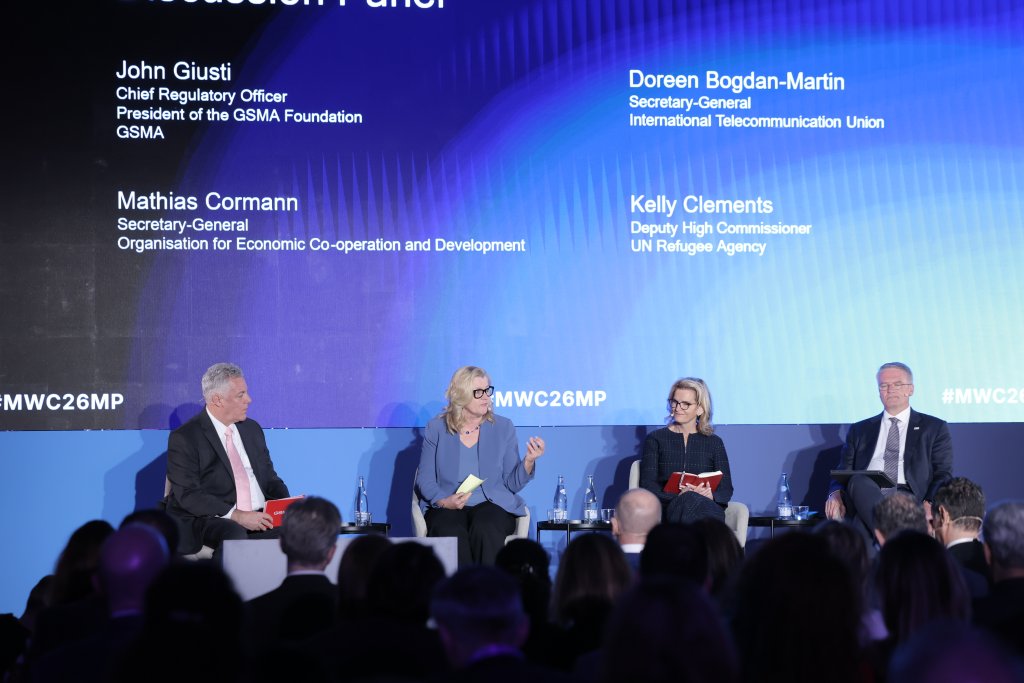


One of the clearest messages from the programme was that digital policy is now inseparable from geopolitics. Governments are increasingly focused on reducing dependencies in critical technologies while strengthening their capacity to shape the rules of the digital economy.
European policymakers emphasised the need for strategic autonomy in areas such as connectivity, cloud and semiconductors. The discussion around the proposed Digital Networks Act (DNA) illustrated this shift. The DNA aims to address fragmentation in Europe’s telecom markets and move closer to a genuine single market for connectivity — something many participants noted has yet to materialise.
At the same time, speakers stressed that sovereignty does not mean isolation. Achieving technological leadership still depends on global scale, open standards and international collaboration. The challenge for policymakers is to balance strategic control with the benefits of interconnected global ecosystems.
Similar themes emerged beyond Europe. Governments highlighted the importance of digital infrastructure for economic security, resilience and crisis response, alongside investments in emerging technologies such as artificial intelligence (AI) and quantum computing. Across regions, digital infrastructure is increasingly seen as a strategic national asset.
Investment at inflexion point



If competitiveness is the challenge, investment is the enabling factor.
Participants repeatedly pointed to the scale of capital now being deployed across the digital ecosystem. Technology companies are investing tens of billions of dollars in AI infrastructure and data centres, while telecom operators continue to expand fibre and 5G networks and explore new services such as edge computing.
Yet this investment landscape is also becoming more complex. The future digital infrastructure stack will combine connectivity, compute and cloud in ways that require closer coordination between sectors that historically evolved separately.
Several countries showcased long-term national strategies to align public policy with private investment. These included initiatives focused on digital infrastructure planning, sustainability in data centres and the development of skilled workforces capable of supporting new technologies.
However, a recurring message from industry was that investment ultimately depends on regulatory certainty and predictable policy frameworks. Spectrum policy, licensing models and regulatory simplification all play a decisive role in shaping the business environment for digital infrastructure.
The global race to build the next generation of digital infrastructure is already underway — and the policy environment will determine which regions succeed in attracting capital.
Protecting trust in the digital ecosystem



Cybersecurity threats and online scams are growing rapidly, with criminal networks increasingly exploiting digital platforms and communications technologies. The financial impact alone is staggering, with global scam-related losses reaching hundreds of billions of dollars annually.
Telecom operators, technology companies, financial institutions and law enforcement agencies are all stepping up their efforts to combat these threats. Initiatives such as AI-driven fraud detection, cross-platform data sharing and coordinated law enforcement operations are already delivering tangible results.
However, participants stressed that the scale and complexity of the problem require deeper multistakeholder cooperation. Scammers operate across borders and sectors, making coordinated international responses essential.
Equally important is the need to balance effective enforcement with privacy protections and regulatory harmonisation. Without aligned legal frameworks, cross-border cooperation becomes significantly more difficult.
The discussions also highlighted a broader issue: resilience. As societies become increasingly dependent on digital infrastructure, protecting networks from cyberattacks, system failures and geopolitical disruptions is becoming a core national priority.
A defining moment for digital policy
The Ministerial Programme made clear that the digital economy is entering a decisive phase. Connectivity, compute, and data infrastructure are becoming central to economic competitiveness, national security and societal wellbeing.
The policy choices made in the coming years will shape whether digital ecosystems remain open, innovative and globally interconnected — or become increasingly fragmented along geopolitical lines.
What emerged from the discussions was the need for balance: between sovereignty and cooperation, between regulation and innovation, and between speed and security. Striking that balance will define the next chapter of the global digital economy.
The GSMA Ministerial Programme will be back to MWC Kigali from 16-18 June, and MWC Doha from 8-11 November.