


The next decade presents an opportunity in spectrum management. With over 1,500 licences due to expire globally, regulators can ensure long-term investment in mobile networks by reconsidering the basis on which they are made. The GSMA’s Rethinking Spectrum Renewals report showcases the policy choices available to make investment-oriented decisions as these spectrum licences are renewed.
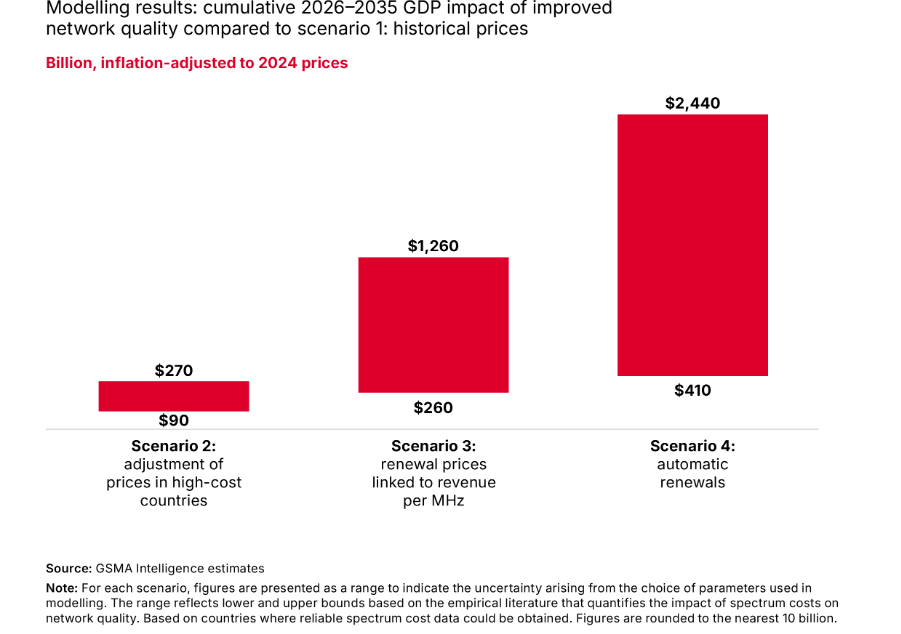
A $410 billion opportunity
When spectrum costs do not reflect the underlying value of spectrum – for example if they are anchored to outdated historical price benchmarks – they can distort operators’ incentives to invest in their networks. Conversely, aligning spectrum costs with commercial value ensures that operators maintain the financial capacity to invest. This enables continued network upgrades, improving coverage and speeds. Better networks improve consumer experiences and support wider economic growth.
Rethinking Spectrum Renewals examines three potential approaches to pricing spectrum at renewal and shows how each could affect network investment, consumer outcomes and the wider economy:
- Maintain historical prices or use outdated benchmarks: Renewal prices remain based on what spectrum cost in the past, rather than reflecting its current commercial value. This can keep spectrum costs artificially high and reduce the benefits that the spectrum can deliver.
- Adjust prices to reflect current commercial value: As operators now generate less revenue from each unit of spectrum, renewal prices are reduced accordingly. This could bring spectrum costs down to 5% of operator revenue, supporting investment that could increase network speeds by up to 10% and add at least $260 billion to global economic output.
- Renew licences without additional spectrum charges: Regulators renew existing spectrum licences without requiring operators to pay an additional renewal fee for the spectrum. This could increase network speeds by up to 20% and deliver at least $410 billion in economic benefits.
From commitments to indefinite tradeable licences – different approaches exist
Beyond rationalised pricing, there are other ways that regulators can approach renewals. Instead of charging a renewal fee, for example, operators could commit to further network investment or improvements in service quality, helping extend connectivity and support goals such as digital inclusion and regional development. Another option is to move away from periodic renewals altogether, converting licences into indefinite, tradeable rights that give operators greater certainty while allowing spectrum to move to higher-value uses over time.
Whichever approach is chosen, good design matters. Investment commitments need to be proportionate and flexible. More broadly, renewal frameworks should recognise not only the value of spectrum itself, but also the wider social and economic benefits that continued investment in mobile connectivity can deliver.
The benefits of proportionate obligations
Besides setting spectrum prices, regulators also place obligations on spectrum licences, aiming to maximise the value of spectrum or achieve specific policy goals. However, these obligations can be burdensome on the licence holder and could lead to higher regulatory costs or inefficient investments, potentially resulting in returned spectrum. The takeaway is that obligations that are set too high can impose costs that outweigh their benefits, reducing investment, increasing regulatory burdens and potentially leaving spectrum unused.
Well-designed obligations can help turn spectrum policy objectives into better connectivity outcomes. Clear objectives make it easier to design proportionate requirements, while flexibility and the right incentives can give operators room to deliver them efficiently. This helps governments pursue connectivity goals without creating unnecessary costs or discouraging investment and spectrum uptake.
Shaping tomorrow’s connectivity landscape
The wave of spectrum renewals over the coming decade gives regulators an important opportunity to rethink how renewal policy can support investment and maximise the value of spectrum for society. By adopting predictable, proportionate and investment-friendly approaches, governments can help deliver better networks, stronger connectivity and potentially hundreds of billions of dollars in wider economic benefits.
Read more in Rethinking Spectrum Renewals and our Public Policy Paper.