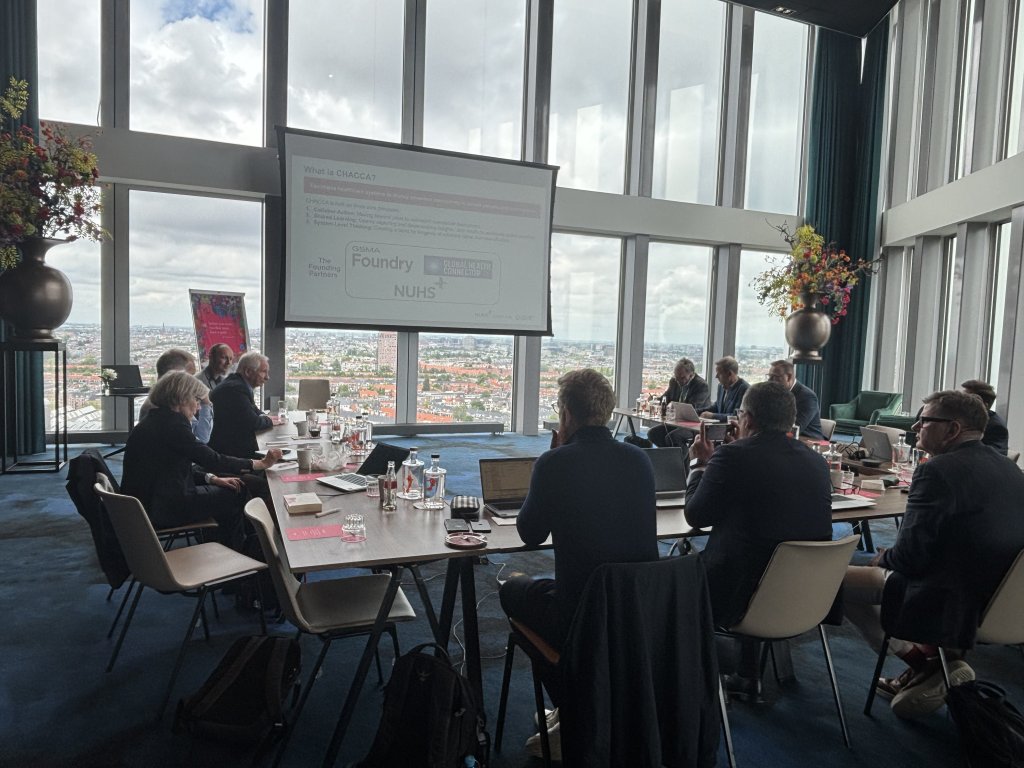
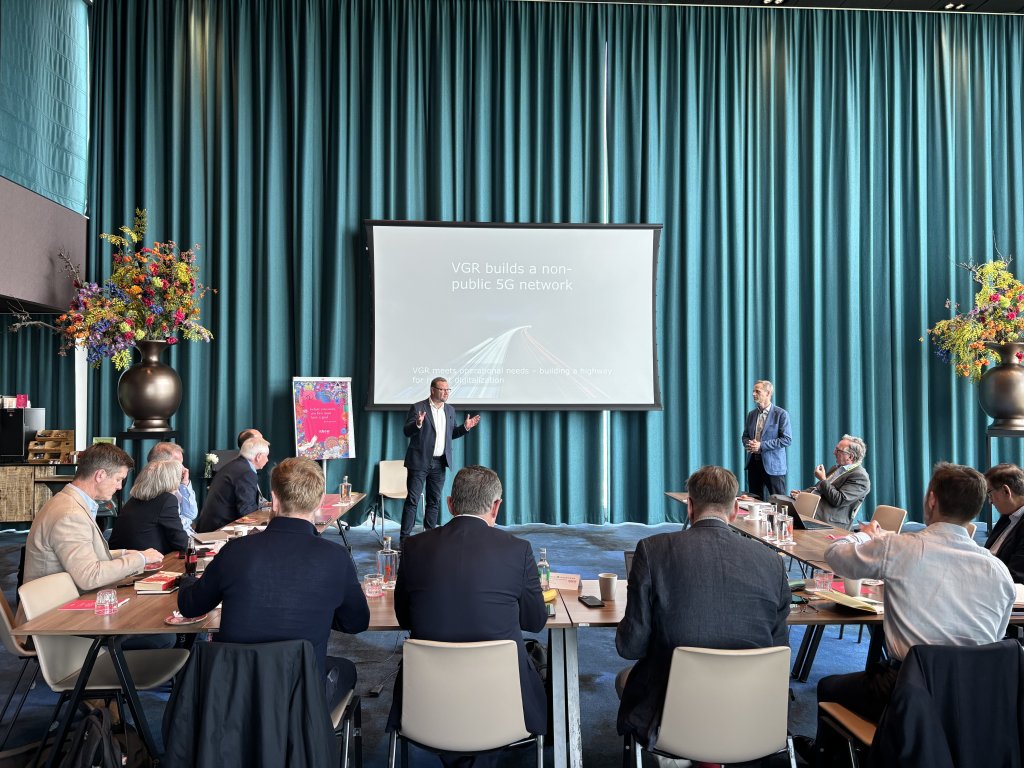
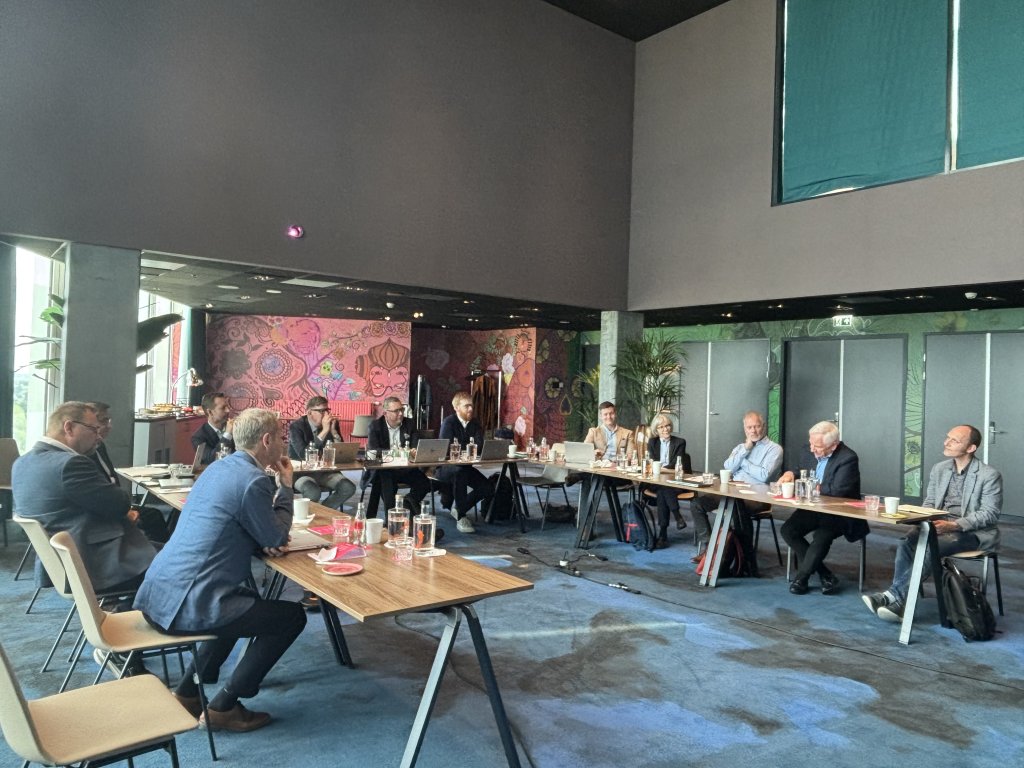
Healthcare systems around the world are no longer asking whether advanced connectivity can improve care delivery. The question now is how to scale what already works.
That was the central theme of the Connected Healthcare Executive Roundtable hosted by GSMA and Global Healthcare Connector (GHC) in Amsterdam on 15 June 2026, where healthcare leaders, operators, clinicians, technology providers and ecosystem partners gathered to focus on one challenge: moving from isolated innovation projects towards repeatable, system-level deployment models.
Held alongside the wider healthcare innovation activity taking place across Amsterdam during HLTH Europe, the roundtable created a focused environment for practical discussion, peer exchange and collaboration. The emphasis throughout was clear: healthcare does not need more disconnected pilots. It needs scalable frameworks, proven deployment pathways and stronger collaboration between healthcare systems and the connectivity ecosystem.
The session brought together perspectives from hospitals, operators and innovation leaders already implementing connected healthcare solutions in live clinical environments. Discussions explored how technologies such as private networks, AI-enabled workflows, XR-supported clinical collaboration, connected ambulances and intelligent asset tracking are beginning to shift from experimentation towards operational reality.
Scaling What Works
The roundtable was structured around a simple but important premise: proven deployments already exist, but replication remains difficult.
Opening discussions from GSMA, and GHC, the Connected Healthcare and Community Care Accelerator (CHACCA) focused on the growing gap between healthcare innovation and scaled deployment. Participants examined why many successful healthcare technology initiatives remain confined to individual hospitals or regions, despite demonstrating measurable operational and clinical value.
Rather than focusing on future concepts alone, the discussion centred on practical implementation lessons:
- What can already be replicated today?
- Which deployment models are transferable across healthcare systems?
- What must be standardised to accelerate adoption?
- Which partnerships are required to scale successfully?
This implementation-first approach shaped the entire session.
Real-World Deployments Take Centre Stage
A key part of the roundtable was the “Art of the Possible” session, which grounded the discussion in operational deployments already taking place across healthcare systems.
Stockholm: Integrated Connected Healthcare Systems
Representatives from Stockholm shared how advanced connectivity is being embedded into everyday healthcare operations, demonstrating how digital infrastructure can support more connected, responsive, and efficient care delivery. One example discussed was the use of connected ambulances, where real-time patient data, diagnostics, and video feeds can be securely transmitted to hospital teams before arrival, enabling clinicians to prepare treatment plans earlier and improve response times for critical cases.
The discussion also highlighted the challenges of integrating advanced connectivity solutions into existing hospital IT environments. At the same time, it demonstrated how carefully planned deployment models can strengthen coordination between emergency services, hospital teams, and digital systems, ultimately improving operational efficiency and supporting better patient outcomes.
Frederik Engströmer, Head of Innovation- Region Stockholm highlighted concerns around the limited availability and adoption of IoT devices in healthcare, noting that this is an area where greater industry focus and promotion are needed. He also emphasised the opportunity to bring AI and 5G together more effectively, given the growing number of healthcare use cases that combine both technologies. The discussion explored how the industry can better demonstrate, deploy, and scale AI- and 5G-enabled healthcare solutions to deliver greater clinical and operational impact.
Göteborg: Private Network-Enabled Healthcare Innovation
Göteborg’s contribution focused on the role of private networks within hospital environments and the operational benefits emerging from advanced connectivity deployments. One example discussed was the use of drone-enabled delivery of defibrillators, where advanced connectivity supports rapid dispatch, tracking, and coordination with emergency responders, helping critical equipment reach patients faster during cardiac emergencies.
Participants explored how dedicated connectivity environments can provide the reliability, security, and performance required for healthcare applications, while also examining the operational and partnership models needed to make these deployments repeatable across healthcare systems.
Dr. Mikael Edsbagge, Senior Consultant and Department Head of Neuro-medical Care, and Digitalisation Strategist described the roundtable as a highly engaging and insightful experience. He particularly appreciated the opportunity to deepen his understanding of 5G and its potential role within healthcare, including the benefits it can deliver for clinicians, patients, and healthcare systems. The discussions offered valuable perspectives on how 5G can be combined with technologies such as AI, XR, and digital health platforms to support more connected, efficient, and patient-centred models of care. He noted that, from a clinical perspective, exploring how these technologies can work together to enhance healthcare delivery was both valuable and inspiring.
NUHS Singapore: Building a System-Scale Deployment Model
GSMA also shared insights from its ongoing collaboration with the National University Health System (NUHS) in Singapore, highlighting how connected healthcare initiatives can be scaled across complex healthcare environments and ecosystem partners. Drawing on real-world examples from the partnership, the discussion explored applications such as XR-based clinical training and simulation, digital twins, and immersive technologies that support healthcare education, operational planning, and patient care.
Participants explored how these technologies in combination with advanced connectivity are increasingly being integrated into clinical and educational environments, not as standalone innovations, but as part of wider transformation programmes.
Collaboration Becomes the Core Discussion
While technology was central to the discussion, the roundtable repeatedly returned to one conclusion: connected healthcare cannot scale through technology alone.
The moderated executive discussion focused heavily on collaboration opportunities and implementation pathways.
Healthcare leaders discussed:
- Replicable deployment architectures and use cases
- Ecosystem responsibilities across hospitals, operators, vendors and integrators
- The role of reference templates and implementation frameworks
Importantly, participants also explored what slows replication down. Across multiple discussions, common barriers emerged:
- Difficulty translating successful pilots into funded operational programmes
- Lack of scalable governance models
- Challenges aligning healthcare and telecom operational priorities
The session reinforced the growing need for ecosystem-wide coordination if connected healthcare is to move beyond isolated deployments.
From Conversation to Action
One of the defining characteristics of the Amsterdam roundtable was its focus on outcomes rather than theory.
Participants also discussed how initiatives such as CHACCA can help create repeatable deployment frameworks that healthcare systems can adapt more efficiently across different regions and operating environments.
The session concluded with agreement around several immediate next steps, including:
- Identification of priority replication opportunities across healthcare systems
- Exploration of opportunities of cross-collaboration across multiple healthcare systems
- Potential feasibility initiatives and follow-up deployments
- Exploration of new GSMA Foundry collaboration pathways
- Alignment around future showcase opportunities, including MWC Barcelona
The conversation reflected a broader industry shift. Healthcare innovation is increasingly moving away from isolated experimentation towards operational scale, measurable outcomes and ecosystem-led implementation.
Looking Ahead to M360 Asean
The discussions in Amsterdam arrive at an important moment for the wider healthcare and connectivity ecosystem.
Momentum will continue at M360 APAC 2026 Asean in September 2026, where connected healthcare is expected to remain a growing focus within broader discussions around digital transformation, AI, infrastructure and advanced connectivity across Asia-Pacific.
Building on the themes explored in Amsterdam, GSMA will also launch a new healthcare-focused opinion piece examining the evolving role of connectivity in enabling scalable healthcare transformation.
The publication will explore:
- Why healthcare systems are shifting from pilots to deployment at scale
- The role of mobile networks and advanced connectivity in enabling operational transformation
- Key barriers to implementation
- Replicable models emerging across global healthcare systems
- The importance of ecosystem collaboration in accelerating adoption
Together, the Amsterdam roundtable and the upcoming M360 discussions reflect a wider transition taking place across the industry.
Connected healthcare is no longer defined by isolated demonstrations of technology potential. Increasingly, the focus is on building the partnerships, frameworks and operational models needed to create scalable healthcare systems that can deliver measurable impact across regions and populations.
Because ultimately, the future of connected healthcare will not be built by one organisation alone. It will be built through collaboration across the entire ecosystem.