


From solar-powered connectivity hubs in Kenya to accessible healthcare for displaced communities and drone-enabled medical deliveries in Panama, discover how innovation is helping overcome barriers to essential services.
What happens when a school has digital devices but no reliable electricity to power them? When a displaced family cannot access healthcare because they don’t speak the language? Or when a remote community urgently needs medicines, but geographical barriers make delivering them a challenge?
These are the real-world problems that technology and collaboration can help solve.
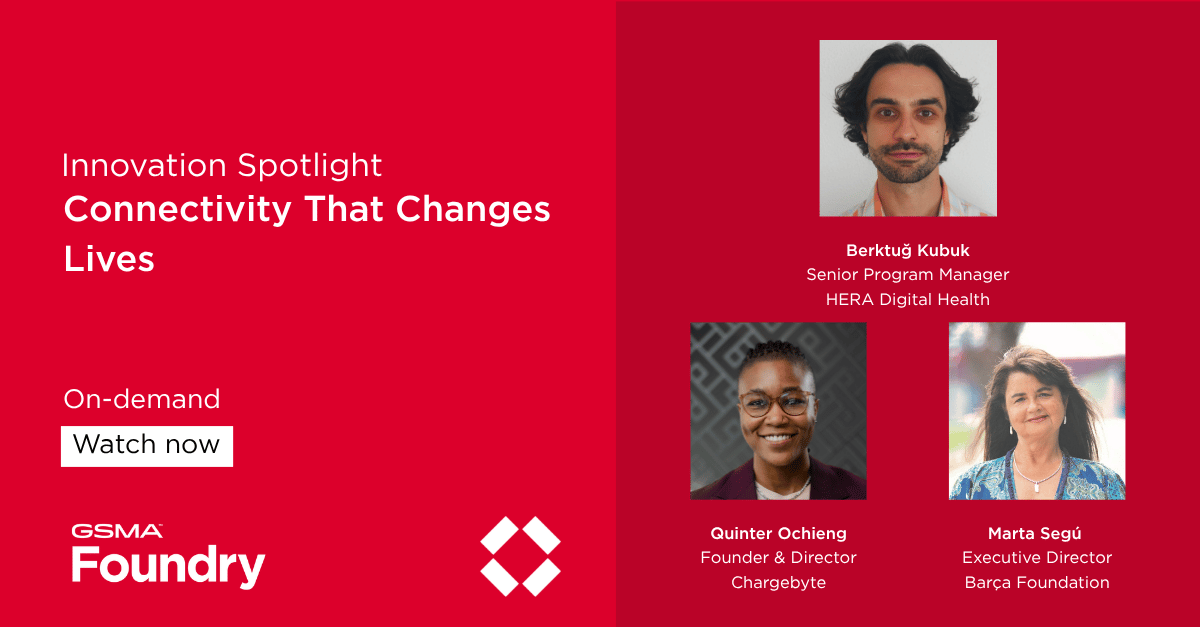
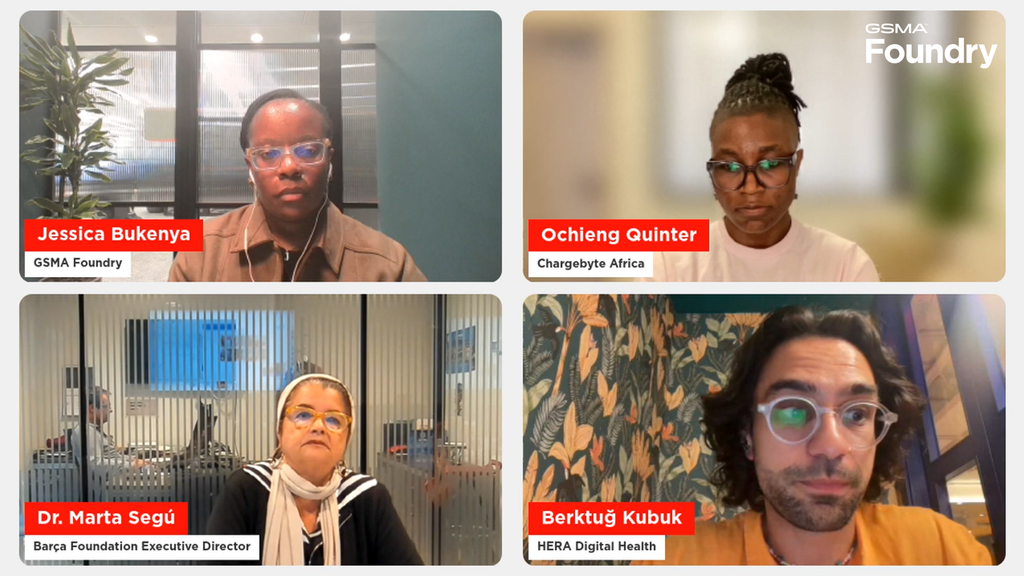
On 19 October, GSMA Foundry Innovation Spotlight #13, Connectivity That Changes Lives, brought together three innovators demonstrating how connectivity can create opportunities, improve access to essential services and strengthen communities.
Hosted by Jessica, the discussion featured Quinter Ochieng from ChargeByte, Berktuğ Kubuk from Hera Digital Health and Marta Segú from Barça Foundation, whose initiatives highlight the human impact of innovation.
The conversation also built on GSMA Foundry’s partnership with Mobile World Capital Barcelona and the Mobile World Capital Awards 2026, which recognise technologies addressing social and environmental challenges.
Powering opportunity through conenctivity in Kenya
Imagine a school equipped with tablets and laptops, yet unable to use them because of unreliable electricity.
This was one of the challenges that inspired ChargeByte, which is helping communities in Kenya overcome two interconnected barriers: access to power and access to connectivity.
Through solar-powered community hubs, ChargeByte provides electricity, device charging, Wi-Fi and access to digital services, enabling schools, businesses and underserved communities to participate more fully in the digital economy.
“It’s only useful when it’s accessible, affordable and reliable.”
Quinter Ochieng, Co-Founder & CEO, Chargebyte
By combining reliable power with connectivity, ChargeByte is helping students participate in ICT classes and enabling local communities to access digital services and conduct business transactions.
But Quinter also highlighted that deploying infrastructure is only the beginning. ChargeByte monitors usage patterns and gathers community feedback to understand demand and adapt its services to local needs.
The lesson? Digital inclusion isn’t simply about providing technology. It’s about ensuring people can use it reliably, affordably and in ways that fit their everyday lives.
Making healthcare accessible to displaced communities
For people forced to leave their homes, accessing healthcare can become an overwhelming challenge.
A clinic may exist nearby, but language barriers, unfamiliar health systems and lost medical records can prevent people from receiving the care they need.
Hera Digital Health is addressing these challenges with mobile technologies designed around the experiences of refugee and displaced communities.
Using familiar tools such as WhatsApp, alongside portable digital health records and AI-enabled assistance, Hera helps people navigate healthcare systems and maintain continuity of care as they move between locations.
“There’s a huge gap between having service available and someone’s actually being able to use that.”
Berktuğ Kubuk, Senior Program Manager, HERA Digital Health
Hera’s approach was developed in collaboration with healthcare professionals and displaced communities, ensuring its solutions respond to real-world barriers rather than assumptions about user needs.
The team also learned an important lesson along the way. Initially, asking users to download a dedicated application created an additional barrier. Adapting the solution to WhatsApp, a platform many people were already familiar with, made it easier to engage.
For Berktuğ, resilience means something deeply human: ensuring that a woman doesn’t lose access to her healthcare information and support every time she has to relocate.
The takeaway? Effective innovation starts with understanding people’s circumstances and designing technology around them, not the other way around.
Connecting remote communities to life-saving healthcare in Panama
In remote communities, geographical barriers can turn routine healthcare needs into serious challenges.
In Panama, a collaboration involving Barça Foundation, the Pan American Health Organization, the Ministry of Health and other partners is using drone technology to strengthen healthcare access for indigenous communities in hard-to-reach areas.
The initiative supports the delivery of medicines, medical supplies and the transportation of laboratory samples, helping overcome logistical challenges that can delay diagnosis and treatment.
Marta Segú, Executive Director of Barça Foundation, explained how the project was developed in close collaboration with local communities, healthcare professionals, government authorities and technology partners.
“It’s a new innovative way to strengthen community health, to connect people with people, hospitals and health centers with communities in very remote and hard to reach areas.”
Marta Segú, Executive Director of Barça Foundation
The project’s implementation has also revealed important lessons for future expansion, from maintaining reliable power for drone batteries to developing protocols for transporting medical samples and temperature-sensitive medicines.
Importantly, local communities have been involved from the beginning, helping shape the initiative around their needs and ensuring that they have a role in its development.
The lesson? Technology can overcome physical distance, but meaningful and sustainable impact depends on community ownership and collaboration.
Why collaboration is essential to lasting impact
While the three projects address very different challenges, one message emerged clearly from the discussion: no single organisation can solve these problems alone.
“The truth is the digital divide cannot be solved by one company. We need synergies, we need collaboration.”
Quinter Ochieng, Co-Founder & CEO, Chargebyte
All three speakers emphasised the importance of bringing together local communities, technology providers, governments, healthcare organisations and investors to develop solutions that can continue delivering value over time.
The discussion also explored the challenge of scaling successful innovations beyond their original communities.
For ChargeByte, this means adapting deployment models, pricing and partnerships to different markets.
For Hera, it means building evidence of improved healthcare access and developing flexible solutions that local organisations can adopt.
For the Panama initiative, expansion requires further investment, government support and infrastructure that can reliably support drone operations.
The common thread is that scaling innovation isn’t simply about replicating technology. It’s about adapting solutions to local needs, building the right partnerships and creating the conditions for long-term sustainability.
What role can mobile operators play?
The conversation also highlighted the opportunities for mobile operators and the wider connectivity ecosystem to help initiatives like these reach more people.
The speakers identified several ways the industry could contribute, from improving affordable and reliable connectivity in underserved regions to working more closely with local innovators.
For Hera, affordable mobile connectivity and messaging services are particularly important for maintaining essential healthcare communications in crisis-affected communities.
For ChargeByte, mobile operators can create opportunities for collaboration by sharing insights into connectivity gaps and working with local organisations developing practical solutions.
Together, these perspectives reinforce the opportunity for the mobile ecosystem to go beyond providing connectivity and become an active partner in delivering meaningful social impact.
Recognising innovation that makes a difference
These initiatives reflect the ambition behind GSMA Foundry’s partnership with Mobile World Capital Barcelona and the Mobile World Capital Awards: Technologies for a Sustainable Future.
The awards recognise projects using technology to tackle some of the world’s most pressing social and environmental challenges.
Through the GSMA Foundry Innovation Spotlight series, we’re helping bring these stories to a wider audience, sharing practical lessons and encouraging further collaboration across the mobile and technology ecosystems.
From connectivity to meaningful impact
Across Kenya, displaced communities and remote regions of Panama, these initiatives demonstrate a powerful common principle: the true value of connectivity lies in what it enables people to achieve.
Whether helping students participate in digital education, ensuring displaced families can access healthcare or bringing essential medicines closer to remote communities, meaningful innovation begins with understanding real human needs.
As the discussion demonstrated, technology alone is not enough. Lasting impact requires collaboration, local understanding and solutions that can adapt and grow.
Through partnerships such as Mobile World Capital Barcelona, GSMA Foundry continues to champion innovations that turn technological potential into practical solutions and positive social impact.
Watch the full GSMA Foundry Innovation Spotlight, Connectivity That Changes Lives, to discover how these initiatives are helping create more inclusive and resilient communities.
Stay tuned for further developments from the GSMA Foundry. If you have any questions or want to join this exciting journey, feel free to reach out.