


Healthcare systems face a shared challenge: delivering more accessible, efficient and patient-centred care amid growing demand and workforce pressures.
Meeting that challenge requires more than technology. It means rethinking where care happens, how expertise is shared and how hospitals connect with patients and communities.
At M360 ASEAN 2026 in Kuala Lumpur, healthcare leaders, clinicians, policymakers, mobile operators and technology partners came together to explore this opportunity.
One message stood out: the next phase of healthcare transformation is about connecting the capabilities we already have around the patient.
Imagine specialist surgical guidance delivered across borders, remote experts supporting clinicians in underserved communities, patients monitored safely at home, and real-time data and AI supporting decisions at the point of care.
In this model, the hospital remains central, but becomes part of a wider connected ecosystem spanning hospitals, clinics, communities and homes.
For healthcare leaders, this creates new possibilities for capacity, workforce, access and the patient journey.
Breaking down silos to scale healthcares innovation
Connected healthcare cannot scale while healthcare providers, technology companies and industry partners work in isolation. Terence Wong, Paresh Modi , Akansha Sharma of GSMA, and Brian O’Connor of GHC ( Global Health Connector) highlighted the need to bring healthcare, government, mobile and technology ecosystems together around real clinical and operational challenges, moving innovation beyond pilots into everyday care.
Malaysia is already taking steps in this direction. Mahesh Appannan of the Ministry of Health Malaysia outlined the shift from fragmented systems towards a more unified, person-centric digital ecosystem, where health information can move securely with the individual across providers.
Extending care beyond hospital walls
Connected healthcare can help healthcare systems extend services into communities and homes.
Dr Mohd Arif Adenan of the Malaysian Communications and Multimedia Commission (MCMC) highlighted the importance of digital inclusion, trusted governance and last-mile infrastructure. Malaysia’s NADI initiative combines community hubs, connectivity and trained personnel to support screening, monitoring and telehealth in underserved communities.
For healthcare leaders, this raises an important question: which elements of care genuinely need to happen inside a hospital?
Remote monitoring, virtual wards and hospital-at-home models can bring appropriate care closer to patients while helping healthcare systems use capacity and clinical resources more effectively.
Bringing specialist expertise to the point of care
M360 ASEAN showcased how connectivity can help healthcare systems overcome geographical and specialist workforce constraints.
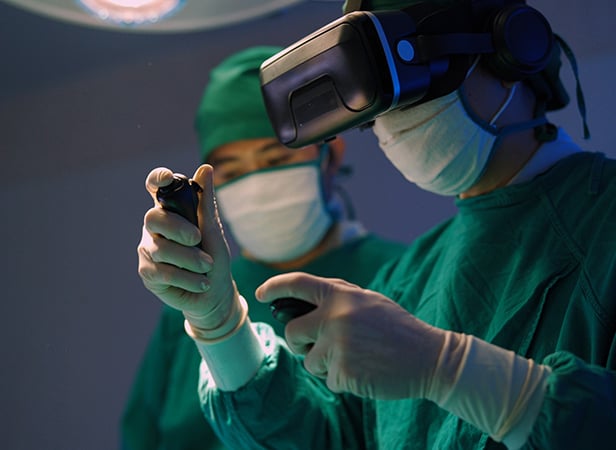
Assoc. Prof. Dr Adli Azam Mohammad Razi of Gleneagles Hospitals Malaysia shared his experience of performing Malaysia’s first robotic cardiac surgery without a physical proctor present. Live streaming and augmented reality enabled an expert in Australia to provide remote guidance, demonstrating how expertise can travel instead of the expert.
Similarly, Professor Shaik Farid Abdull Wahab of Hospital Universiti Sultan Zainal Abidin (HoSZA) showed how mixed reality can enable specialists to remotely guide clinicians performing ultrasound scans, helping address situations where equipment is available but specialist expertise is not.
The same principle applies to education. Prof David J. O’Regan of HoloMedicine Malaysia / Black Belt Academy of Surgical Skills highlighted how immersive 3D technologies, XR and HoloMedicine can transform medical training and allow specialist knowledge to be shared across institutions and geographies.
Building the foundation for intelligent healthcare
These new models of care depend on strong digital foundations.
Prof. Dr Mohd Zulkiflee demonstrated how a mature EMR-enabled hospital ecosystem can support telemedicine, virtual wards and even real-time surgical broadcasting across borders for education and clinical collaboration.
Dr Yujia Gao of the National University Health System (NUHS), Singapore described the evolution from Connected Health to Integrated Health and ultimately Intelligent Health, where connected systems, real-time data and AI enable increasingly predictive and personalised care. In this future, 5G and eventually 6G can form part of the digital fabric supporting healthcare delivery.
For CIOs, CTOs and transformation leaders, the question is therefore not simply whether a technology works, but how it fits into the wider healthcare architecture.
Using AI to redesign healthcare
Dr Keren Priyadarshini of AWS highlighted the potential of digital twins and custom AI models to simulate hospital environments and workflows, helping healthcare organisations identify bottlenecks, test changes and design services around patient needs.
The opportunity for AI is not simply to automate existing processes, but to help healthcare systems redesign how care is delivered.
Creating trust and enabling scale
Innovation also depends on trust. Maurice Tan of Singapore’s Ministry of Health Office for Healthcare Transformation (MOHT) highlighted the interdependence of providers, patients, payers, pharmaceutical companies, technology platforms and regulators.
Transparent governance across technology, services and data is essential to enable innovation while protecting privacy, security and patient trust. Interoperability, cybersecurity, data governance and regulation must be designed in from the start.
Connectivity as an enabler of healthcare outcomes
For mobile operators, the opportunity is not simply to provide connectivity, but to understand the clinical and operational challenges healthcare systems are trying to solve.
Dr Masdiana Sulaiman of CelcomDigi highlighted the role of telcos in providing the secure, reliable connectivity underpinning advanced healthcare applications and connecting experts with patients regardless of location.
Ultimately, the value of connectivity is measured by what it enables healthcare systems to achieve.
From pilots to healthcare at scale
The technologies discussed at M360 ASEAN are already demonstrating what is possible. The challenge now is scale.
A successful pilot must integrate with existing systems and clinical workflows, meet security and governance requirements, demonstrate measurable value and ultimately be replicated across hospitals and healthcare systems.
That is where CHACCA – the Connected Health & Community Care Accelerator – comes in.
Through the GSMA Foundry, CHACCA brings together healthcare institutions, clinicians, mobile operators and technology partners to address real healthcare challenges. Its focus spans XR surgical training, remote specialist support and global surgery, hospital-at-home and virtual care, AI-enabled healthcare, smart hospitals and connected infrastructure.
The ambition is straightforward:
Convene → Deploy → Scale.
For healthcare systems, it creates a pathway to explore and scale new models of care. For mobile operators and technology partners, it creates an opportunity to work directly with healthcare organisations around genuine clinical and operational priorities.
Beyond the hospital
M360 ASEAN demonstrated that the next phase of healthcare transformation will not be defined by how much technology hospitals deploy, but by what that technology enables.
Can expertise reach more patients? Can appropriate care move beyond hospital walls? Can scarce clinical resources be used more effectively? Can data and intelligence follow the patient across their care journey?
The hospital remains essential, but increasingly as part of a wider connected ecosystem spanning hospitals, clinics, communities and homes.
That is the shift from technology transformation to healthcare transformation.
Hear directly from the leaders shaping connected healthcare
Watch the M360 ASEAN Connected Healthcare participants interviews to hear healthcare leaders, clinicians, policymakers, mobile operators and technology partners discuss the real-world challenges, use cases and opportunities shaping connected healthcare.