


Monday 6 July, 2026
Executive summary
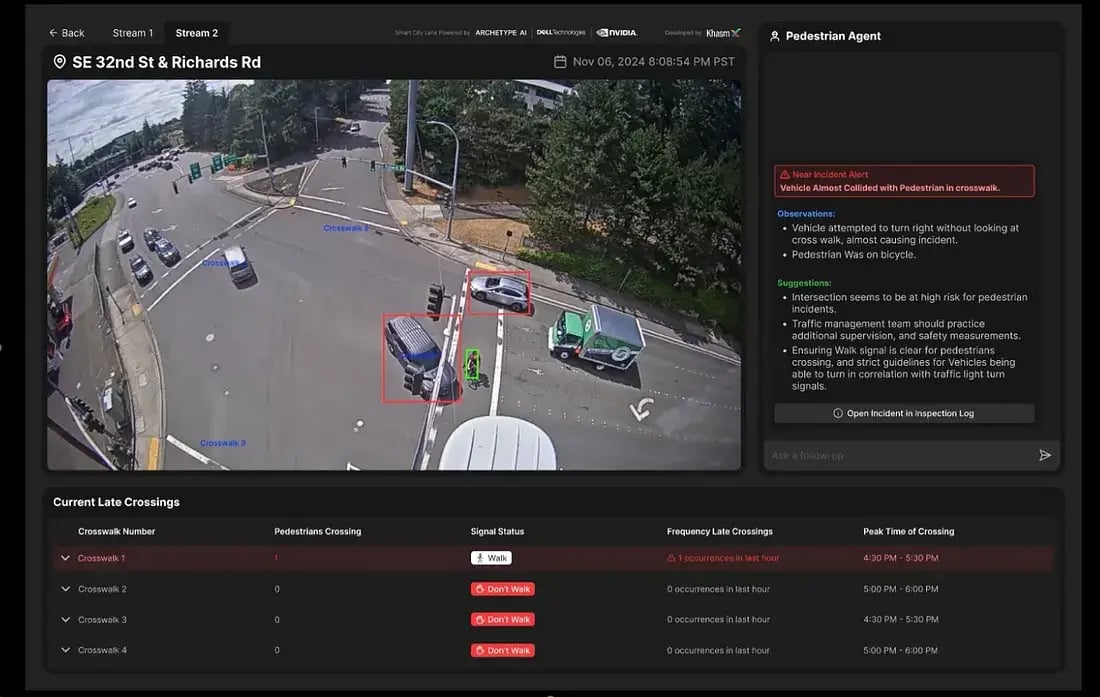
The telecommunications industry is at a pivotal juncture, with the advent of 5G and the exponential growth of AI promising unprecedented opportunities. To capitalise on this, a pioneering collaboration between AT&T, NVIDIA, Dell Technologies, Archetype AI and Khasm Labs was forged to create the Telco AI Cloud Pilot. This initiative, spearheaded by Dell Technologies, successfully developed and validated a blueprint for network operators to transition into AI cloud providers by leveraging their vast edge infrastructure. By deploying AI workloads on-premises and at the network edge, the pilot demonstrated a significant reduction in latency and operational costs whilst unlocking new revenue streams through real-time AI services. A key outcome of this collaboration was the development of a production-ready generative AI for pedestrian safety, showcasing the tangible benefits of an operator-led AI ecosystem.
Business imperative
The traditional telecommunications business model, centred on connectivity, is facing increasing commoditisation. To maintain a competitive edge and drive future growth, operators like AT&T must evolve into platforms for innovation, offering value-added services beyond basic connectivity. The explosion of AI and the Internet of Things (IoT) presents a significant opportunity, but also a challenge. Centralised cloud data centres, whilst powerful, introduce latency and data transit costs that are prohibitive for many real-time AI applications.
The core business challenge addressed by the Telco AI Cloud Pilot was to create a viable model for AT&T to:
- Monetise its 5G infrastructure beyond simple data plans.
- Reduce latency for mission-critical AI applications running on its network.
- Enhance data security and privacy by processing data closer to the source.
- Lower the total cost of ownership (TCO) for AI-powered services.
- Foster an ecosystem of innovation by providing developers with the tools and infrastructure to build and deploy edge AI solutions on the AT&T network.
The solution
The Telco AI Cloud Pilot established a new framework for real-time AI application development and deployment, effectively turning AT&T’s network into a distributed AI cloud. The solution is built upon a foundation of powerful, yet flexible, hardware and software components from key technology partners:
- NVIDIA’s AI-on-5G Platform: This comprehensive software platform provides a reference architecture for operators like AT&T to build and manage their AI cloud services. It includes NVIDIA’s advanced GPUs for accelerated AI computing, the NVIDIA Aerial™ SDK for software-defined 5G virtual Radio Access Networks (vRAN), and the NVIDIA EGX™ platform for secure, high-performance edge computing.
- Dell Technologies’ AI Solutions: The physical foundation of the edge cloud was provided by Dell Technologies. The pilot utilised Dell PowerEdge XR8000 servers, which are specifically designed for demanding telecom edge environments. These ruggedised and compact servers are optimised to house the powerful NVIDIA GPUs, providing the necessary compute power for intensive AI workloads directly at the edge of AT&T’s network.
- AT&T’s 5G Network: As the lead operator, AT&T’s robust and high-speed 5G network provided the essential connectivity fabric for the pilot. This infrastructure was critical for enabling the ultra-low-latency communication required between edge devices, the Dell servers hosting the AI workloads, and the end-users.
- Khasm Labs‘ Ecosystem Development: Acting as a crucial orchestrator, Khasm Labs (formerly the 5G Open Innovation Lab) cultivated a vibrant ecosystem of AI-focused startups. This collaborative environment facilitated the development of innovative and commercially viable AI solutions built to run on the new platform powered by AT&T.
- Archetype AI‘s “physical AI” technology: Powered by its Newton foundation model, Archetype’s Lenses AI technology was utilised in the Bellevue pilot program for interpreting real-world sensor data. The technology, which processes multimodal sensor data and operates locally at the edge on AT&T’s network, enabled real-time incident detection and dynamic traffic signal adjustments for a “Safer Signals” program.
Economic Benefits
The Telco AI Cloud Pilot demonstrated a compelling economic case for the adoption of a distributed AI cloud model by network operators. For AT&T, the key financial and operational advantages include:
- New Revenue Streams: By offering AI processing as a service, AT&T can tap into new, high-growth markets such as smart cities, industrial automation, and connected healthcare. This moves the company up the value chain from being a connectivity provider to becoming an indispensable platform for innovation.
- Reduced Operational Costs: Processing data at the edge significantly reduces the need for expensive backhaul to centralised data centres, leading to substantial savings in data transit costs across the AT&T network. Furthermore, the use of a software-defined, virtualised infrastructure simplifies network management and reduces operational overhead.
- Improved Capital Efficiency: The modular and scalable nature of the edge AI cloud, built on hardware like the Dell PowerEdge servers, allows AT&T to make targeted investments in infrastructure based on demand, avoiding the high upfront costs associated with building large, centralised data centres.
- Increased Customer Retention: The ability to offer low-latency, high-performance AI services will be a key differentiator for AT&T, leading to increased customer loyalty and reduced churn.
Lessons Learned & Future Outlook
AT&T’s Telco AI Cloud Pilot has provided invaluable insights into the technical, operational, and commercial aspects of deploying AI at the network edge. Key takeaways include:
- Collaboration is Crucial: The success of the pilot was a direct result of the deep collaboration between a leading network operator (AT&T), key technology providers (NVIDIA and Dell Technologies), leading AI software (Archetype AI) and an innovation ecosystem builder (Khasm Labs). This multi-stakeholder approach is essential for driving the adoption of new technologies and business models.
- A Robust Ecosystem is a Key Differentiator: By fostering a vibrant ecosystem of developers and startups, operators like AT&T can accelerate the creation of innovative AI services and applications, creating a virtuous cycle of growth and adoption.
- Open and Scalable Architectures are Paramount: The use of open standards and a software-defined approach ensures interoperability and allows operators to avoid vendor lock-in, whilst also providing the flexibility to scale their AI cloud services as demand grows.
Looking ahead, the Telco AI Cloud Pilot serves as a blueprint for the global telecommunications industry. The demonstrated success of this AT&T-led initiative paves the way for a future where network operators are at the forefront of the AI revolution, powering a new generation of intelligent and responsive applications that will transform industries and improve lives. The continued development of this model will see operators become the backbone of a truly connected and intelligent world.
Distributed AI Inferencing in Telecoms Networks – Case Studies Webinar
Artificial intelligence is transforming the 5G edge for telecom operators by enabling faster, more secure, and cost-effective services through distributed inference.
Watch our webinar to discover real-world case studies and learn how to implement effective AI strategies across the enterprise edge, data infrastructure, RAN, and device domains.
