



Friday 4 September, 2026
Cisco has a science-based goal to reach net zero greenhouse gas emissions by 2040, and circularity is an important tool to advance progress. A key focus and differentiator for Cisco is circular product and packaging design.
In 2025, the organisation achieved a major milestone: reaching its goal that 100% of new products and packaging would incorporate Circular Design Principles. These principles include material use, making products easier to repair through modular design and component standardisation, adding more smart energy modes to products, and making them easier to reuse or recycle at end of life.
One of the biggest challenges was scaling this circular approach across a company with such diverse products.
With hundreds of products released each year, it quickly became clear that evaluating each product and packaging design manually wasn’t feasible. That’s when Cisco started to develop IT tools that would embed circular design evaluation directly into its design process. By integrating the requirements and scoring into tools its engineering and supply chain teams already use, teams could more easily adopt circularity without stepping outside their normal workflow.
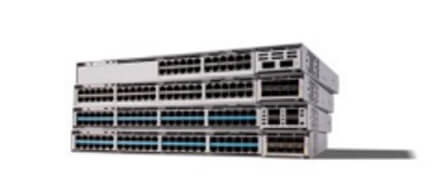
Every new product and packaging is now scored against Cisco’s Circular Design Principles and must score at least 75 points to be released. That gamified the process and sparked energy among our engineers and designers, who are competitive and innovative people. Cisco even added an innovation section to the evaluation tool where employees can earn bonus points for coming up with new circular design ideas. One example of business and environmental benefits of Circular Design can be found in its Catalyst 9000 family of switches. Cisco eliminated oil-based paint from the Catalyst 9000 series in 2019; this has resulted in over US$9 million in savings while reducing about 318 metric tonnes of volatile organic compounds and about 3,400 metric tonnes CO2e from Cisco’s fiscal year 2020 through fiscal year 2025.
And, since Cisco’s emissions are part of its customers’ Scope 3 Category 1 emissions accounting, its actions on Circular Design support the overall transition to a more sustainable, resilient and lower-carbon supply chain.
Now that Cisco has met its100% Circular Design goal, the organisation is undertaking “Circular Design 2.0” – which includes developing advanced, role-specific training with real-life examples and practical tools that engineers can use in their day-to-day work to incorporate circularity.
