


Tuesday 8 September, 2026
Addressing Scope 3 emissions is vital for EDOTCO to systematically embed sustainability capability across its entire telecommunications value chain. In developing markets like Malaysia, this effort is fundamentally anchored around a robust local and Bumiputera development agenda, ensuring that the transition to a low-carbon economy actively empowers domestic suppliers and builds a highly resilient national business ecosystem.
EDOTCO’s Vendor Development Programme (VDP) serves as the primary engine for this transformation, upskilling 182 local suppliers to ensure capacity building translates directly into recognised industry excellence. Rather than outsourcing this education to global consultancies, the core training modules are internally developed by EDOTCO’s own specialised staff. This direct in-house knowledge transfer allows us to institutionalise corporate governance, sustainable sourcing, and technical data compliance seamlessly across local teams.
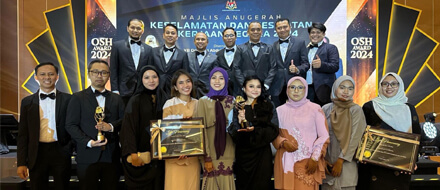
Crucially, EDOTCO has expanded this internal expertise outward to create a deeper community ecosystem. By combining EDOTCO’s corporate VDP modules with its flagship Occupational Health and Safety (OHS) at School programme, EDOTCO employees directly mentor rural schools and local vendor communities together. This unified approach has yielded spectacular milestones: EDOTCO’s close mentorship enabled a local vendor partner, Naluri Rasa Sdn Bhd, to win the prestigious 2025 National OSH Award, proving that grassroots capacity building can elevate local players to national leadership standards.
Despite these clear triumphs, executing the programme presents sharp structural challenges. Navigating the highly fragmented digital readiness levels among smaller, tier-2 Bumiputera vendors demands immense administrative resources and continuous customised coaching. Furthermore, transitioning small-to-medium enterprises (SMEs) away from traditional carbon-intensive operational setups requires a massive cultural pivot.
EDOTCO has learned that standard corporate mandates fail without hands-on cooperative education. By breaking down technical requirements (like IFRS S1 and S2) into simplified tools and utilising EDOTCO’s own staff as direct technical mentors, the organisation successfully helps local suppliers pivot. They no longer view sustainability as a restrictive regulatory burden, but rather as a distinct competitive advantage that keeps economic benefits localised.
