

A unique partnership between the GSMA and the Pacific Islands Telecommunications Association (PITA) is advancing the implementation of mobile-enabled Early Warning Systems (EWS) through Cell Broadcast across the Pacific Islands. The success of this work is driven not just to the technology itself, but by the regional approach to its design and delivery.
The Pacific faces some of the world’s highest exposure to climate and disaster risk, spread across vast ocean distances with limited resources. This initiative recognises the need for a collaborative approach that reflects geography, capacity, and risk across the region.
Cell Broadcast (CB) is a proven mobile technology that enables rapid, secure, congestion-free emergency alerts to all compatible handsets within a defined area. Unlike SMS, it does not rely on subscriber databases and continues to function during periods of high network traffic, precisely when warnings are most needed. Implementing CB effectively, however, requires alignment across operators, disaster management agencies, regulators, and communities.
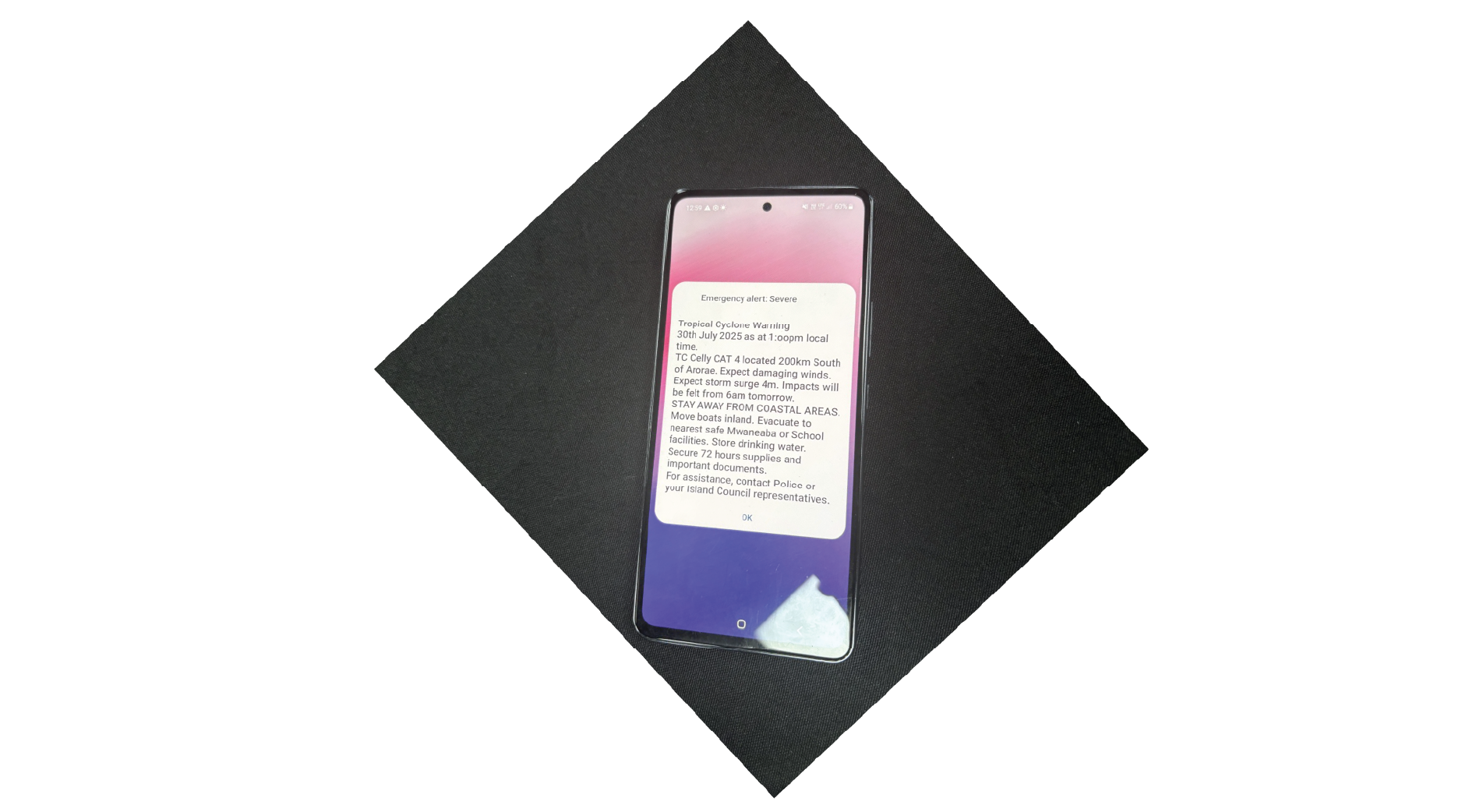
Image: Pacific Island stakeholders practice drafting and issuing a Cell Broadcast test alert in a closed environment
Strong partnerships have played a central role in progress so far:
- As the region’s telecommunications convenor, PITA creates the space for cooperation, shared learning, and trust between Pacific Island countries and mobile network operators.
- Technical leadership from Omnitouch Network Solutions further accelerated progress, with the provision of CB software and hands-on support helping countries move from theory into real implementation.
- Regional coordination and deep technical expertise are essential to setting up Pacific-wide EWS coverage. Recognising this, the Secretariat of the Pacific Regional Environment Programme (SPREP) and the GSMA have partnered to strengthen collaboration on digital solutions for climate resilience and disaster preparedness across the region.
Furthermore, all regional operators across the Pacific, including Digicel Pacific Group, ATH Vodafone Group, Solomon Telekom, and ACC Oceanlinks, have already begun working closely with their respective national agencies to ensure CB technology is embedded into existing National Emergency Management Systems.
In May 2025, GSMA, PITA, and Omnitouch supported the Solomon Islands to conduct the first live Cell Broadcast test in the Pacific. From there, the work has expanded. In July 2025, GSMA, PITA, and Omnitouch co-hosted the Pacific Humanitarian Connectivity Charter Workshop: Leveraging Cell-Broadcast for Disaster Preparedness, Response, and Recovery in the Pacific Islands in Nadi, Fiji. Alongside national teams, humanitarian organisations including the World Food Programme and UNOCHA contributed field level insight, while regional bodies such as SPC and SPREP have ensured alignment with broader climate and development priorities.

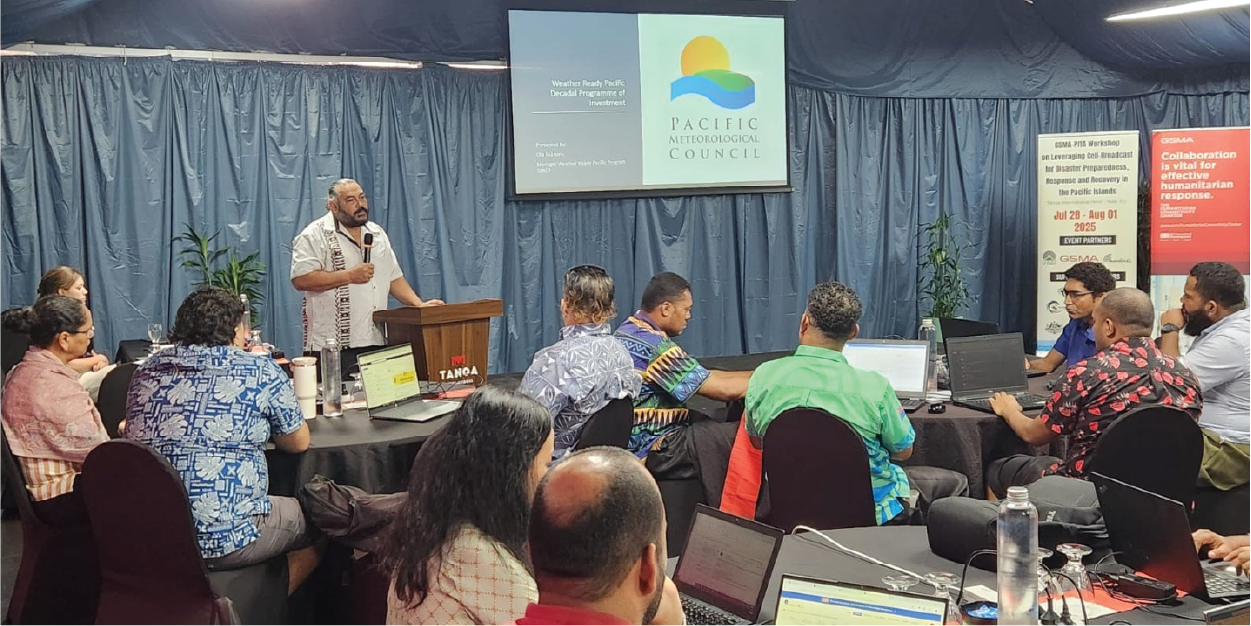
Image: Regional collaboration and learnings shared between partners advance realistic CB progress realistically and at scale
Global leadership from the Early Warnings for All (EW4All) initiative, including WMO, UNDRR, ITU, and IFRC, has brought international best practice into the regional conversation. Regulators, ICT ministries, broadcasters, and communications authorities across the region have been closely involved to help ensure that policy, governance, and dissemination strategies are coherently addressed.
One of the clearest lessons from 2025 was that success depends not only on the technology itself, but on operational coordination and capacity building. Cell Broadcast implementation requires sustained effort to bring the relevant agencies together to clarify roles and foster trust. This, though, is what makes CB feasible in reality.
Peer exchange helps set realistic expectations, anticipate common roadblocks, and ensure that adequate resources and timelines are in place before implementation begins. Reflecting on this, GSMA is setting up a regional community of practitioners and regional knowledge hub on CB in the Pacific to ensure this project is regionally owned and regionally sustained.

Image: Representatives from Our Telekom (Solomon Islands) share lessons from their CB experience
Today, the Solomon Islands’ progress is a blueprint for others. In 2025, implementation began in the Cook Islands, Samoa, and Kiribati. In 2026, three additional small island states started CB implementation. The regional coordination effort will continue to expand to Pacific Island countries such as Tonga, as well as to French territories including French Polynesia, New Caledonia, and Wallis and Futuna, where CB infrastructure already exists through the French FR-Alert system.
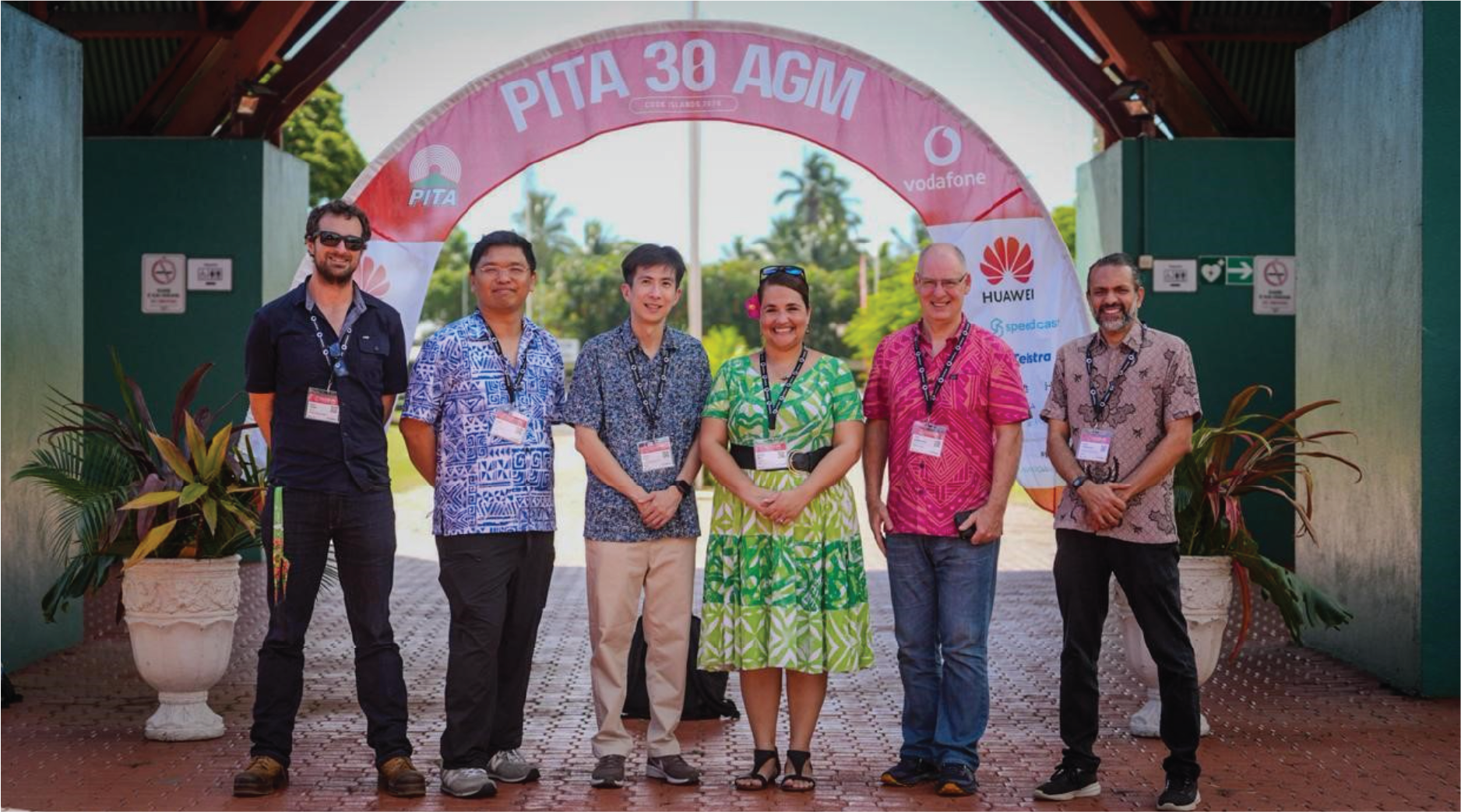
Image: GSMA and key stakeholders collaborate at the PITA 30 AGM 2026 hosted in the Cook Islands.
In April 2026, an update on this work was presented to an audience at the PITA Annual General Meeting in Rarotonga, Cook Islands. While progress to date was welcomed, it was recognised that embedding Cell Broadcast sustainably within existing emergency alerting processes, particularly within alerting agencies’ standard operating procedures, will take time. Achieving this will require continued partnership-building, targeted capacity building, and sustained funding support.
Through the GSMA–PITA partnership, Pacific Island countries are maintaining momentum on CB implementation and turning shared ambition into action. This work has shown that regional cooperation can help to overcome challenges of scale, distance, and limited resources.
This initiative is currently funded by UK International Development from the UK government and is supported by the GSMA and its members.