



AI for Good is not just a philanthropic ambition, but a strategic opportunity driving innovation, commercial growth and societal impact. Mobile network operators (MNOs) can drive this opportunity by developing local AI infrastructure, supporting early-stage innovation and co-leading initiatives aligned with national AI and digital transformation strategies. Collaboration and partnerships across the ecosystem are essential to promote and develop responsible, inclusive, and sustainable AI in emerging markets.
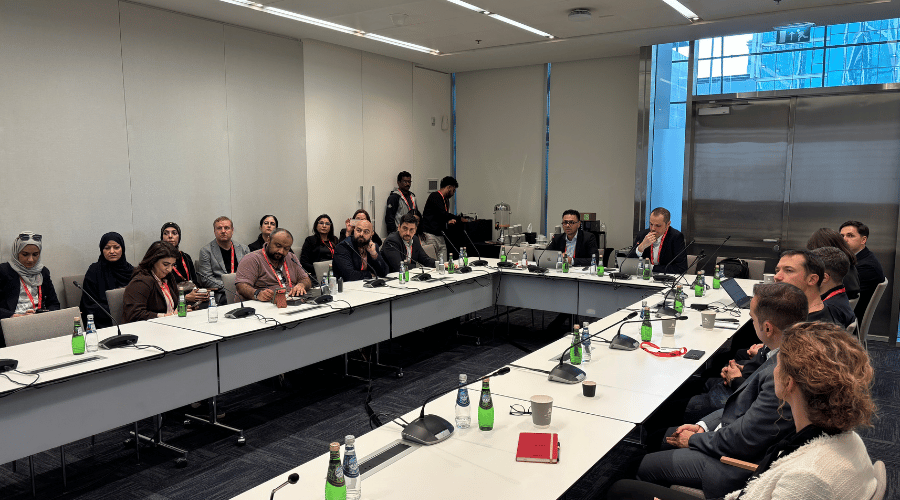
At MWC25 Doha, GSMA Mobile for Development brought together leading MNOs, investors and impact-driven AI startups to discuss partnership opportunities for developing commercially viable impactful AI solutions.
The roundtable discussion included senior leaders from MNOs, technology companies, startups, investors, research and academia. Participants brought perspectives from varying sectors, ecosystem levels and geographies, particularly across the Middle East and North Africa (MENA) and Asia.
Equity and ethical responsibility are foundational to AI that benefits all, but commercial sustainability is just as essential to achieving lasting, large-scale impact. As AI solutions move beyond early pilots to reach greater scale, it’s essential to explore the business case for viable, impactful solutions, and the role that the private sector can play in advancing AI in emerging markets.
MNO’s role in the AI ecosystem
Within the private sector, MNOs stand out as key enablers of AI development and deployment, especially in emerging markets, where they have long served as the backbone of the digital economy. Their established digital infrastructure and customer reach provide strong foundations for advancing AI-based solutions.
The discussion highlighted the ways in which MNOs are enabling the development of commercially viable impactful AI solutions. In emerging markets, operators are increasingly supporting national priorities by contributing to the development of national AI infrastructure. For instance, operators in South and Southeast Asia shared their experiences building homegrown large language models (LLMs), preserving their country’s many regional languages. The operators view these LLM initiatives as both cultural preservation and a step towards closing the usage gap, making digital services locally relevant, inclusive and accessible.
MNOs are also beginning to deploy this AI infrastructure in key sectors such as health, education, government services and early warning systems. Additionally, offering these locally developed models as secure and contextually relevant AI services for local businesses, MNOs are creating a potentially strong future source of commercial revenue.
Importantly, the MNOs did not undertake these efforts alone. The government and universities were key collaborators, each actor bringing unique value to the AI journey and demonstrating the importance of ecosystem-wide collaboration.
Perspectives from the innovator ecosystem
For startups in emerging markets, the challenges start at the foundations: access to high-quality, locally relevant data, compute and infrastructure. To work around this, startups in emerging markets become adept at “frugal innovation”, like creating smaller, lighter models that can be deployed locally, and which comply with data regulations.
“In emerging markets, as a startup founder, you may have an innovative product in mind, but soon realise you must build all the underlying infrastructure yourself before you can build the actual product.”
When creating products and solutions for the most marginalised groups, demand is not a concern if those products truly address urgent needs. However, the people who need these products most are often the least able to pay for it. For instance, a South Asian startup building inclusive e-learning solutions pivoted to other markets where demand was backed by purchasing power, before returning to their original market once they were more financially secure. Startups building novel solutions from scratch, where there are no proven use-cases before them, often struggle to raise venture capital funding, and instead rely on grant funding to build a product that can then demonstrate commercial viability.

Collaborations for greater impact
For startups, partnerships can address these systemic hurdles. For instance, while startups shared experiences of building bootstrapped datasets from scratch, the right partnerships can solve this challenge. This was clear in the case of the MNO LLM initiatives, where partnerships helped bring together language data from operators, universities and public institutions.
MNOs can add value across the lifecycle of an innovation, from providing crucial contextual data, to last-mile user reach. MNOs can also support startups through APIs, sandboxes, incubators and accelerators.
Some social impact-oriented startups have found the corporate social responsibility (CSR) route useful when engaging with MNOs and others in the private sector. While CSR has been a valuable initial boost for startups, ultimately more sustainable financing models are needed for innovations to be viable and scalable.
Participants also discussed the important role the government plays within the innovation landscape. Governments can help create the right enabling environment for the private sector to provide infrastructure, such as by incentivising MNOs to expand life-changing connectivity into rural areas. Integrating innovations into existing government systems can give them unparalleled reach and scale. Early warning systems and disaster preparedness forecasting stand out as instances where innovators, MNOs, governments and universities came together to deliver life-saving information that could not have been achieved in the absence of collaboration.
While government partnerships can boost impact and sustainability, it also brings in regulations and rules that can add complexity. For instance, by partnering with the government, an operator could only use official government data in their AI model development, which brought with it major interoperability challenges, slowing down development and scale.
Making impactful AI a reality
Ultimately, while partnerships are essential, there are also trade-offs and tensions between stakeholders, their incentives, and definitions of success. These competing interests can come in the way of building mutually beneficial collaborations that advance impactful AI. For instance, competition between private sector actors and the creation of data moats by larger companies can impede innovation, limit data access for less well-resourced innovators, and concentrate power in the hands of a few big players.
Most startups are relatively small players, and while partnering with established entities can boost their success, they are often unable to reach the right people and institutions to make these partnerships happen in first place. As one startup said, “It’s a chicken and egg problem. To get the right introduction, you need to first know the right person”. They highlighted the role that organisations like GSMA can play in the ecosystem, by acting as a stepping stone for startups that are less well-known, or well-marketed, and fostering mutually beneficial relationships, such as the GSMA Innovation Fund.
Designing and deploying truly impactful AI requires not just technical talent but a range of skills, capabilities, and enabling factors. The challenges are too complex, and the stakes are too high, for any one player to take on alone. Successful business models do exist that combine socio-economic impacts with commercial sustainability, and partnerships are at the heart of them.
The session concluded with a deep dive into what success really looks like for AI initiatives. While venture capitalists look for unit economics and scalability, academic and humanitarian perspectives ask whether the technology is vaccinating more children or educating more students. The consensus was that “AI that benefits all” must design for inclusive, measurable impact on socio-economic well-being and climate resilience while maintaining ethical responsibility. By sharing lessons across borders, the global community can ensure that innovation is not just “project-based” but drives systemic change.
The GSMA is continuing this critical conversation through its EmergingTech Programme, which focuses on low- and middle-income countries. Moving forward, the organisation will continue to convene knowledge-sharing sessions with key partners including investors, donors, startups and MNOs mobile to share best practices and foster cross-border collaboration.
This initiative is currently funded by UK International Development from the UK government and the Swedish International Development Cooperation Agency (Sida).
