Small Island Developing States (SIDS) encompass 39 countries and 18 territories spanning three geographical regions: the Pacific, the Caribbean, and the Atlantic, Indian Ocean and South China Sea (AIS). While these communities are diverse in culture, language, governance and more, they share a defining vulnerability in their geographic positions which place them on the frontline of climate change.
Over 65 million people call SIDS home, yet they face a disproportionate set of social, economic and environmental challenges, with disaster mortality rates being more than double the global average. Early Warning Systems (EWS) are a vital tool in disaster prone contexts, significantly reducing loss of life and the economic toll of climate hazards by providing timely, actionable emergency alerts to impacted communities. However, just 39% of SIDS report having a multi-hazard EWS in place. Bridging this gap requires solutions that are both scalable and accessible across these geographically dispersed island communities. As such, mobile connectivity stands out as a powerful and already-present asset that reaches across SIDS.
The GSMA Mobile for Humanitarian Innovation (M4H) programme has been working with mobile network operators (MNOs), governments and humanitarian partners towards effective EWS globally, and has built a body of work demonstrating the importance of collaboration for fostering effective, inclusive EWS in the world’s most disaster prone and impacted communities.
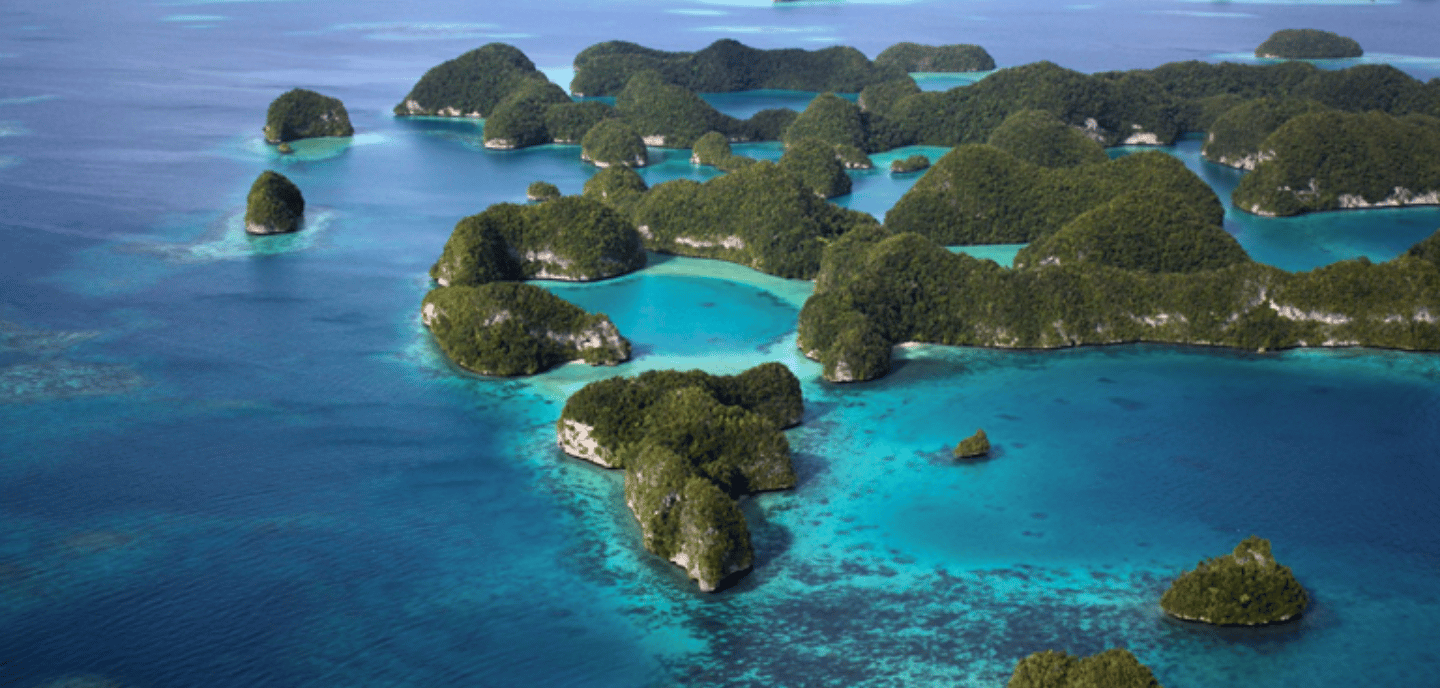
Image: Palau. Pablo_Marx, Flickr
The challenge for SIDS
For SIDS, the barriers to effective EWS are uniquely pronounced. Geographic isolation and, for some areas, limited infrastructure redundancy, make multi-channel emergency alerting inherently difficult, while exposure to severe hazards such as cyclones, storm surges and flooding continues to grow. Reaching communities reliably requires layering multiple channels – mobile, radio, sirens, and others – to eliminate single points of failure. Within this, mobile is particularly effective: it offers broad reach at scale and, as part of a multi-channel system, can mean the difference between a community forewarned and one left unreached.
Cyclone Freddy (February-March 2023) brought such stakes into sharp relief. The longest tropical cyclone on record, it travelled across the Indian Ocean region over several weeks, creating considerable social and economic damage. In Madagascar alone, the cyclone’s two landfalls impacted more than 200,000 people – prompting a broader shift in Madagascar’s disaster management approach from reactive response towards active preparedness, and a growing recognition of the importance of delivering multi-channel emergency warnings to the right people at the right time. Central to this was the work of Madagascar’s National Meteorological and Hydrological Service and National Office for Risk and Disaster Management, which issued regular warnings and advisories to affected communities throughout the cyclone.
Collaboration in action: building systems together with M4H
M4H is engaged across SIDS, acting as a vital partner for EWS stakeholders to support the implementation, and strengthening of, regional and national EWS.
Pacific
In the Pacific, GSMA has worked closely with MNOs through its partnership with the Pacific Islands Telecommunications Association (PITA), alongside governments, humanitarian organisations and disaster management agencies, to implement Cell Broadcast (CB)-enabled EWS across several Pacific SIDS. A landmark moment in this work recently came in the Solomon Islands, which was the first Pacific SIDS country to successfully conduct a CB test – a significant milestone in expanding the region’s life-saving emergency alert capabilities. Our Telekom has led this deployment, implemented alongside existing channels including radio, TV and social media. CB implementation also began in the Cook Islands, Samoa and Kiribati in 2025.
In addition, a regional workshop co-hosted by GSMA, PITA and Omnitouch in Fiji brought together over 50 stakeholders and resulted in a formal partnership between the GSMA and the Secretariat of the Pacific Regional Environment Programme (SPREP) – the regional body established by Pacific governments to protect and manage the region’s natural resources.
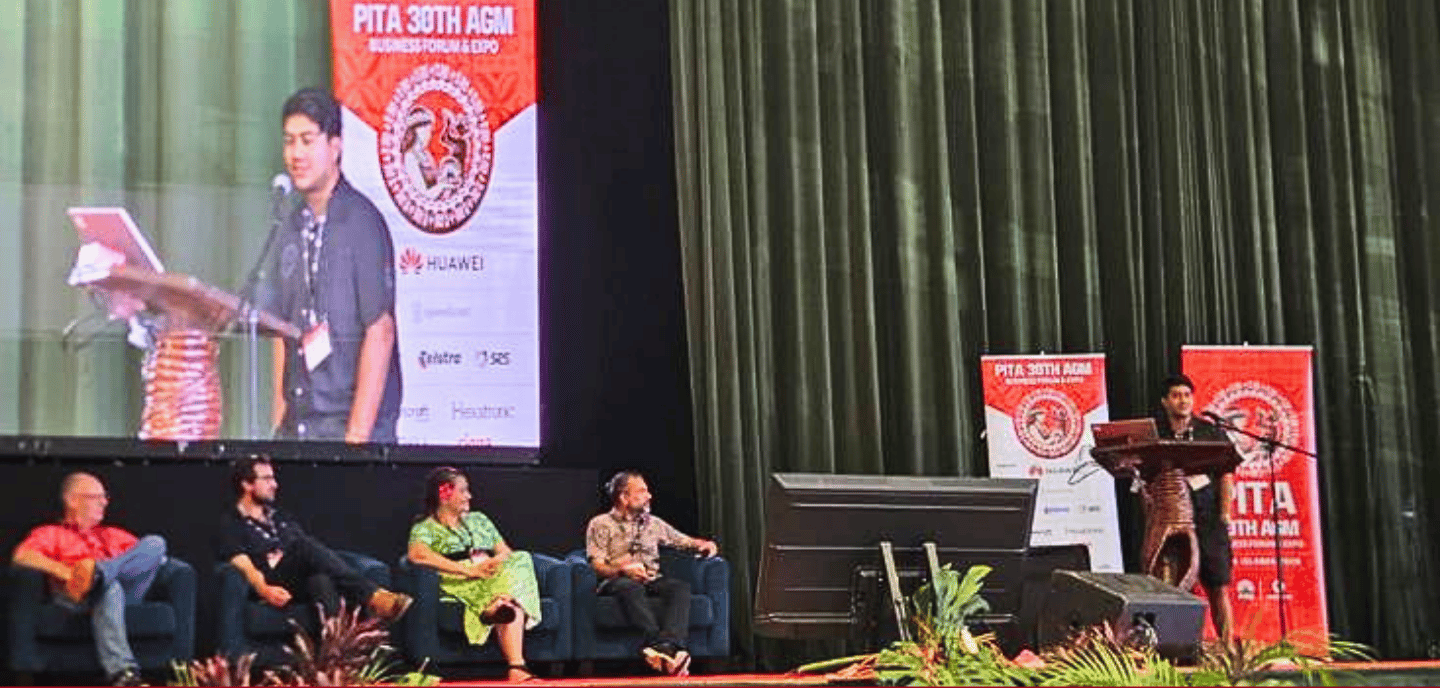
Image: The GSMA and other key stakeholders collaborate at the PITA 30 AGM 2026 in the Cook Islands
Caribbean
In the Caribbean, GSMA has built partnerships through industry body, the Caribbean Association of National Telecommunications Associations (CANTO) to advance EWS collaboration between MNOs and governments, including discussions with several Caribbean countries to develop and implement a national EWS. The GSMA also hosted, alongside the Emergency Telecommunications Cluster and the International Telecommunication Union, an emergency telecoms preparedness workshop in October 2024.
This work sits alongside CREWS Caribbean, a flagship three-year programme under the Global Facility for Disaster Reduction and Recovery (GFDRR), covering 15 Caribbean Community (CARICOM) nations. The programme brings together the World Bank, the World Meteorological Organisation (WMO) and the United Nations Office for Disaster Risk Reduction (UNDRR) to strengthen the region’s multi-hazard, people-centred EWS.
Indian Ocean
In Madagascar – the most cyclone-exposed country in the world – GSMA has supported EWS strengthening and national CB deployment readiness through member-funded research and stakeholder engagement. This included a February 2026 workshop co-hosted by GSMA, the International Telecommunication Union (ITU), the Madagascar National Office of Risk and Disaster Management (BNGRC) and the Regulatory Authority of Communication Technologies (ARTEC), to address national challenges and enhance the effectiveness and inclusivity of Madagascar’s EWS. In addition, GSMA recently commissioned a first-of-its-kind assessment of Madagascar’s existing SMS alert system and examined how communities receive and respond to these messages alongside other channels, in support of strengthening Madagascar’s national EWS infrastructure.

Image: Stakeholders engaging at the GSMA, ITU, BNGRC and ARTEC workshop in Madagascar.
Cross-regional insights
From its engagement across SIDS, the GSMA has observed several cross-cutting lessons for these diverse contexts:
- Cross-stakeholder collaboration must be embedded from the outset – the most effective EWS are those where MNOs are brought in as EWS partners from the beginning, ensuring that MNOs, governments, disaster management agencies and humanitarian partners are aligned before a climate event occurs.
- Multi-channel delivery is essential – Mobile based alerting, including SMS and Cell Broadcast, can extend emergency alert reach significantly but must be combined with traditional mechanisms such as community radio and warning sirens to ensure no one is left behind.
- Accessibility and inclusive design must be considered from the outset, including delivery in local languages or accessible formats.
- Community trust and ownership is critical to EWS effectiveness to ensure that affected communities not only receive alerts but also act on them.
The GSMA, through its Mobile for Humanitarian Innovation programme, continues to work to enable deeper collaboration across EWS stakeholders, share regional learnings and embed EWS into the architecture of mobile networks across SIDS and around the world. You can find out more about M4H and our EWS work here. Learn more about our engagement in the Pacific here.
This initiative is currently funded by UK International Development from the UK government and is supported by the GSMA and its members.