
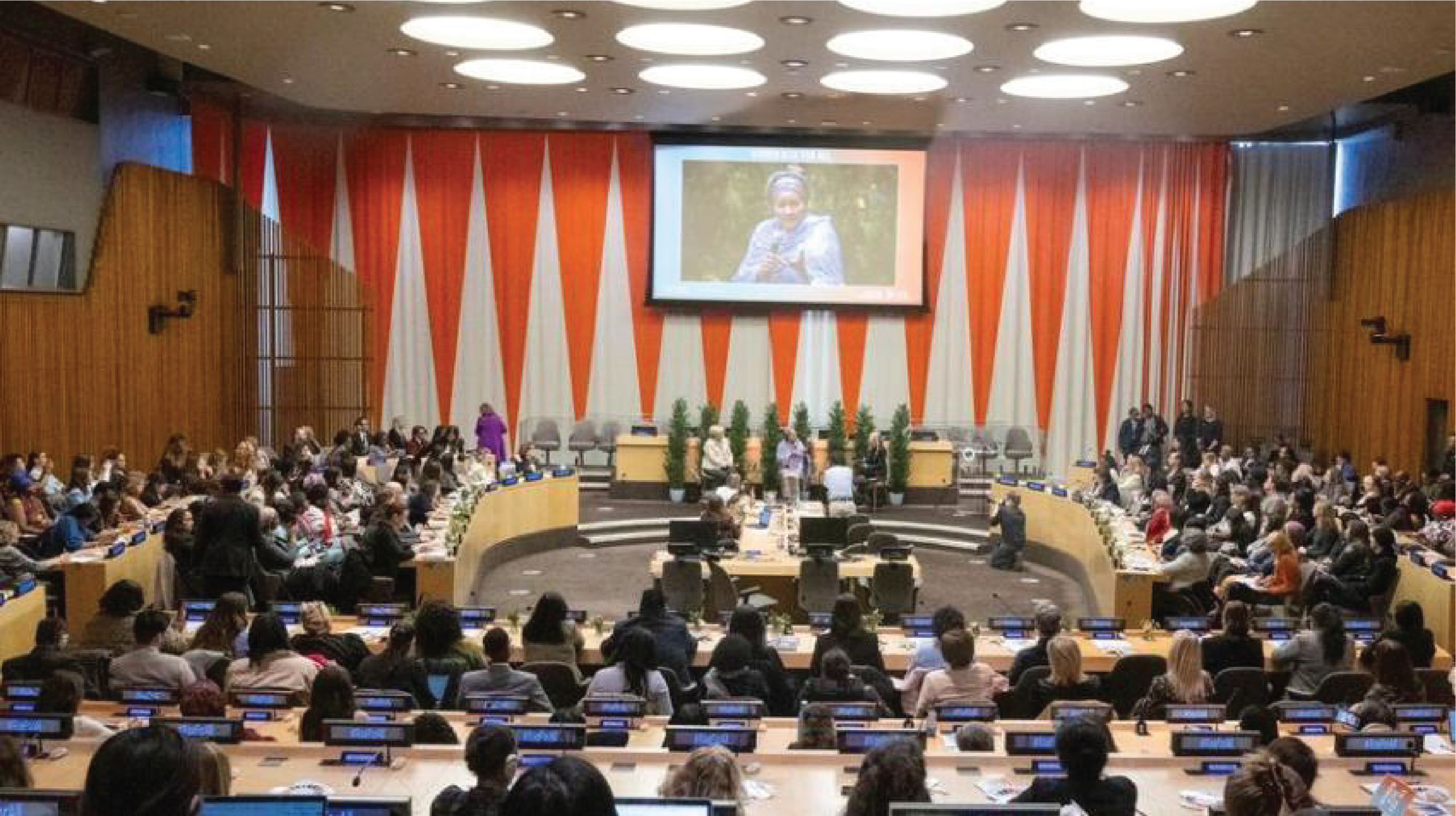
In March 2025, UN Member States adopted the Beijing+30 Political Declaration, and committed to the Beijing+30 Action Agenda, a key moment in marking the 30th anniversary of the Beijing Platform for Action, the world’s most comprehensive blueprint for advancing women’s rights.
Beijing+30 placed a greater emphasis on bridging the digital gender divide, identifying it as one of six top priorities of the Action Agenda. This was a sharp contrast to the original 1995 Platform, which made no reference to digital.
Rather than a one-off moment, Beijing+30 is a year-long anniversary, marked by a series of milestones throughout 2025. The next came at UNGA80 in September, during a high-level meeting on the 30th Anniversary of the Fourth World Conference on Women, where governments unveiled new national commitments to advance the Beijing +30 Action Agenda.
From 1995 to Today: Persistent gender gaps in an increasingly digital world
The original Beijing Platform in 1995 outlined 12 critical areas of concern for advancing gender equality. At the time, digital transformation was not part of the agenda.
Today, more women are digitally included than ever before. Worldwide, 65% of women are now using the internet according to ITU. Despite this, there remains a significant gender gap with 189 million more men than women using it.
In low- and middle-income countries (LMICs), where the majority of men and especially women access the internet via mobile phones, women are 14% less likely than men to use it (GSMA, 2025).
These gender gaps not only reflect existing gender inequalities but also risk deepening them. Closing the digital gender divide is essential for achieving gender equality but it is also a socio-economic imperative.
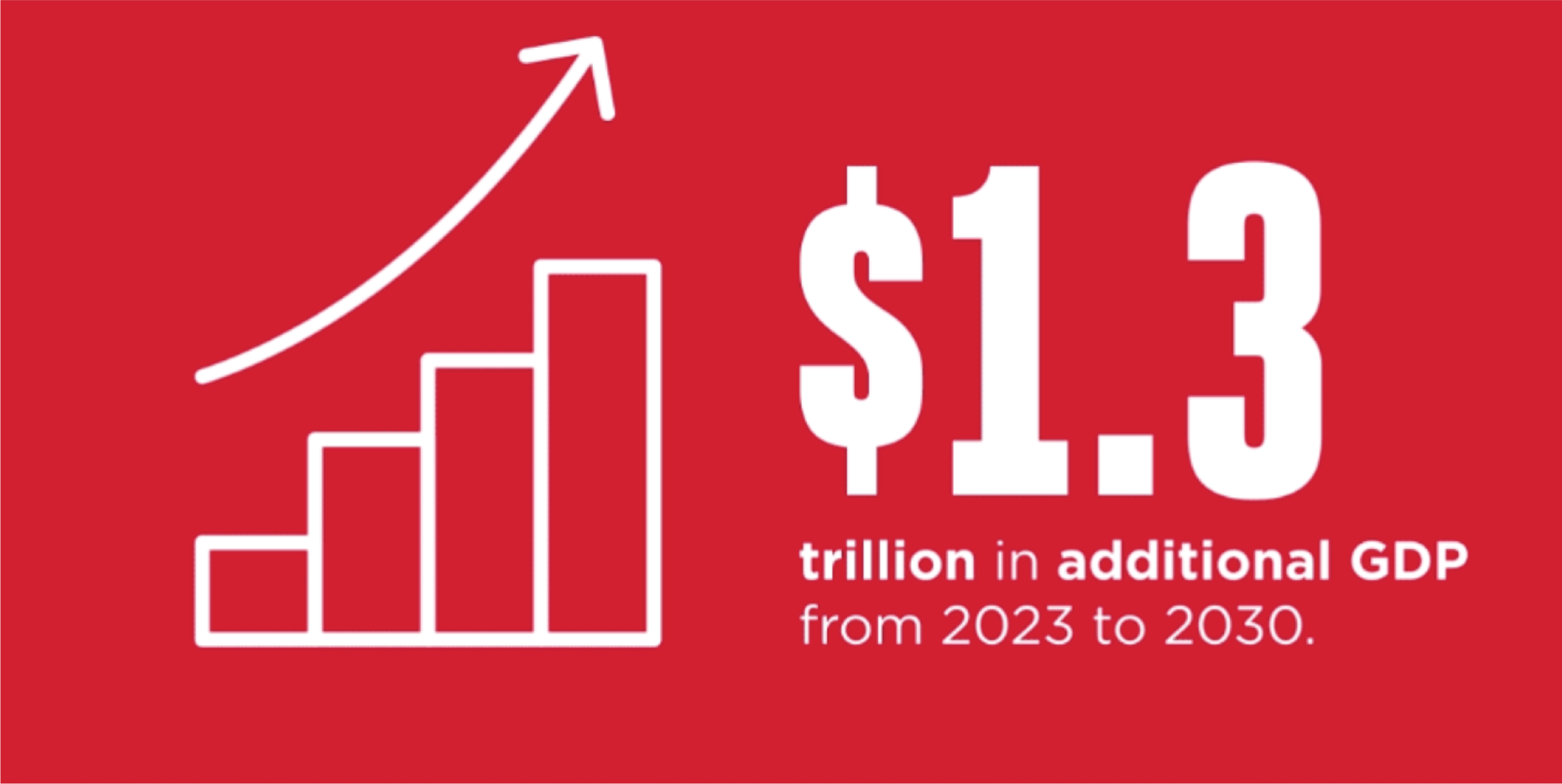
Connecting all women to the internet will bring significant benefits to individual women and their families, the economy and businesses, while at the same time contributing to the achievement of the UN Sustainable Development Goals, especially SDG 5. For instance, GSMA research indicates that closing the gender gap in mobile internet adoption in LMICs would add $1.3 trillion in additional gross domestic product (GDP) during 2023–2030.
Progress is happening, but more needs to be done
Throughout the Beijing+30 anniversary year, some governments have already started translating global commitments into national activity by embedding digital gender equality into national strategies, budgets and initiatives.
For example, India announced a record $55.2 billion gender-focused budget in 2025–26 that includes digital empowerment and skills. Ghana has introduced initiatives to expand digital skills for girls and improve data affordability, while Pakistan is implementing a national Digital Gender Inclusion Strategy through a multi-stakeholder approach.
During the recent high-level meeting on the 30th anniversary of the Forth Conference on Women at UNGA80, new commitments were also announced in support of the B+30 Action Agenda. So far, 11 Member States, among other stakeholders, have made pledges towards a digital revolution for women and girls1. These commitments are an important step forward and we encourage other governments to follow in their footsteps.
However, the true measure of success will be whether these commitments translate into action that delivers real progress on women’s digital inclusion.
So, what’s next? What can governments do to close the digital gender divide?
The digital gender divide is substantial and persistent – particularly in LMICs – and requires concerted action from government and other stakeholders. To deliver on the Beijing+30 promise and ensure action turns into lasting impact, governments should:
1. Understand the context of digital inclusion for women and girls. This means collecting, analysing and tracking gender-disaggregated data related to mobile and mobile internet access and use, to inform government policies and interventions.
2. Integrate a gender perspective in strategies, policies, plans and budgets by ensuring digital gender equality goals and considerations are included across information and communication technologies (ICTs) and other relevant policies (e.g. those related to broadband, education, agriculture, SMEs, gender, etc.).
3. Address key barriers preventing women from adopting and using mobile internet. This includes:
- Affordability (particularly of handsets)
- Literacy and digital skills
- Safety and security concerns
- Fundamental enablers including electricity and formal identification, as well as restrictive social norms which may limit women’s access and use to digital technologies
- Relevant content and services that meet the needs and preferences of underserved women
4. Collaborate and partner with different stakeholders to address the mobile gender gap as the root causes are complex, diverse and interrelated. Stakeholders such as policymakers, mobile operators, non-governmental organisations and the international community all have a role to play as no one stakeholder can close this gap on their own.
For more recommendations, please see the GSMA’s Policy considerations to accelerate digital inclusion for women in low- and middle-income countries and The Mobile Gender Gap Report 2025 (p.62).
The commitments made at UNGA80 and throughout the Beijing+30 process show that political will is abundant. The challenge now is to turn momentum into measurable progress. Digital inclusion is no longer optional; it is a prerequisite for achieving gender equality in today’s digital age.
The Connected Women programme is funded by the UK Foreign, Commonwealth & Development Office (FCDO), the Swedish International Development Cooperation Agency (SIDA), and supported by the GSMA and its members.