In today’s increasingly connected world it is important to remember that around 3.4 billion people are still not connected to mobile internet – the primary and often only way people in low- and middle-income countries (LMICs) access the internet. The majority of those who are not yet using mobile internet are women. In fact, across LMICs women are 14% less likely than men to use mobile internet – around 235 million fewer women than men. Worryingly, progress in closing this gender gap across LMICs has stalled.
This highlights that more must be done. Connectivity provides access to critical and life changing information and services including healthcare, education, e-commerce, financial services and income opportunities. Accelerating digital inclusion for women does not just benefit women but is a significant commercial and economic opportunity. We estimate that closing the gender gap in mobile internet adoption in LMICs would add $1.3 trillion in additional gross domestic product (GDP) over the eight years from 2023 to 2030.
As the world becomes more digitised, ensuring that women can access and use mobile is essential. The acceleration of tools such as AI are giving rise to new digital divides. If women are digitally excluded, they won’t be able to benefit, further exacerbating gender inequalities.
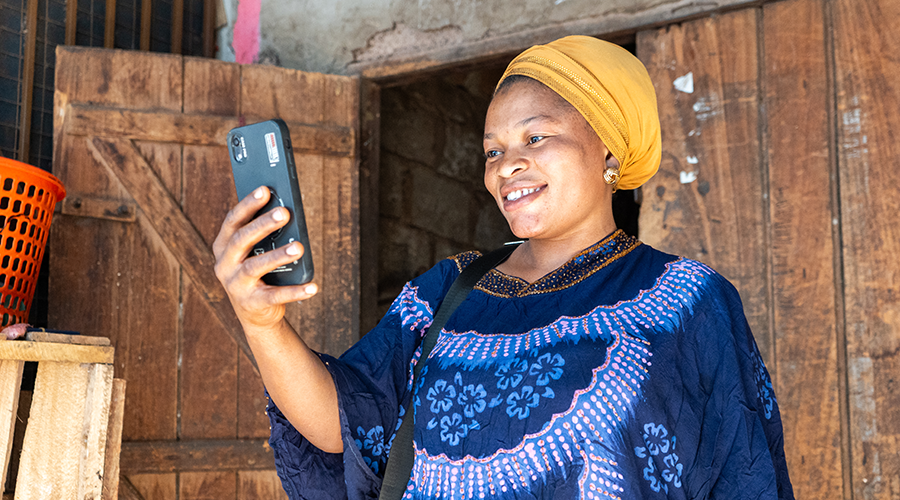
The theme for this year’s International Women’s Day is “Give to Gain”. To ensure that we are not leaving women behind in an increasingly connected world, all stakeholders must work together and:
- Give investment, effort and attention to address the mobile gender gap
- To gain and realise significant social and commercial benefits to individuals, societies and economies
We will be giving critical data and insights on the mobile gender gap in June, when we publish our Mobile Gender Gap Report 2026. The report will provide the latest data on the size of the mobile gender gap across LMICs, the barriers to mobile internet adoption and use, and opportunities to address them. For the first time, we will also provide a breakdown of mobile gender gaps by key geographies within LMICs, including urban and rural areas, least developed countries LDCs), landlocked developing countries (LLDCs), and small island developing states (SIDs). We will also share new data on how mobile internet users feel that using it has impacted their income and livelihoods.
This data is critical to measuring progress and informing investment and action. Investment such as those made by mobile operators as part of the GSMA Connected Women Commitment Initiative. We are excited to announce that since this initiative was launched in 2016, more than 50 mobile operators have made formal commitments with targets to accelerate women’s digital and financial inclusion and have collectively reached over 90 million additional women to date.
Connected Women Commitment Partners are successfully increasing women’s access to and use of mobile internet and mobile money services by actively improving:
- Affordability of internet-enabled devices and services (e.g. through handset financing and subsidy schemes and partnerships)
- Knowledge and skills by increasing awareness and understanding of mobile internet and mobile money services for women, their benefits and uses, as well as digital skills and confidence (e.g. through marketing campaigns, digital skills training including using the GSMA Mobile Internet Skills Training Toolkit, agent networks)
- Safety and security by helping address concerns such as harassment, harmful content, false information and fraud (e.g. by enabling customers to hide their phone numbers when recharging their credit or data or transacting with others to minimise risk of harassment, and including a focus on online safety in digital skills training)
- Relevance of products and services (e.g. by adapting products and services to better meet women’s needs)
By holistically addressing women’s needs and the barriers they face, it is possible to reduce the gender gap. This includes not only ensuring that women are able to own an internet-enabled phone but that they have the knowledge and skills to safely use it to meet their life needs, and have access to relevant products and services. It also includes addressing restrictive social norms that may prevent or limit women’s access and use of the internet.
See who the GSMA Connected Women Commitment Partners are and read more about their commitments and the actions they are taking on our Commitment Initiative page.
Our upcoming new data, along with our work and that of our partners, will hopefully inspire further action to #GiveToGain and ensure digital and financial inclusion for women.
We are grateful for the support of our members, the UK Foreign, Commonwealth & Development Office (FCDO), the Swedish International Development Cooperation Agency (SIDA) and the Gates Foundation.
Our Mobile Gender Gap Report 2026 will be available here in June 2026. To receive our upcoming reports, please sign up to our newsletter here.

The Connected Women programme is funded by the UK Foreign, Commonwealth & Development Office (FCDO), the Swedish International Development Cooperation Agency (SIDA), and is supported by the GSMA and its members.