
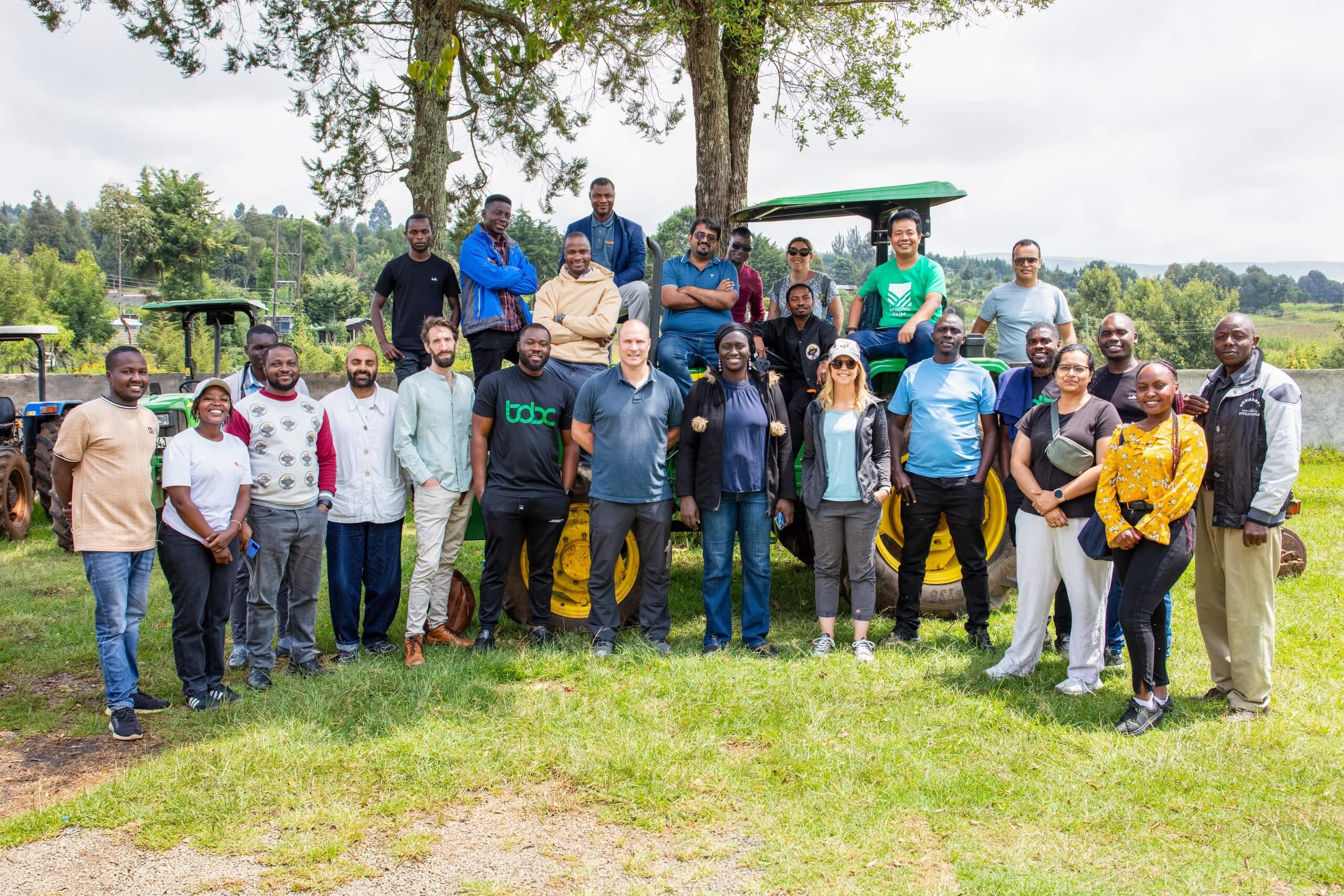
The fourth and final Field Focus Session (FFS) under this edition of the AgriTech Accelerator took place during July across sites in Nairobi and Nakuru, Kenya. Field Focus Sessions are designed to enable the AgriTech Accelerator cohort members to meet with eachother for knowledge sharing, capacity building and gathering inspiration from innovative local agritech initiatives and ecosystem stakeholders.
During this FFS, field visits were arranged to see first-hand, how two organisations deploy their services on the ground. Two interesting business models were explored. First, with Hello Tractor who are enabling farmers to access mechanisation on their farms without the capital outlay of tractor ownership, and secondly with Kuza who are supporting farmers access a range of services through their “agripreneur” model. Both organisations are approaching significant issues faced by smallholder farmers (SHF) from very different, but complimentary angles.
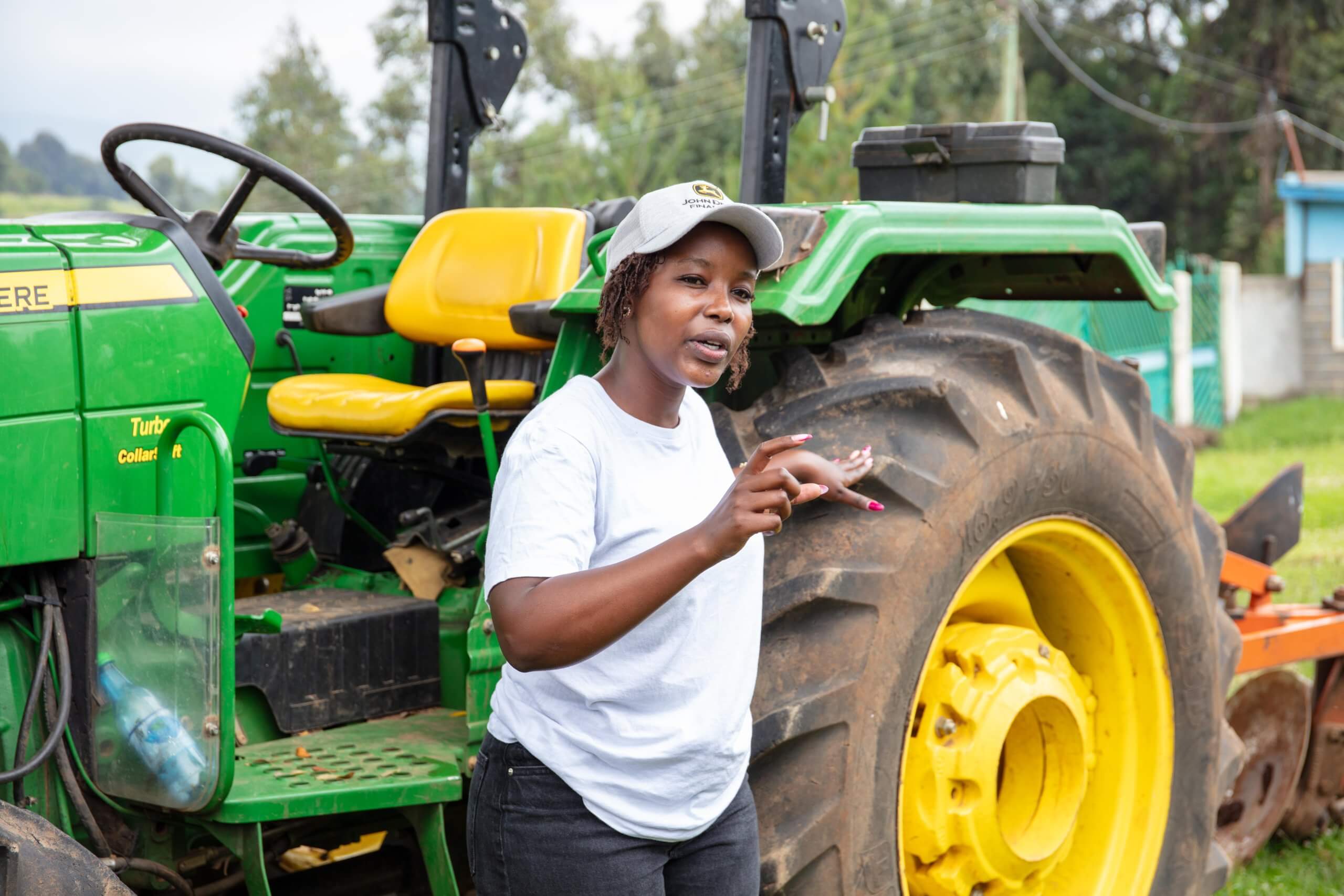
Hello Tractor are in essence providing asset finance services to tractor operators, who lease-hire tractors from the company. The tractor operators generate income to repay their loans by providing mechanisation services to SHF; once the loan is repaid, the operators own the tractor. Jobs are created for tractor operators, booking agents and technicians who service the tractors. Hello Tractor put a lot of energy into ensuring their assets are well looked after, because until that loan is repaid, the tractor is a liability for the company, and the tractor operator cannot generate income if the vehicle is not fully functional.
Kuza is training and equipping rural youth, known in the farming community as “agripreneurs,” to build farmers’ capacity and connect them to advisory services, quality inputs, financial services, and market linkages through Kuza’s One Network platform. These agripreneurs are equipped with portable digital toolkits, specially designed for rural conditions, functioning without internet or electricity and featuring over 10,000 bite-sized videos in 10 local languages on good agricultural practices, business skills, and climate-smart techniques.
Founder and CEO Sriram Bharatam explained “farmers are linked to an agripreneur, who acts as their trusted advisor and gateway to services on the Kuza One Network. As more agripreneurs, farmers, and service providers join the network, a flywheel effect takes hold: increased participation enhances the platform’s value, attracting even more users and expanding access and choice for farmers.”
Importantly, in both cases, we saw how the different approaches by each company were generating jobs for women and young Kenyans across the agricultural value chain; Hello Tractor through their booking agents and tractor opertors and Kuza through their agripreneurs.
Later in the week, the AgriTech Accelerator cohort were introduced to Antugrow and the Digifarm team, two organisations providing smallholder services with different technologies and targeted at different audiences. Firstly, Antugrow are leveraging blockchain to overcome the age-old issue of access to credit for individual farmers, by equipping stakeholders across the agricultural value chain with fast, accurate, actionable information to support smarter decision-making. Antugrow’s farm advisory combines Geographic Information System (GIS) data, existing agricultural datasets with the company’s proprietary decision model to provide highly tailored and personalised advisory. Meanwhile, Brian Amani, CEO of Antugrow explained how their Shambani platform provides farmers with access to credit based on the performance of their farms. SHF can access loans based on smart contracts in place with FSPs registered on the blockchain-based facility.
Digifarm offers a comprehensive digital agriculture platform designed to transform Kenya’s agricultural sector by empowering smallholder farmers, cooperatives, and Agri-SMEs across both formal and informal value chains. Through strategic partnerships with local financial institutions, Digifarm integrates financing, advisory services, and market access into a single ecosystem. Farmers using the platform benefit from tailored credit solutions, access to quality inputs and services, digital advisory tools, and embedded payment systems.
For Agri-MSMEs, Digifarm’ s Soko platform provides a suite of tools that streamline operations and enhance profitability. These include farmer management systems, bulk SMS communication for real-time updates, smart harvest collections with IoT integrations, and instant digital payments via M-PESA or bank transfers. Additionally, embedded financing solutions such as farmer cash advances for tea factories enabling timely payments, reduced side-selling, and improved supply chain efficiency. This end-to-end solution has been co-developed and validated in collaboration with financial service providers, as explained by Anne Ngendo, Financial Products Lead, and Lionel Ngunjiri, Product Manager Merchant solutions. The platform leverages data-driven credit review, mobile technology, and partnerships to unlock liquidity, improve yields, and enhance financial inclusion for underserved farming communities
Digifarm on the other hand are onboarding established co-operatives and farmer groups in formal agricultural value chains. The farm data is fed into the Digifarm platform at the co-operative / farmer group level and lending decisions are made based on the outputs from the Digifarm decision-making model. This credit scorecard has been developed and validated with local financial service providers.
The two organisations are using different tools and technologies to improve SHF’s access to credit but leveraging different ‘trust and risk assessment” approaches; Antugrow through the benefits of distributed ledger technology and the advantages of immutable data for smart contracts, whereas Digifarm is leveraging the linkages and human factors of cooperative membership and social contracts in combination with digitised record keeping for their credit scorecard.

The FFS was rounded off with further insights from local agri ecosystem stakeholders. Sam Mbugua, Venture Support Manager of Delta 40 gave an insightful talk on common pitfalls agritechs and startups make when first approaching investors. This was followed by a panel session with representatives from local agritechs, donors and investors, which culminated in three key takeaways building on the insights from Sam earlier in the day:
Don’t just take the money because it is there: Investment for investment’s sake is not necessarily a silver bullet and can actually be more harmful to a business in the long run. If the investors and business are not aligned from the outset, then as painful as it may seem, walking away from a deal could make better sense.
In a similar vein, moving away from business models and strategies focussed on “growth at all costs” came up throughout the week. External and macro-economic factors as well as the sector itself has tended to show that these models do not necessarily last the test of time; particularly for businesses with high, up-front capital outlays for assets to be leased, or crop buying.
Thirdly, partnerships were a key talking point, especially as traditional funding streams are shifting. Admittedly, not a new topic, but a timely reminder that identifying partners who can operate in synergy or parallel to your core offering, can help agritechs focus on their core strengths. These types of partnership enable product and market diversification, without distracting founders from their primary focus. The many demands on a founder’s focus are a real danger for agritech startups where business models are still being refined and decisions on whether and how to pivot with limited resources can create an existential crisis! A clearly thought through strategy can help a founder navigate the challenges and barriers they will inevitably face along the way.
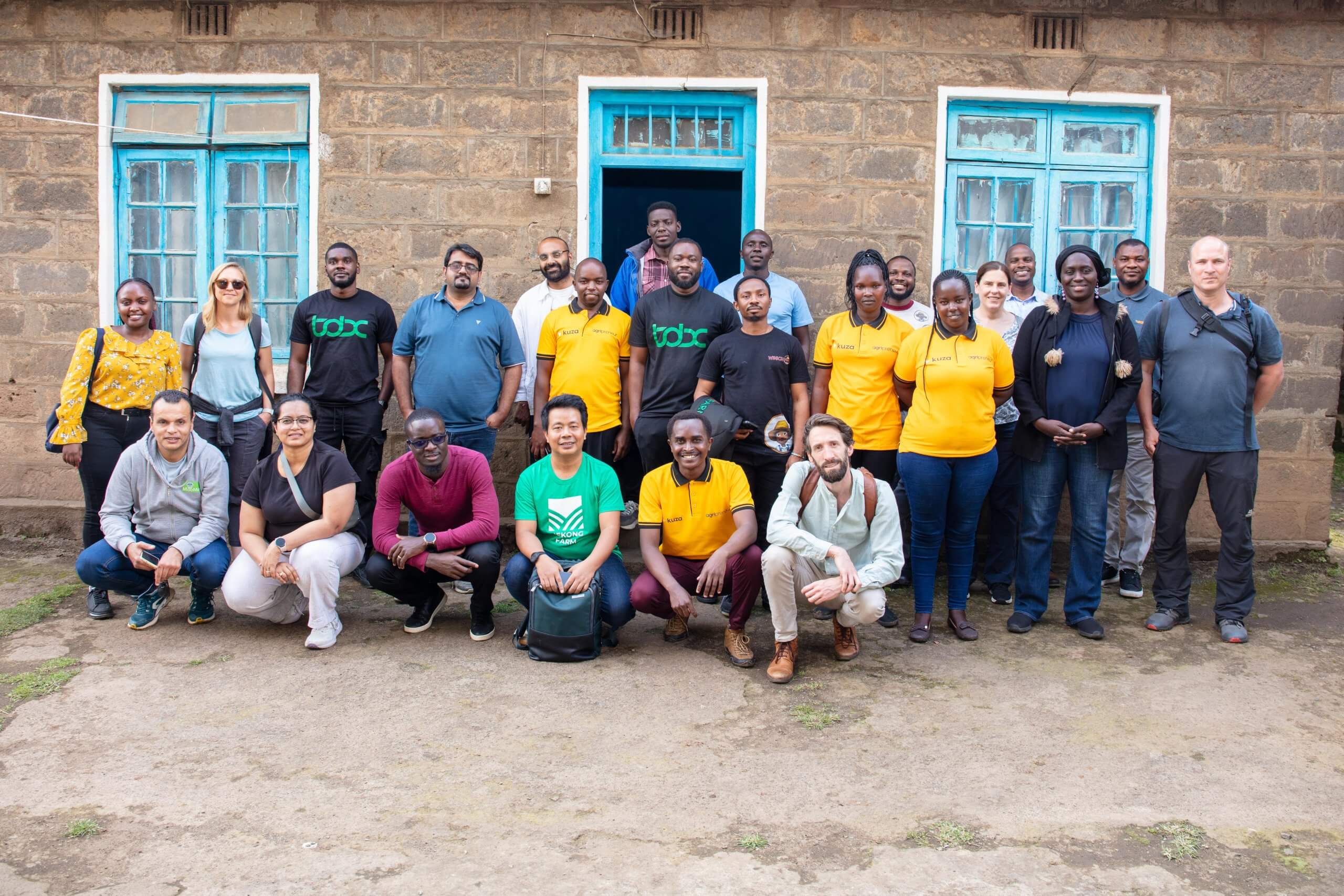
It has been a real pleasure for the AgriTech programme to host the four FFS throughout the AgriTech Accelerator, and we have really enjoyed watching the cohort grow as a community and build their capacity as agritechs. The programme has learnt a great deal from them, and we thank them all for their commitment and willingness to work closely with the programme. We will be keeping a close eye on their progress as they transition from the Accelerator.
Later in 2025, the AgriTech Accelerator Learnings report will be published in addition to a UX Guidebook, based on the learnings and insights from this edition of the AgriTech Accelerator.
Curious about how digital innovation is transforming agriculture across Sub-Saharan Africa?
Dive deeper into stories of impact, technology, and transformation on our blog.
Stay tuned for fresh insights and upcoming features that spotlight the future of AgriTech – powered by local ingenuity and global collaboration.
The GSMA AgriTech Accelerator is funded by the German Federal Ministry for Economic Cooperation and Development (BMZ) and supported by the GSMA and its members.