




Although women in the Philippines are just as likely as men to use mobile internet, and women micro-entrepreneurs are more likely than their male counterparts to use mobile for business, 1 in 4 women micro-entrepreneurs in the Philippines still do not use mobile for their business (Mobile Gender Gap Report 2025). GSMA research also shows that both female and male micro-entrepreneurs in rural areas in low- and middle-income countries are consistently less likely to use mobile for business than their urban counterparts. The key barriers preventing micro-entrepreneurs from using mobile for business vary by country but consistently include a lack of awareness of mobile-for-business use cases or perceived relevance of these, alongside safety and security concerns, and a lack of confidence and digital skills.
To help address these barriers, Smart Communications, Inc. (Smart), the wireless arm of PLDT Inc. (PLDT), works with various partners to equip Filipino micro-entrepreneurs, particularly women and those in rural and underserved communities, with practical digital skills, online safety knowledge, and the confidence to use mobile for business and improve their livelihoods. Smart’s free, full-day, in-person group digital skills training program covers topics such as running a secure online business, using GenAI for business, cybersecurity and digital safety, creating and managing TikTok Shops, and taking high-quality product photos.
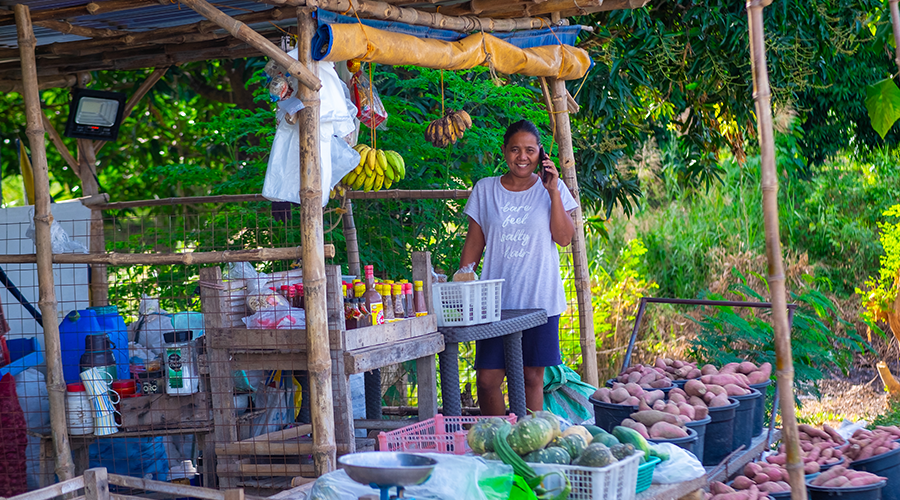
In collaboration with a broad network of partners, Smart has trained over 36,600 micro-entrepreneurs since 2021 through in-person or online group sessions, including more than 20,000 women (approximately 55% of participants). Post-training surveys conducted with participants of both in-person and online trainings showed encouraging self-reported outcomes, with 95% or more of respondents reporting increased confidence in using digital tools for business, greater awareness of cybersecurity practices, and an improved ability to promote products and reach customers online. After participating in Smart’s training, women micro-entrepreneurs like Monaliza have also shared that applying mobile and digital tools to their businesses has helped them reach more customers, explore new income opportunities and increase their earnings.
The key lessons below have been drawn from Smart’s learnings (through customer engagement, surveys and analysing internal data), the GSMA’s discussions with Smart and informal interviews with a handful of Smart customers.
Key Lessons
1. Tailor micro-entrepreneur training to different levels of digital maturity and include case studies that reflect women micro-entrepreneurs’ realities.
Smart’s in-person group trainings are open to all micro-entrepreneurs (not segmented by gender), and they strive to ensure examples, case studies and discussions are reflective of both women (and men) micro-entrepreneurs’ profiles and realities. As micro-entrepreneurs begin the trainings with varying levels of digital literacy, digital adoption and confidence, Smart found that segmenting participants into beginner, intermediate and advanced groups enabled training to be better aligned to learners’ needs, where the scope and complexity of the content could be adjusted accordingly. For example, beginners are introduced to basic smartphone use for business, setting up social media pages, online safety basics and mobile photography. Intermediate learners focus on content planning, product listing, customer engagement and use of e-commerce or social commerce platforms. More advanced participants explore improving their online storefronts, using platform insights, experimenting with GenAI for captions and product descriptions, and strengthening their online marketing campaigns. Smart has observed that this approach helps improve engagement, make the training more relevant to participants’ needs, supports them in applying new skills at a pace appropriate to their level of digital maturity, and generally improves learning outcomes.
2. Build women micro-entrepreneurs’ confidence to manage online risks, not just to detect them, to encourage adoption and use of mobile for business.
Safety and security concerns are the top reported barrier in the Philippines preventing men and women who are already aware of mobile internet from adopting and using it (Mobile Gender Gap Report 2025). These concerns – including scams and fraud, and unwanted contact from strangers – are also more likely to be reported by Filipino women than men. Similarly, Smart’s own experience suggested that women micro-entrepreneurs were more likely than their male counterparts to express concerns about online safety, often shaped by personal experience or awareness of scams within their communities, which significantly reduced confidence in, and adoption of, mobile for business. For example, women expressed greater concern about online scams and fraud, discouraging them from selling their products online.
In response, Smart strengthened its safety and security training to go beyond awareness-raising, focusing on detecting, avoiding and responding to online risks. Participants are taught how to identify red flags for common online scams and phishing attempts in the Philippines. The training also emphasises practical actions such as pausing before clicking, verifying sources, avoiding suspicious links, as well as how to block, report and seek support when encountering suspicious activity. This helps position online safety not as a barrier to digital adoption, but as an important capability that can enable entrepreneurs to use mobile tools more confidently and responsibly.
3. Offer flexible, on-demand learning opportunities to encourage women micro-entrepreneurs’ training participation.
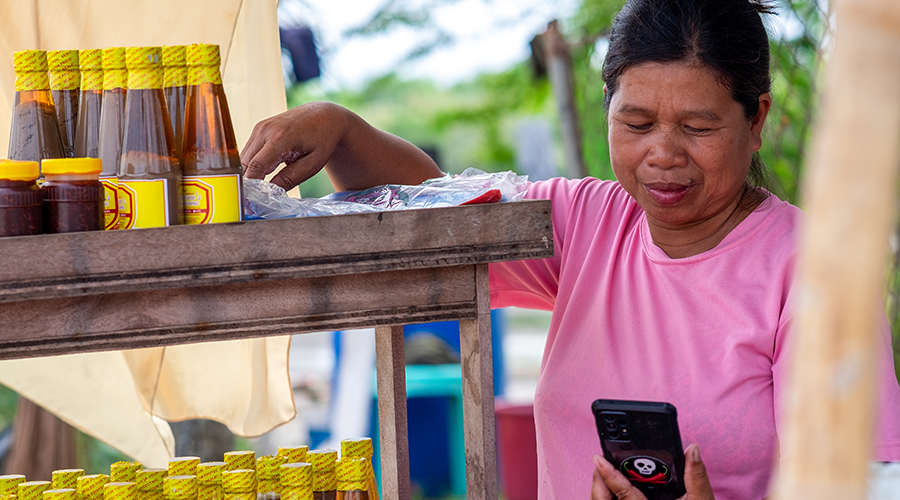
Smart also offer online learning opportunities, given the additional time constraints women micro-entrepreneurs face due to caregiving and household responsibilities (which limits their ability to attend formal, in-person sessions). These include training via Facebook groups and group chats, where participants can access bite-sized content, continue learning at their own pace and seek peer support. Participants are encouraged to practise their skills and receive feedback from others (e.g. for lessons on ‘how to take good product photos’, farmers can post their product photos in the group, and trainers or peers can comment with tips to improve them).
4. Provide in-person, hands-on support to help women micro-entrepreneurs set up digital pages, accounts, and online business profiles to succeed online.
While digital channels help expand training access and participation and enable ongoing education and troubleshooting, Smart has found that face-to-face training is particularly valuable for participants, especially women micro-entrepreneurs who tend to find the practical, hands-on elements of the training most helpful. In-person group sessions typically begin with foundational topics such as selling online, social media marketing and digital safety, before progressing to hands-on activities to apply learnings. Participants receive support to set up or improve their digital business accounts (including TikTok), create or update product listings, and troubleshoot challenges with guidance from trainers. Some sessions also include a product photography workshop, where participants use their own smartphones to photograph their own products while receiving guidance on taking high-quality photos and presenting products effectively online.
5. Provide ongoing support to micro-entrepreneurs beyond initial training to sustain use of mobile for business, especially women.
Smart has observed that while many entrepreneurs were eager to use digital tools after training, some struggled to apply what they had learned in their day-to-day business operations. Women and rural participants in particular – often with competing responsibilities, limited time, uneven access to support, and lower confidence – needed more than a one-off training session to move from awareness to adoption.
In response, Smart developed a community adoption programme that provides micro-entrepreneurs with a series of in person training sessions as well as in person or remote follow-up mentoring support over three months. Participants receive real-time online support to set up accounts and improve their use of e-commerce, while the regular structure builds accountability by encouraging them to apply learnings between sessions. The programme has produced encouraging results so far, with 90% of participants becoming online sellers and remaining active after the programme.
6. Partner across public and private sectors to extend the reach of the micro-entrepreneur training in rural and underserved communities.
Delivering in-person digital skills training to men and women micro-entrepreneurs at scale in an archipelagic country such as the Philippines requires strong collaboration across sectors. Recognising that women micro-entrepreneurs face additional time constraints due to household and caregiving responsibilities, Smart typically conducts in-person group trainings during daytime hours in accessible locations with reliable transport links and suitable facilities. For Smart, working with various partners such as government agencies, development organisations, NGOs, local community and business groups and other private-sector partners has helped extend the reach of its digital skills initiatives – including coordinating schedules based on local circumstances and securing venues that are familiar and accessible to women participants – as well as their relevance. Each organisation contributed complementary capabilities and resources. Government agencies provided credibility and access to registered micro-entrepreneurs, including those with limited or no digital presence and also ensuring women micro-entrepreneurs were well represented in the training sessions. Private-sector partners contributed platforms, technology and business-enabling tools, while local organisations offered community trust, sector expertise and a deeper understanding of the needs of entrepreneurs on the ground. PLDT and Smart contributed connectivity support, training on the use of relevant digital tools, online safety expertise and programme management support.
Smart also collaborated with the GSMA – who provided training materials and market insights on mobile internet use and barriers to adoption for men and women – and the International Trade Centre (ITC) to adapt the GSMA Mobile Internet Skills Training Toolkit (MISTT) resources for the Philippines, with ITC translating the resources and Smart localising and rolling them out, digitally and in person, to Filipino men and women learners. Smart also partnered with ITC to complement ITC’s programme with training on digital entrepreneurship and internet safety, jointly recruit men and women micro-entrepreneurs to participate in the training, and deliver workshops together in selected provinces.
This collaborative model combined Smart’s strengths in connectivity, digital inclusion and online safety with the reach, resources, technical expertise and community networks of its partners, ensuring the programme was tailored to local needs rather than taking a one-size-fits-all approach.
Looking ahead, Smart will continue to strengthen its blended approach to digital skills training, combining the reach and flexibility of digital channels with the hands-on support enabled through in-person engagement and ongoing mentorship. Using this approach, Smart aims to address the skills and safety barriers that can prevent women and rural micro-entrepreneurs from fully benefiting from using mobile for business and help them build the capabilities and confidence needed to strengthen their online presence, grow their businesses, and participate meaningfully in the digital economy.
This blog was prepared as part of a research initiative funded by the Gates Foundation. The findings and conclusions contained within are those of the authors and do not necessarily reflect positions or policies of the Gates Foundation.
The Connected Women programme is currently funded by the UK Government’s Foreign, Commonwealth & Development Office (FCDO) through its Global Research and Technology Development portfolio, and by the Swedish International Development Cooperation Agency (SIDA), and is supported by the GSMA and its members.