


Green Power for Mobile has conducted first working group in 2014 for Myanmar stakeholders in Shangri-la Hotel, Yangon on May 29, in partnership with IFC (World Bank Group). The Working Group has been co-hosted by Ooredoo and sponsored by Narada and Heliocentris. The number delegate has reached 81 participants from 49 different organizations. The event has attracted the multiple stakeholders from MNOs, Vendors, Energy Service Companies (ESCO) and Investors as well. The event was continued by building a technical capacity for engineer on May 30 that taken place at the same venue. Here is a summary from the event.
At opening session, Areef Kassam, GPM Director of GSMA and Jason Pellmar, Senior Investment Officer of IFC as a programme sponsor have been greeting the delegates, followed by Ross Cormack, CEO of Ooredoo, he has explained how Ooredoo’s supporting a green initiative and active to search an alternative energy to power up Ooredoo’s base station.
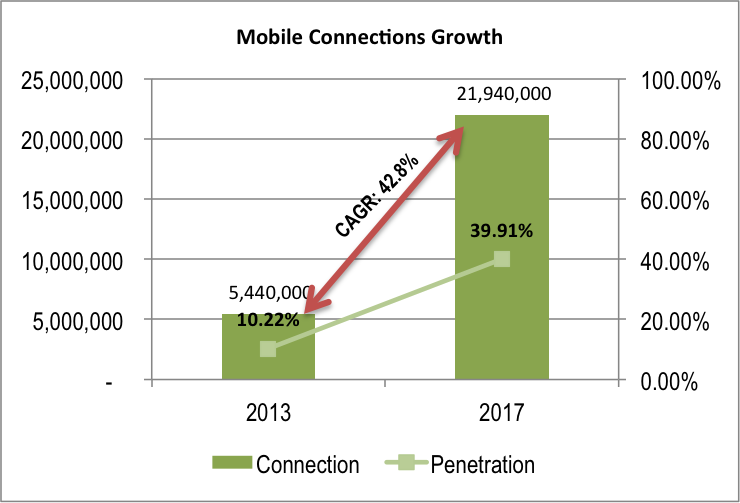
The next speaker was Ali Imron, GPM’s Asia Project Manager, has presented key findings on a green power for telecom opportunity in the country. The current penetration was about 10.22% for mobile and 1% for fixed line. The number of tower was around 1,800 sites across the country. GSMA estimated the number of market penetration would reach almost 40% by 2017.
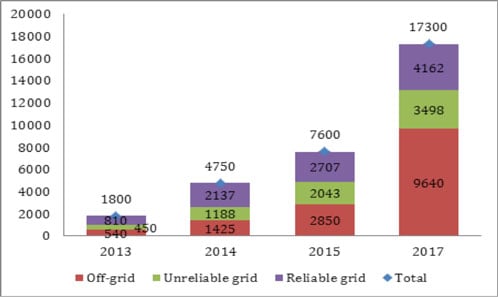
GPM estimated the total number of sites would reach for more than 17,000 tower sites by 2017, with total power requirement over 455 GWh. Given the fact, MNOs need to find an alternative power solution to power up their base stations where grid power supply shortage in the country. Because based on current approach, MNOs would require 25 million liters of diesel this year and climb up to 116 million liters by 2017.
Figure: Problematic Sites Growth
GPM analyses about 1,544 sites have a green potential in 2014 and will reach 9,990 sites by 2017. It will require a CAPEX investment of US$388 million by 2017, with an opportunity OPEX saving for MNO is around US$137 million. It will be equal 203,985 tons CO2 emission reductions. In the other hand, it can create another opportunity for Energy Service Company to provide a power to MNO as well. GPM estimates a potensial ESCO in 2014 is around US$72 million and will increase to US$79 million with payback period less than 3 years. For the detailed report please read here.
Roll out Plan and Strategy – MNO and TowerCo Sharing
Brian Theaker, Network Facilities Director of Ooredoo, presented Ooredoo’s future plan for Myanmar. He said that Ooredoo will deploy 3G network only on 900 and 2100 MHz band, with estimation around 4,500 sites will be deployed by end 2018 and about 57% of them are off-grid sites. On current phase, Ooredoo will build its own power system to power up Ooredoo’s base station and Ooredoo is still evaluating a model (CAPEX or OPEX) for upcoming roll out plan.
Ooredoo has identified the strategy to tackle current power issue by optimizing battery hybrid solution or using an alternative energy solution. He briefed that power sharing mechanism would bring a significantly reduce fuel usage based on Ooredoo’s study.
Karim Dakki, CFO of IGT, came after Ooredoo to explain their business model as TowerCo in Myanmar. IGT as a TowerCo would be able to give its services on tower leased service and tower and power sharing service as well. He said that IGT would construct about 2,000 sites across the country in this year.
IGT would implement power management monitoring system on IGT’s sites to control energy consumption, especially on fuel usage. IGT has realised that power responsibility has shifted from MNO to TowerCo/ESCO and IGT would be able to work to find bet fit solution for MNO.
Technology Development
Peter Ng, CEO of Narada, was opening technology presentation by bringing Energy Storage System (ESS) topic to audiences. He brought the comparison between each type of battery technologies and their implementation in the country such as Myanmar. He mentioned that storage technology has played important role in telecom sector to give a back up time to base station. He briefed the comparison of various ESS technologies with their implementation for multiple grid situations.
The second speaker came from Heliocentris. Jens Fiedler, VP Marketing showed power challenges in Myanmar and TCO models for telecom sector. He described on how TCO works and TCO’s elements those could impact to final result of TCO itself. He showed to the audiences that remote energy management system could play important role to give site transparency and visibility for MNO/TowerCo.
The third speaker was coming from Ameresco, Christoper Pinelli,Director International Operations and Robert Rallo, Senior Engineer have shared their experiences on solar panel deployment. They also briefed the multiple technology designs for various power situations with TCO models comparison.
The forth speaker was Lim ThenPoh, APAC Business Development Manager of Ballard. He introduced Fuel Cell solution that could fit with Myanmar grid situation. He also presented TCO model comparison between fuel cell and DG solution. He showed that Fuel Cell solution had a similar cost as standby diesel generator but Fuel Cell would provider higher site availability with easier installation and operation in urban area (roof-top site).
The last speaker was Shalini Lagrutta, APAC Regional Director of Flexenclosure. Flexendlosure has shared their experiences from the other continent in Africa, she mentioned with right methodology of hybrid implementation could reach an MNO’s/TowerCo’s saving expextation. She showed Flexenclosure’s approach for Myanmar situations, Solar hybrid and Battery hybrid solutions could be the best fit for the country such as Myanmar.
Business Model and Financial Inclusion
The session was kick-off by Ferdous Mottakin, GPM Programme Manager. He described around 16% growth of problematic telecom site in the next six years globally. He also mentioned the common problem of DG daily operational was diesel pilferage on site and it was estimated about US$964 million lost.
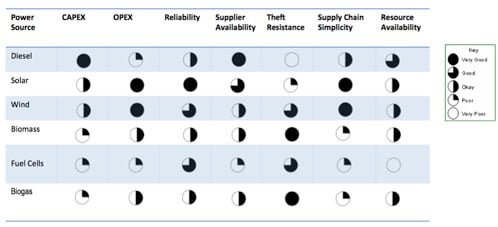
He showed to the audiences for each solution performance analysis based on different power solution.
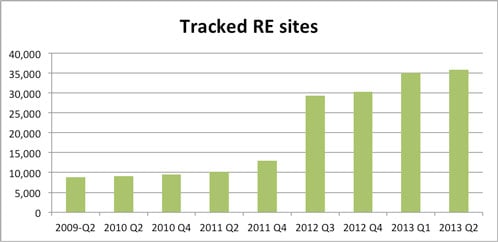
He briefed that GPM has tracked the green deployment around the globe. About 38,000 deployed green powered telecom sites and another 7,000 sites are on the pipeline has been identified by GPM.
On financial case, he described the different between CAPEX versus OPEX model briefly. He mentioned the main challenging of CAPEX model was raising a capital for investment, but it would give a huge OPEX saving for MNO in the other hand.
Andy Schoeter, CEO of Sunlabob, presented after GPM’s presentation. He spoke about ‘Tower Energy Services and Community Add-on’ topic. Sunlabob predicted more than 6,000 off-grid towers would spread across the country in next five years. Sunlabob would offer to MNO and TowerCo as an ESCO to give a peace of mind O&M for MNO/TowerCo. He mentioned that Sunlabob would be able to take this responsibility and has built their local partner to support their activity.
The next speaker was coming from IFC, Jason Pellmar, Senior Investment Officer has briefed IFC background as a member of the World bank group. He explained IFC’s products to support Myanmar’s stakeholder in TMT (Telecoms, Media and Technology) sector. He also mentioned that IFC could finance entire value chain for a green player from contractor, MNO, TowerCo or ESCO.
Yoong Wong, Director of Soleq, was coming to present their portfolios that could be offered to Mynamar’s stakeholders. He briefed that Soleq could provide 100% OPEX model for MNO with a contract range between 5 to 7 years duration. For Myanmar, Soleq targeted 2,000 sites would be financing for energy outsourcing.
And the last speaker of the event was coming from IIX. Mark Sayer, Director of IIX has shared impact relationship on investment side. He described how to analyse impact for tower and mobile industries by compelling business proposition. He also shared on how to measure the impact by creating a framework and building metric for tower provider and service provider.
Through this Working Group has created a market momentum in a green power for telecom sector in Myanmar. Multiple discussions have been brought during the event to search a best solution to tackle the power issue. GPM would keep this momentum and do a follow-up regularly with any stakeholders who active in the country.