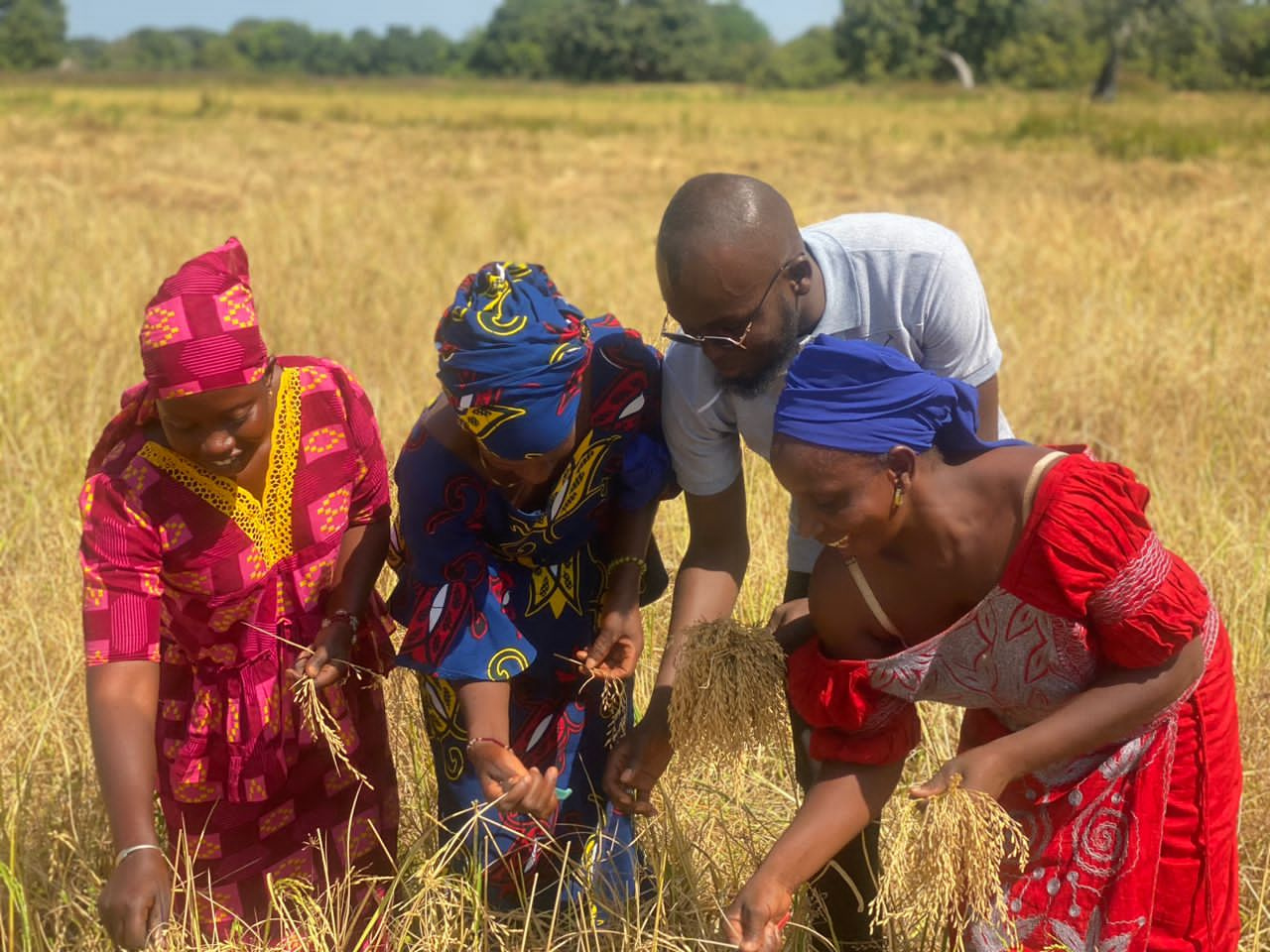
Agriculture is regarded as a key driver of Senegal’s economy, accounting for 17% of Senegal’s GDP. The sector directly employs a large percentage of its 19 million population, ranging from 30% to 40%. In addition, about 70% of the rural population depends on agriculture for their livelihood. Despite its significant role in the country’s economy, the sector faces a myriad of challenges. These include climate change impacts, limited access to resources and information, and socio-economic limitations such as limited adoption of technology, among others. Although advancement of digital technology has increased access to information, knowledge, financial services, markets, and farm tools for millions of farmers, many remain largely excluded.
This blog aims at highlighting how Jokalante, a startup in Senegal is leveraging B2B partnerships, to scale their services, increasing the accessibility of digital agriculture services (DASs) to small-holder farmers.
Farmers in Senegal, like in many other Low- and Middle-Income Countries (LMICs) climate risks and volatile markets, leading to a chain reaction that weakens the rural ecosystem. The lack of reliable rural market data leads to losses and high risks for businesses, microfinance institutions, and insurers – threatening food security, profitability, risk assessment, demand forecasting, inefficient logistics, planning and impact of their services.
It is for this reason that Jokalante created a smart, data-driven platform connecting agri stakeholders. Using multichannel communication; sms, Voice, IVR, Jokalante provides farmers with localised climate data, localised market data, and adapted agricultural advisory services that enhance their decision-making process for greater food security. In addition, through the Tic platform, they leverage farmer behavioral and economic data, as well as feedback to provide valuable insights to agribusinesses, microfinance institutions, NGOs and the government to enable efficient farmer engagement.
Despite the innovative solution, Jokalante has faced a myriad of challenges in their scaling journey. These challenges include the cost of farmers acquisition, digital literacy gaps among the users, and access to capital and expertise to support the growth of solutions. To navigate these challenges, Jokalante is leveraging B2B partnerships for scale.
B2B Partnerships and its potential
Well-organized multilateral collaborations have the potential to help agritech startups overcome systemic barriers, fostering an environment conducive to digital transformation. By combining diverse expertise and aligning the interests of stakeholders, these partnerships can create tailored solutions that promote inclusive and equitable digital innovation.
Case studies from partnerships with National Agency for Civil Aviation and Meteorology (ANACIM), National Network of Seed Producer Cooperatives of Senegal (RNCPS), and Consultation Framework of Peanut Producers (CCPA) illustrate how coordinated efforts among private enterprises, public entities and agribusinesses have facilitated the scaling of DASs.
ANACIM is the national civil aviation authority and meteorology agency of Senegal. It oversees coordinating the supervision and control of all meteorological activities in Senegal in accordance with the standards of the World Meteorological Organization (WMO).
RNCPS is dedicated to support and promote the production, quality control and distribution of seeds for Senegal farmers. On the other hand, CCPA brings together peanut producer organizations in several regions of Senegal. Its main objectives are to unite producers, create lasting partnerships, defend producers’ interests, contribute to a national observatory of the sector, and promote peanut processing. Jokalante partnered with these organizations with an aim of strengthening the agricultural sector in Senegal.
Jokalante-ANACIM partnership
Developing Synergistic solutions
Collaborating with different players in the agricultural value chain can create integrated solutions that address multiple challenges faced by farmers.
ANACIM needed to develop an early warning system to enable communities to be more prepared for disasters and limit loss of life, agriculture and livelihoods, as well as safeguard against second-order effects such as disease. Jokalante on the other hand had developed innovative communications technology targeting hard-to-reach populations. Using a suite of SMS and interactive voice response systems (IVR), Jokalante and ANACIM co-designed and disseminated climate information content that directly addressed farmer challenges.
Driving behavior change
To successfully scale DASs, agritech startups often must impart new behaviour among the farming community, different from how they might typically access and consume agricultural advisory.
In response to this need, Jokalante collaborated with ANACIM to create a behaviour change strategy aimed at enabling farming communities to not only understand and adapt to new technologies for receiving warnings more easily, but also to offer valuable feedback that could be useful in future interactions between the communities and Jokalante.
As a result of this collaboration, Jokalante has been able to scale its services to impact the lives of 500,000 farmers in the last 3 years. In addition, they have been able to validate business models including the fact that farmers can pay to receive these services when value is properly demonstrated.
Jokalante-RNCPS and CCPA Partnerships
Distribution networks
Collaborating with established agribusinesses and retailers can facilitate the distribution of DAS to a wider network of farmers. The collaboration leveraged Jokalante’s expertise in community engagement using digital tools and RNCPS’s extensive network of seed cooperatives and CCPA’s network of peanut producers. By integrating SMS, Voice and IVR, Jokalante facilitates the dissemination of crucial agronomic advisory related to seed production, quality seed production standards to help farmers in choosing the best seeds for planting, while tapping into the network of cooperatives under RNCPS and producer merchants under CCPA to scale their digital solutions.
Market Knowledge
Partnering with agricultural enterprises and input providers offers an important understanding of farmers’ needs, market dynamics, and local issues, helping to ensure that solutions are both appropriate and impactful. RNCPS and CCPA, having supported farmer cooperatives and producer merchants for many years, have invaluable knowledge of their needs, farming behaviors, and practices. This knowledge has been very crucial in helping Jokalante craft solutions that speak to the needs of those farmer cooperatives.
Increased Adoption
By partnering with organizations trusted by farmers, digital agricultural solutions can gain greater credibility and accelerate adoption rates among small-holder farmers. Jokalante has been very strategic in selecting partners to collaborate with ensuring shared goals, vision, and farmers’ trust. As a result, these partnerships have enabled farming communities to embrace and adopt the technologies developed by Jokalante in collaboration with various partners. Through these partnerships with RNCPS and CCPA, Jokalante has so far reached and impacted over 30,000 farmers, enhancing access to agronomic advisory and improving their climate resilience.
Key Considerations for Successful B2B Partnerships; lessons from Jokalante
Effective B2B partnerships are built on trust, open communication, and mutual gain. Establishing common goals, clearly outlining roles and responsibilities, and maintaining open lines of dialogue are key. Long-term success also depends on transparency, consistent collaboration, and a flexible, adaptive approach.
Building trust with partners
To establish trust with partners, Jokalante started by demonstrating openness, reliability and consistency in their service delivery. They ensured they provided clear information about their expertise and achievements but also being open about their shortcomings. In addition, they have offered their value to the partners upfront through providing trials of their services and sharing industry insights to show their commitment. By honouring their commitments and maintaining open lines of communication, they have been able to enforce their dedication to building strong relationships.
Nurturing relationships
Jokalante’s key strength in nurturing partnerships is personalizing their approach based on the needs of the partner and their mode of farmer engagement, e.g. ANACIM’s dissemination of climate information and farmer engagement for RNCPS. Also, they are proactive in addressing partner concerns and offering solutions. Besides, they have demonstrated their preparedness to adapt to changing circumstances and adjusting their engagement as needed to ensure there is continued success.
Role of data
Jokalante understands the role that data plays in partnerships. It provides them with insights into the performance of partnerships against the objectives and KPIs set at the onset. It helps them identify areas of improvement and guides their decisions. Performance data is mainly gathered through impact surveys. For example, a survey of 400 farmers revealed that by RNCPS increasing awareness on identification and access of quality seeds, the production of farmers had gone up significantly. This feedback enabled RNCPS to optimize their efforts and thus deliver better impact.

Conclusion
B2B partnerships are crucial in driving growth, promoting innovation and enabling scale of digital agricultural services as seen in the case of Jokalante. When effectively managed, these collaborations can help organisations develop synergistic solutions with partners, access new markets and distribution networks, drive behaviour change and increase adoption of DASs. However, building and maintaining meaningful B2B partnerships requires thoughtful and strategic approaches to build and nurture trusted relationships.
Discover more stories of innovation and impact in digital agriculture on our blog.
Stay tuned for upcoming features and insights!
The GSMA AgriTech Accelerator is funded by the German Federal Ministry for Economic Cooperation and Development (BMZ) and supported by the GSMA and its members.