


The current state of global healthcare can be illustrated by a few key characteristics: an aging and increasing population; the threat of pandemics; the increasing costs of treatments; and, a short supply of physicians – with experienced specialists unevenly distributed and frequently found only in urban centres.
While these are just a few of the characteristics defining the current state of healthcare worldwide, it can be further illustrated by health failures, such as:
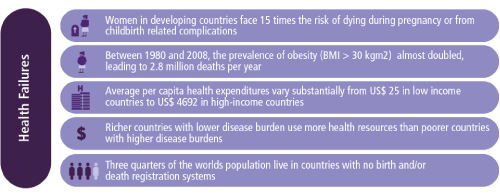
The healthcare sector is in need of innovation, namely because of the reasons above, as well as increasing patient empowerment, increasing consumerism and expectations of health provision, and demands for the personalisation of healthcare. This need for innovation is apparent in both the developed and developing world. To do this, the global healthcare industry is experimenting with new approaches to managing healthcare access and costs, and one of these approaches is mobile health (known as mHealth).
mHealth has the potential to scale primarily because the capabilities of mobile operators and devices can address specific issues and needs in healthcare provision in both the developed and developing world.
Mobile is the most widespread communication infrastructure in the world. With more than 6 billion connections globally, there is near-ubiquitous network coverage in the developed world and significantly higher penetration than fixed telecom networks in developing countries. Most of the world’s population has access to some form of mobile communication, in even the most remote areas of Africa, Asia and Latin America.
The GSMA mHealth team lists over 600 mHealth services, both commercially live and pilots, across the globe. mHealth is here to stay, but a lot still needs to be achieved in order to reach scalability that will enable sustainability.
The million dollar mHealth question: What is the answer to scalable and sustainable mHealth services? Is it ecosystem formation or convergence?