


Hell’s Gate is a 68m2 national park just South of Lake Naivasha in Kenya, North West of Nairobi. As far as African national parks go, it’s considered small, but is popular due to its proximity to Nairobi, as well as its beautiful scenery and abundance of wildlife. Hell’s Gate is home to 100 species of birds and numerous other animals such as buffalo, zebra, eland, hartebeest, gazelle and baboons.
Sixty-eight Masai families also call Hell’s Gate home. Living in typical mud and dung huts, the Masai of Hell’s Gate maintain a predominantly traditional lifestyle as pastoralists, although some also earn income as guides and a few families run businesses reselling airtime top up cards to service the mobile phones in the village.
Most of the villagers have mobile phones and a few of them spoke to us about how they use them and the difference they make in their day-to-day lives.
Moses, who is responsible for cultural promotion in the village, has 6 kids ranging in age from 20 years to 6 months. He uses his phone to connect with relatives and friends outside the village, to send and receive money via M-PESA, and to organise cultural activities. He also uses his mobile to communicate with partners in other villages via voice or SMS, so he can find out the price of their animals and ensure he gets the best price when he sells his animals at the local Saturday market.
Before mobile phones, Moses would either have to walk up to half a day to use a call box in town, write letters, or send people by foot to communicate with others, taking valuable time and slowing the exchange of information.
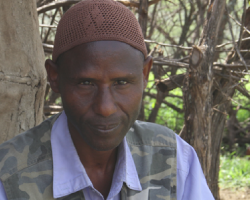 Moses explained the difference having a mobile phone makes for him.
“It makes things easier. We used to have difficulties sometimes before the mobile phones were brought. You could even take one week to have communication with whoever you want to. But nowadays it’s easier cause if you want to talk with someone outside you make it immediately.”
The immediacy of communication has helped the villagers in other ways as well. 22-year old Sophia, who has a 2-month old baby, explained that mobile phones have helped in emergencies, especially because villagers have limited means of transportation other than buses provided by the onsite drilling company on Wednesdays and Saturdays.
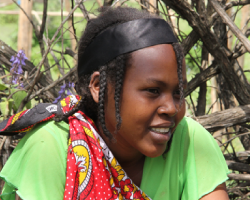 “Sometimes when we get somebody who is very sick, somebody who doesn’t help himself, we usually use phone to call those people to come and collect them to the hospital using that phone. Yesterday there was a mother who was not feeling good and we used phone to call someone to come and collect her to the hospital. Now she’s very okay. ”
As we left the Masai village in Hell’s Gate, a group had formed in the centre for a community meeting. We learned that the village, which has been home to some of its people all their lives was going to be relocated because of the drilling taking place in the national park, which is also home to three geothermal power stations. The villagers will have to re-settle an additional 10-12km further from town, making getting to town even more time consuming and therefore further strengthening the value of immediate communication provided by their mobile phones.
For updates, follow us on Twitter @GSMAm4d