


The GSMA used the occasion of the 15th EMF Forum to call on governments to use the approaching completion of the work of the World Health Organization (WHO) Task Group on RF-EMF to harmonise policies with international recommendations.
WHO Task Group report in 2027
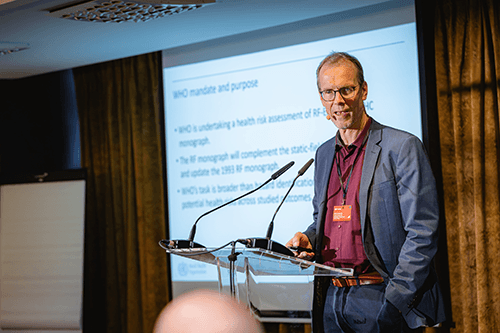
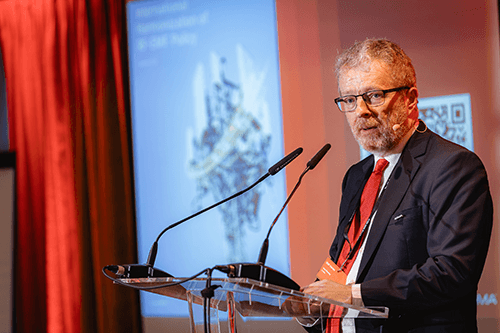

The WHO Task Group Chair, Professor Hajo Zeeb, told attendees the final report is expected in early 2027, after four years of work by more than 80 experts. The Task Group plans one more meeting to finalise the assessment after integrating all evidence streams. He acknowledged criticisms and stressed that ‘interested parties need to understand both the substance and the process – transparency is key.’
Time for action
The new GSMA report International RF-EMF policy harmonisation encourages countries to use the completion of the WHO Task Group work to ensure that national policy is based on the ICNIRP (2020) international exposure guidelines; allows EMF assessments to use the actual parameters of base stations (instead of theoretical assumptions); and makes publicly available credible information.
Dr Jack Rowley, Senior Director EMF and Deployment Policy at the GSMA, told the Forum that the scientific consensus is that the ICNIRP ‘guidelines protect against all potential adverse health effects relating to exposure to RF EMF.’ He reminded attendees that ICNIRP clearly states that ‘there is no evidence that additional precautionary measures will result in a benefit to the health of the population.’ He also pointed to evidence that poor EMF policy restricts mobile connectivity.
EMF compliance and communication
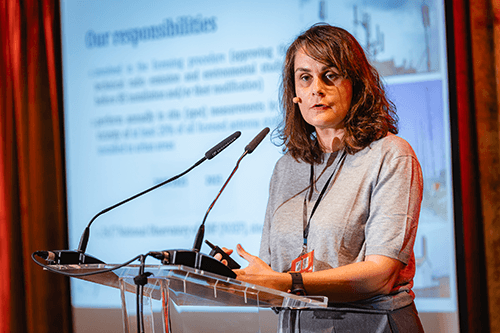
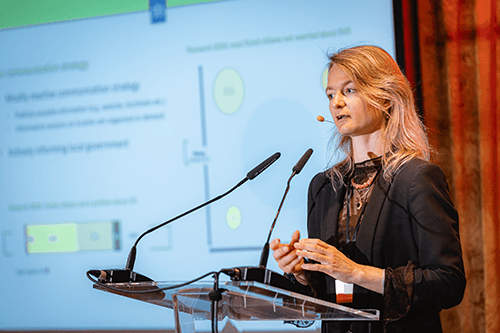
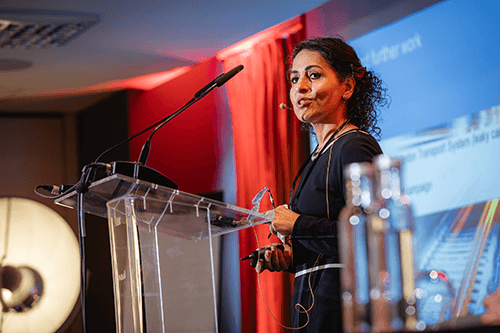
A panel of European policymakers discussed approaches to ensuring compliance with radio wave limits and addressing stakeholder concerns.
Maria Christopoulou from the Greek Atomic Energy Commission (EEAE) outlined a two-year process that led to the country’s 2025 adoption of RF-EMF limits aligned with the European Council recommendation. She also explained how EEAE makes information on EMF measurements accessible to the public.
Lisette Kruit from the Dutch Antenna Agency described a communication approach that is proactive towards local government, which needs to understand its role in antenna approvals, and reactive to members of the public seeking factual information. Antenna Agency research has identified a silent majority with diverse communication needs.
Representing the UK Health and Security Agency (UKHSA) Dr Azadeh Peyman spoke about myths, misinformation and concerns about 5G. The UKHSA continues to follow technology developments with plans for EMF measurements in the London transport system and of the recently licensed millimetre wave spectrum.
‘6G is more of an evolution than a revolution’
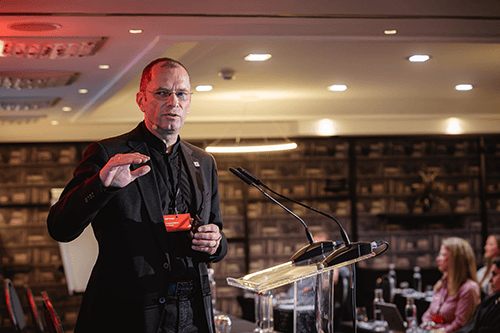
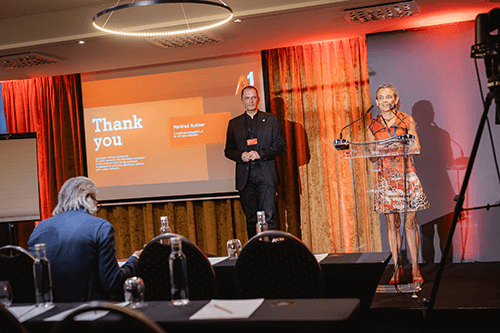
Manfred Ruttner from A1 Austria and Deputy Chair of the GSMA EMF and Health group explained that regarding 6G ‘the technology is and remains radio, and radio has been used for information transmission for many decades.’ He added that ICNIRP’s international RF-EMF limits cover all the frequencies specified for 6G, and relevant EMF test methods exist. In response to questions about EMF and satellite-connected mobile phones, Ruttner responded that downlink levels are very low, with similar field strengths to those at the edge of terrestrial cells. For mobile phones, the maximum power specified in technical standards is the same whether connected to a terrestrial or satellite network.
Quality matters in EMF science
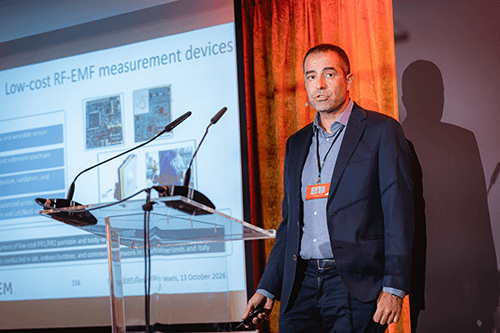

The European Union-supported NextGEM developed Standard Operating Procedures (SOPs) for RF-EMF exposure and biological research to support ‘reproducibility and quality assurance,’ according to Dr Nikolaos Petroulakis, the project coordinator. He added that NextGEM risk assessments ‘indicated that 5G RF exposure at existing low levels appears to pose no or very low risks for the general population.’
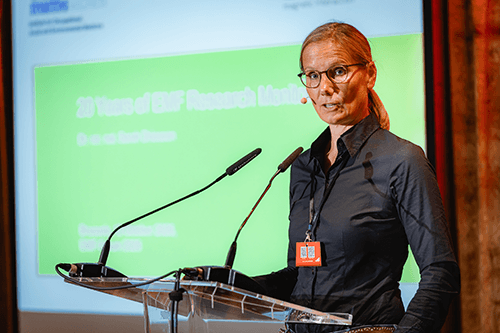
Dr Sarah Driessen, head of the EMF-Portal hosted by RWTH Aachen (Germany), traced EMF concerns from radar in the 1950s to powerlines in the 1970s and mobile communications in the 1990s. She cited studies that drew intense scientific and media interest but failed to replicate. She concluded that ‘biological and health-related effects exceeding the limits are widely accepted, whereas those below the limits are still being discussed.’
The speakers stressed the importance of interdisciplinary teams that include experts on exposure and biology when conducting EMF studies, and that standardised procedures can improve comparability between studies.
‘Regulatory quality gets the balance right’
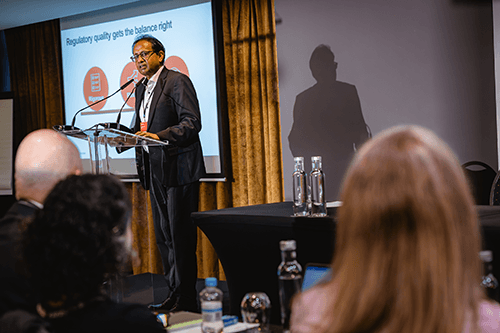

This was the key message of Dr Mani Manimohan, Head of Digital Infrastructure Policy & Regulation, GSMA, who outlined broader policy predictability challenges affecting decisions about mobile network investment. Regarding EMF, he said a rigorous evidence base should inform clear policies so mobile network operators can keep investing and innovating.
In remarks celebrating the 15th EMF Forum, Mike Wood, Telstra and Chair of the GSMA EMF and Health group, pointed to the event’s continued focus on ‘translating scientific research into practical policy approaches that support public confidence, technological innovation and the continued development of mobile connectivity.’
Elsa Sependa, Head of Public Policy at GSMA Europe, highlighted the importance of mobile connectivity amid growing geopolitical, security and climate challenges in Europe. Looking to future networks, including 6G, Sependa noted that stakeholders ‘must continue investing in research, transparency and public trust.’
GSMA thanks all the speakers, facilitators and participants for contributing to an engaging event.
The EMF Forum 2026 presentations and recording are available here.