


The Open Gateway Hackathon, sponsored by Nokia, brought together developers, innovators and telecom experts for two days of intensive collaboration at the Talent Arena during MWC Barcelona 2026.
Held on 2–3 March in the Hackathon Zone, the event challenged participants to create innovative applications using advanced telecom capabilities exposed through standardised APIs. The hackathon concluded with live finals and an awards ceremony on the XPRO Stage, where the top teams presented their solutions to an expert judging panel.
Delivered in collaboration with Google Cloud, MasOrange, Orange, Telefónica and Vodafone, the event demonstrated how the GSMA Open Gateway initiative is enabling developers to build new digital services using telecom network capabilities.
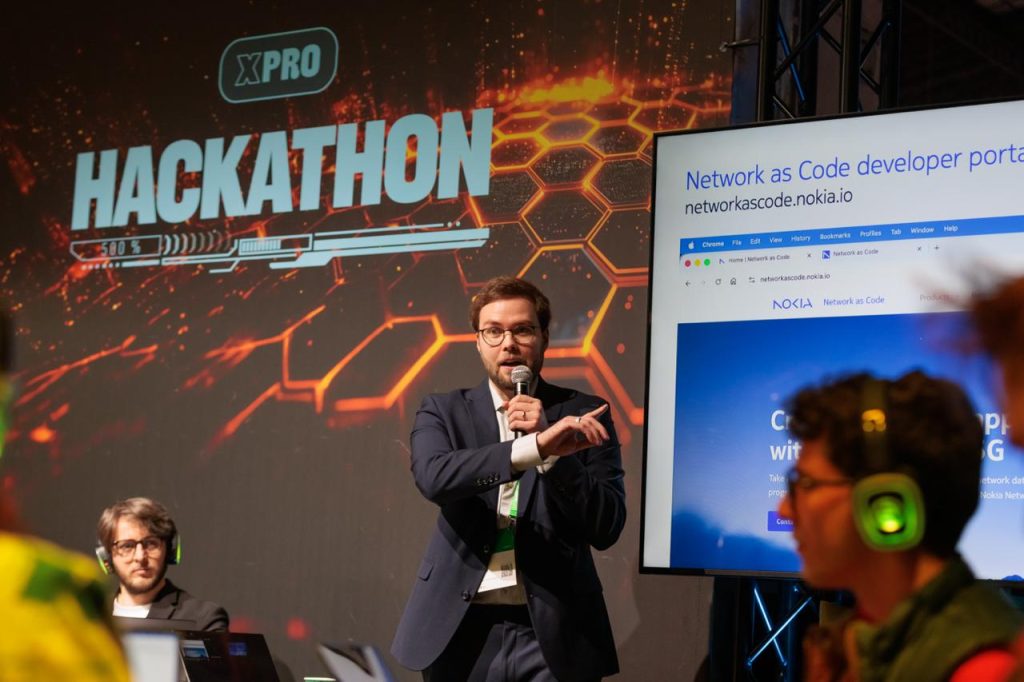

Building with Nokia’s Network as Code
Participants built their projects using APIs available through Nokia’s Network as Code (NaC) platform, which allows developers to access telecom network capabilities through simplified, standardised interfaces.
Teams were able to experiment with a wide range of APIs including:
- Network APIs – such as Quality on Demand (QoD) to prioritise network performance for critical applications
- Identification APIs – including Number Verification, Know Your Customer (KYC) and Device Status
- Location APIs – such as Location Verification and geofencing
- Security APIs – including SIM Swap and Device Swap
Projects were also tested under realistic conditions, allowing teams to connect their applications to live networks and demonstrate how telecom APIs can enhance digital services in real-world scenarios.
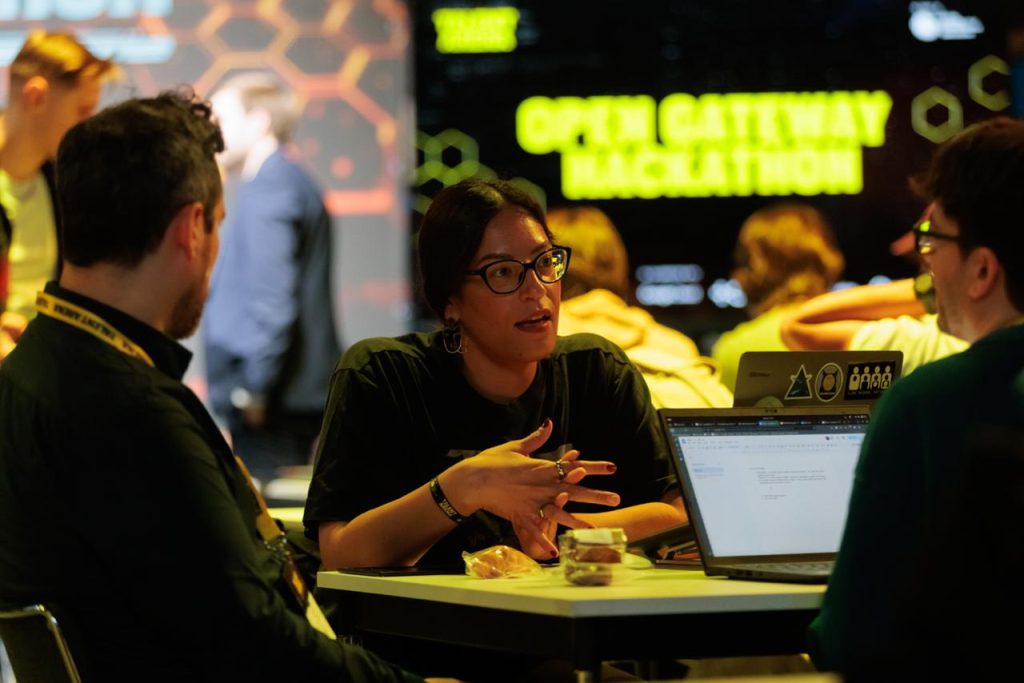
Strong Participation from the Developer Community
The hackathon attracted strong interest from the developer community, highlighting growing momentum around programmable telecom networks.
- 230+ registrations
- 104 confirmed participants
- 96 developers actively competing
Across the two-day challenge, teams worked to design and build solutions addressing real-world challenges including crowd safety, disaster response and intelligent video processing.
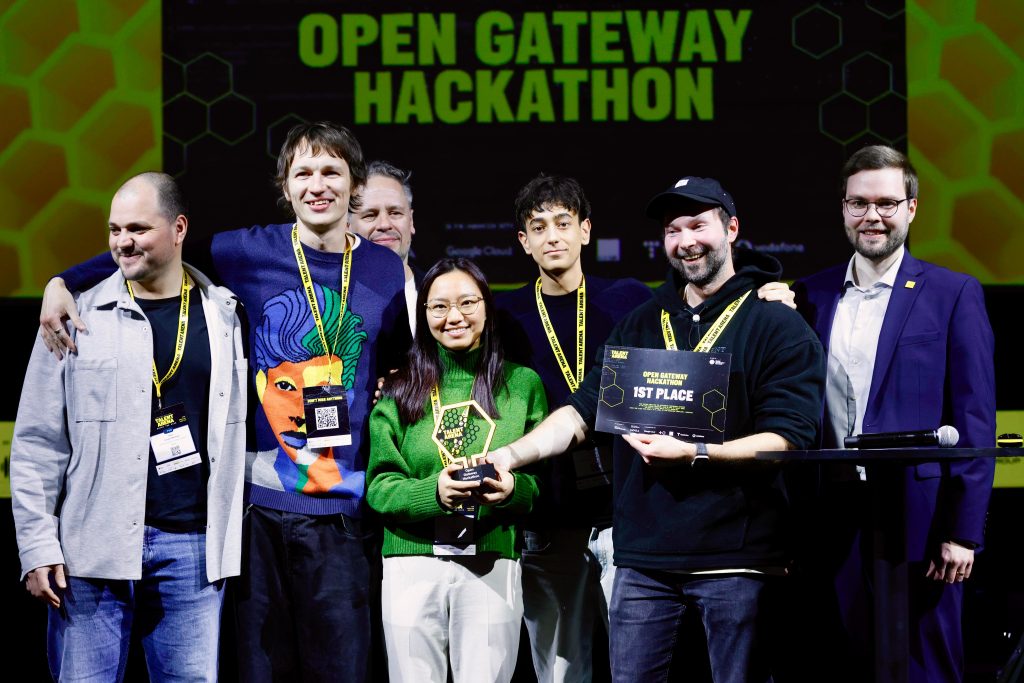
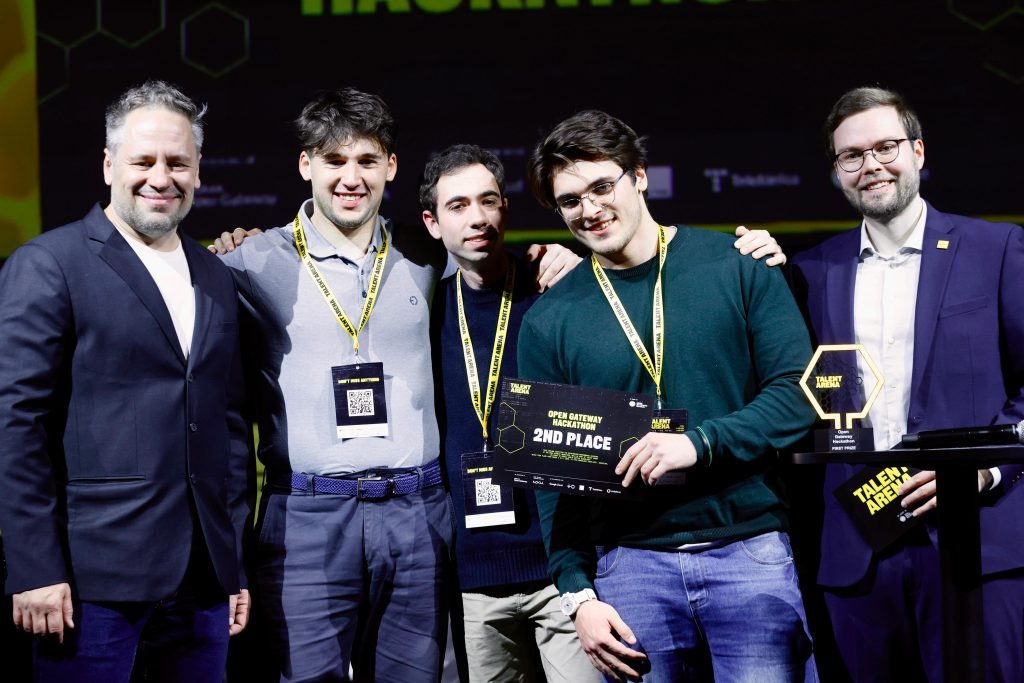
Winning Projects
Following the final presentations, three standout teams were selected by the judging panel.
🥇 Stage Flow – 1st Place
Stage Flow is an event management and crowd safety application designed for large venues such as festivals and concerts. Using Quality on Demand, location services and geofencing, it helps organisers coordinate medical teams and security staff in real time while ensuring reliable connectivity during critical situations.
🥈 Smart Focus – 2nd Place
Smart Focus uses AI to detect people or objects of interest in live video feeds from sources such as CCTV or drones. With Quality on Demand, the system maintains high resolution only for key areas while reducing the rest of the image, enabling up to 80% bandwidth savings.
🥉 ResiliNet – 3rd Place
ResiliNet is a personal safety application that uses location verification and geofencing to detect when users may be near dangerous situations, alerting them and helping guide people to safer areas during emergencies.

Accelerating Innovation with Open Gateway
The Open Gateway Hackathon demonstrated how standardised telecom APIs can unlock new possibilities for developers across industries including events, media, public safety and smart cities.
By enabling developers to access network capabilities through initiatives such as GSMA Open Gateway and platforms like Nokia Network as Code, telecom operators and technology partners are helping to build a new ecosystem of programmable network services.
With strong participation, innovative ideas and real-world applications demonstrated throughout the event, the hackathon was a clear success and highlighted the growing role developers will play in shaping the future of telecom-enabled digital services.