


MWC26 | Open Gateway Summit | Accelerating Network API Adoption | Session 2
The shift from generative to agentic AI is reshaping how network capabilities are consumed and operators need to move fast.
If Session 1 was about distribution, Session 2, From Identity to Programmability: The impact of advanced network APIs on future services, was about transformation. Chaired by Hélène Vigue (Mobile Identity Director, GSMA), this Session examined the convergence of network APIs with agentic AI and the trust, governance, and commercial models that need to be built before that convergence becomes mainstream.
The conversation moved quickly from identity and fraud prevention into territory that felt genuinely new: AI agents as autonomous API consumers, MCP as an architectural standard, and the very real question of whether telecom networks are ready to be discovered and operated by machines.
Three Horizons, One Direction of Travel
Neelam Sandhu (Vonage/Ericsson) opened with a clear framework for where the industry is heading. With Vonage operating across approximately 70% of US network infrastructure, her view carries commercial weight:
- Horizon 1: Authentication and fraud prevention – live today, generating measurable value
- Horizon 2: Quality on Demand (QoD) network slicing -moving toward commercial deployment in 2026
- Horizon 3: Fully agentic network orchestration – the near-term future
The stat that landed hardest: 60% of enterprises are forecast to deploy some form of network-powered AI solutions by end of 2026, a dramatic shift from just 12 months ago.

Why Network Signals + Identity + Biometrics = the Winning Stack
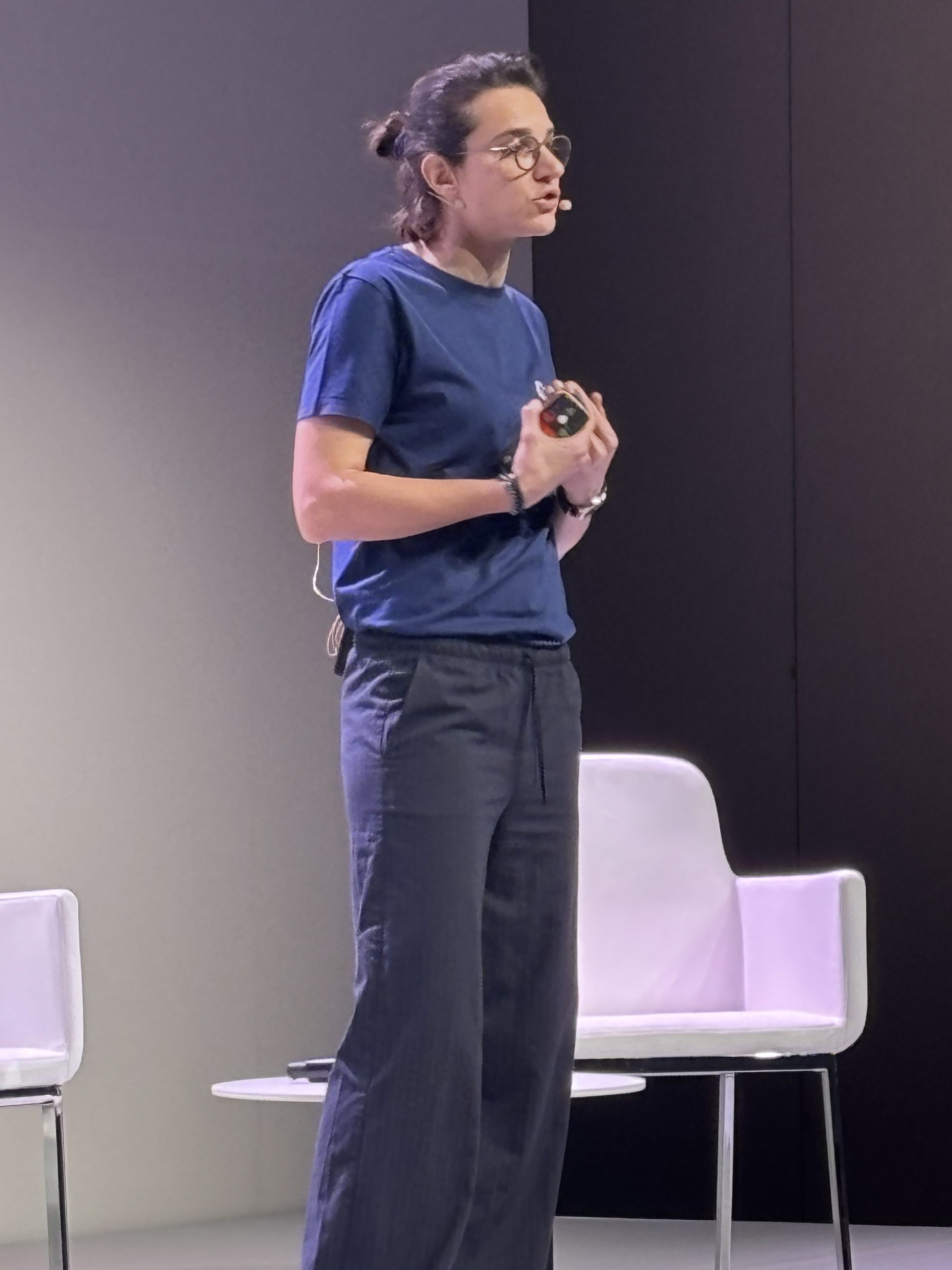
Sara Sebti (ShareID) addressed one of the most pressing challenges in digital services: fraud is becoming more sophisticated, faster than traditional authentication can respond to it. Phishing, synthetic identity, and generative AI-enabled attacks are making single-factor approaches, including OTP, increasingly insufficient.
“Neither network-based APIs alone nor strong authentication alone are sufficient. The winning approach combines both layers.”
Sara Sebti, ShareID
ShareID’s approach layers three components: network signals (SIM swap, number verify), government-issued digital identity, and biometric verification, creating a reusable digital identity that can authenticate users at subsequent interactions without storing biometrics.
A key use case illustrated the elegance of this approach: onboarding with email only. The system silently derives the user’s phone number, performs network-based verification, and links to a verified government identity, all without an OTP. The result is lower friction, lower fraud, and stronger compliance.
MCP: The ‘USB Drive’ for AI Agents
The most technically forward-looking presentation came from Lin Sun (Solo.io), who made a compelling case for MCP (Model Context Protocol) as the architectural shift that will define how AI agents interact with external systems, including telecom networks.

The analogy she used was memorable: MCP is a USB drive for AI agents. Rather than requiring traditional API integration, it allows agents to access data and functions through a standardised discovery-and-invocation layer.
The live demo was persuasive. An AI agent, using Cursor, deployed a full application onto a Kubernetes cluster, created network routes and ingress rules, and raised a pull request, all through conversational prompts. A second demo showed a multimodal AI assessing live audience engagement from camera images.
“The future of networking is agentic: AI agents will manage infrastructure through natural language intent, not manual configuration.”
Lin Sun, Solo.io
The implication for telecoms is direct: if network APIs are not MCP-accessible, AI agents will simply route around them. Operators who invest in making their capabilities discoverable and invocable by agents will be in the flow of traffic. Those who don’t risk being bypassed.
The Panel: Four Operators, One Urgent Message
The closing panel, moderated by Amy Cameron (STL Partners), featuring Dr. Chathurangi Wickramasinghe (Deutsche Telekom), Johanna Wood (Vodafone), Alexandru Ciinaru (Orange), Irene Bernal (Telefónica), and Boon Chee Loo (Bridge Alliance), moved the conversation from technical possibility to commercial readiness. The consensus was clear: the APIs are well-built. The blocker now is speed.
Several important themes emerged:
- Agents will not behave like humans; they will call APIs in unexpected combinations and at unpredictable frequency. Product and security design must account for this.
- A new commercial model is needed; pricing models, SLAs, and security posture designed for high-frequency, non-deterministic agent behaviour. Not human developer patterns.
- Trust is the entry ticket; enterprises will only route workflows through operator platforms if they can rely on governance and accountability frameworks.
- Harmonisation is non-negotiable; inconsistency between operators within or across countries is a blocker for enterprise adoption at scale.
Telefónica was direct: without harmonised API exposure across markets, the ecosystem fragments and enterprise confidence erodes. The call to action from the panel was specific: speed of exposure, portfolio expansion, and governance frameworks, in that order.
Key Takeaways from Session 2
- Agentic AI is not a future scenario; it is the near-term design requirement for every network API strategy
- MCP makes network capabilities discoverable and consumable by AI agents without human-in-the-loop integration
- The winning authentication stack combines network signals, digital identity, and adaptive biometrics. No single layer is sufficient
- Operators must design for unpredictable, high-frequency agent behaviour, not just human developer consumption patterns
- Speed of exposure and API harmonisation across markets are the most important commercial enablers right now
Session 3 brought the commercial reality into sharp focus, examining how automotive, aviation, and broadcast industries are already deploying network APIs to solve concrete operational problems. Read the final blog.
GSMA Open Gateway Summit · MWC Barcelona 2026
Three sessions. One direction of travel: from capability to commercial outcomes.