


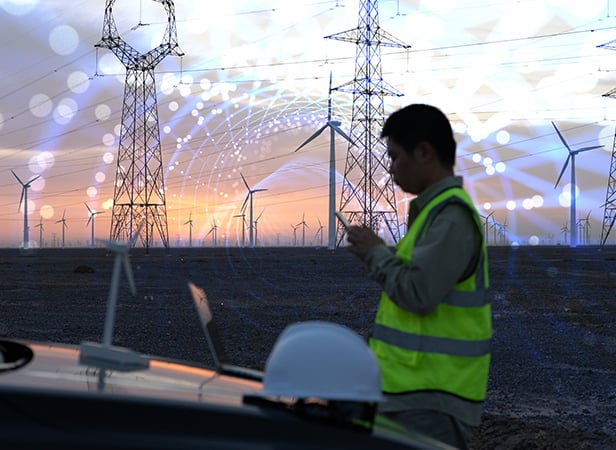
A Global Industry Milestone
1 billion NB-IoT and LTE-M LPWAN connections worldwide
At the end of 2025, the mobile ecosystem reached one billion active NB-IoT and LTE-M connections. The milestone reflects a decade of coordinated effort to create a scalable, interoperable foundation for massive IoT.
Since 2015, mobile operators, vendors, and partners have worked to align standards, reduce fragmentation, and support long-term deployment. The GSMA has played a central role in convening that collaboration and enabling cellular LPWAN to scale globally.

“Reaching one billion low power IoT connections is a testament to what sustained industry collaboration can achieve. This milestone reflects a shared commitment to standards, interoperability, and long-term value – and it lays the foundation for the next phase of massive IoT growth.
Alex Sinclair, CTO, GSMA
From fragmentation to unification
A decade ago, massive IoT faced a structural problem. Low power connectivity existed, but the ecosystem lacked a shared direction. Competing approaches, uneven implementations, and limited interoperability made global deployment difficult to sustain.
Progress accelerated once the industry aligned on a common cellular foundation. Agreement around NB-IoT and LTE-M gave operators, vendors, and developers the certainty needed to invest, build, and deploy at scale.
That early alignment proved decisive. It replaced fragmentation with consistency and enabled mobile LPWAN to mature into a globally deployable platform. One billion active connections is the outcome of that choice.
The GSMA’s role in unifying the LPWAN ecosystem
Mobile LPWAN expansion is the result of industry coordination over divergence. That required a neutral space where operators, vendors, and solution providers could align on priorities and move together.
GSMA provided that structure. By convening stakeholders across the value chain, supporting early standardisation, and maintaining focus on interoperability, GSMA helped turn emerging specifications into deployable platforms.
Roaming frameworks, certification programmes, and shared insight reduced risk for early adopters and accelerated commercial rollout. The result was an ecosystem able to develop consistently across markets and over time.

“Early trials that Vodafone was involved with, well, we pioneered a pre-standards version of the technology back in 2014. We then demonstrated the concept on our Mobile World Congress stand in 2015. We used a mock-up of a water meter because that was one of the use cases that we were very interested in trying to enable. Fast forward one year and we were very proud to announce the first live trial using narrowband IoT technology in partnership with a company called Aguas de Valencia to connect water meters in basements and cellars under metal covers and prove to the customer that the technology was able to provide the right degree of connectivity together with low power consumption and allowed them to replace a plethora of legacy proprietary technology.
Luke Ibbetson, Head of Group R&D, Vodafone

“Yes, NB-IoT and LTM were the first cellular technologies designed specifically for IoT and introduced by 3GPP in release 13. They are offering the following benefits, long battery life, improved coverage, high reliability thanks to the use of license spectrum. All this while allowing low-cost module designs and being future proof in the 5G era. Often, rolled out together by operators, the choice between the two complementary technologies depends on the use case. For example, NB-IoT would be ideal for IoT sensors collecting simple data in hard-to-reach areas, while LTE-M would better serve sensors with larger payloads requiring higher speeds.
Julien Grivolas, EU Director of Wireless Network Industry Development, Huawei

“Launch of the new technology is like playing a fine musical orchestra piece. It needs all the sections to work together. So, for mobile IoT, we needed to have affordable chips and modules, we needed to have pervasive infrastructure, and we needed to have mobile network operators ready to deliver these IoT services to its customers. The GSMA as a Mobile Industry Trade Association, entered the scene as a conductor for this orchestra. The first challenge for us was to convince everyone to play from the same sheet music., and so we started with this exciting new document called Embedded Mobile Guidelines that provided all the notation for the future deployments, and it became a bestseller, a blueprint for the rest of the mobile IoT ecosystem.
Svetlana Grant, Business Development Manager, Google DeepMind

“Several unlicensed, low power wide area solutions for IoT were gaining attention in the market, and we needed a cellular capability that would compete. It didn’t need the high bandwidth of 4G, what it did need was to enable devices that were affordable, didn’t show up a lot of battery life and came in small sizes. LTE-M fit the need better than alternatives because it could support mobility and formal updates over the air. Through the GSMA Mobile IoT initiative, we were able to align on the 3GPP specifications and gain consensus on the key capabilities much faster than would have been the case otherwise. By the industry coming together in this fashion, it also provided momentum for the development and launch of mobile IoT.
Cameron Coursey, Vice President, AT&T Connected Solutions
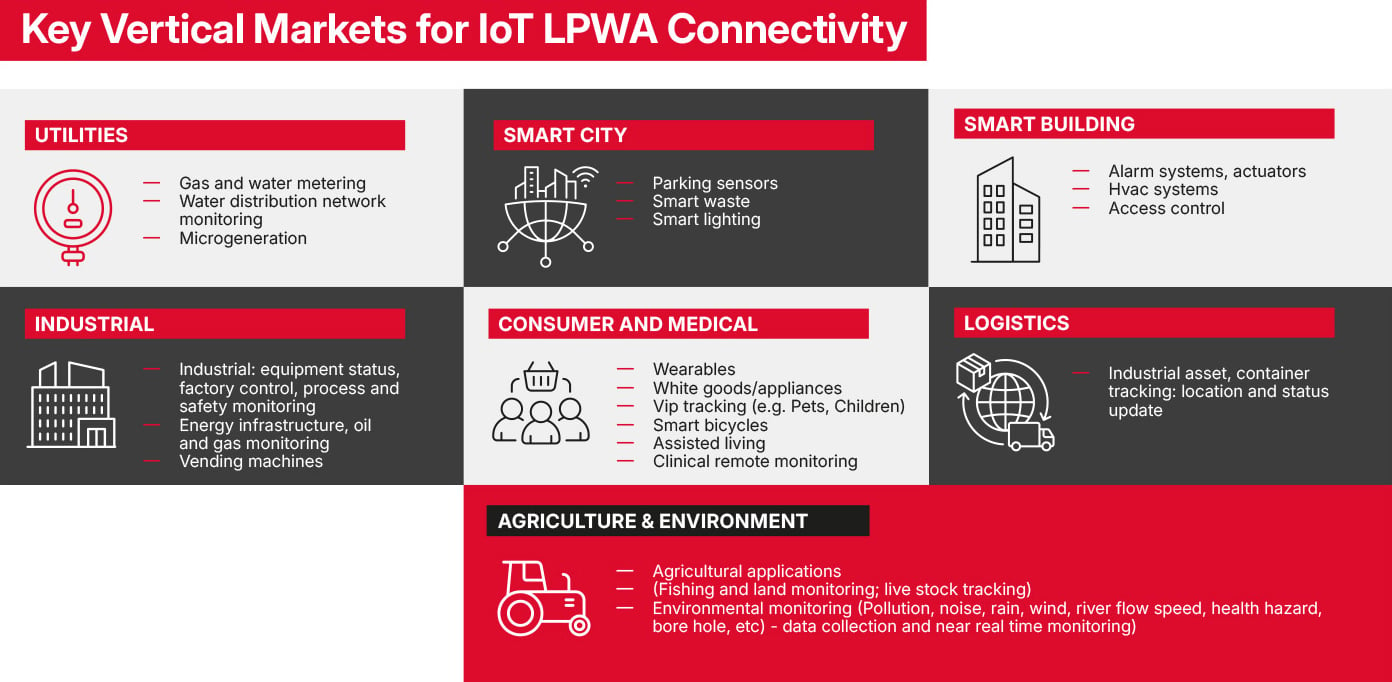
Utilities
Smarter Networks Through Long-Life Connectivity
LPWAN enables utilities to deploy smart meters and monitor grid infrastructure at national scale – supporting real-time insights into energy and water usage, leak detection, and network performance.
With devices designed to operate for over a decade on a single battery, NB-IoT and LTE-M make it possible to scale metering programmes efficiently across urban and remote locations.

Logistics
End-to-End Asset Visibility
From fleet tracking to shipment monitoring, LPWAN supports continuous visibility across supply chains – even in underground or cross-border environments.
Long battery life and deep coverage enable logistics providers to monitor assets throughout transit, improving operational efficiency and reducing loss or delay.

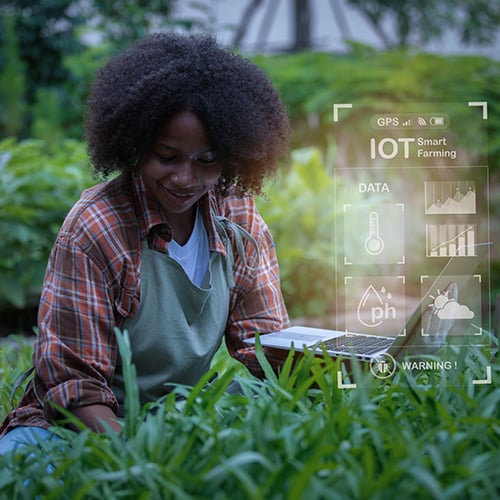
Agriculture
Precision Monitoring in Remote Environments
LPWAN technologies support remote monitoring of soil conditions, irrigation systems, and livestock – helping farmers optimise resource usage and improve crop yield.
Coverage in rural and hard-to-reach areas enables reliable data collection without the need for frequent maintenance or power access.
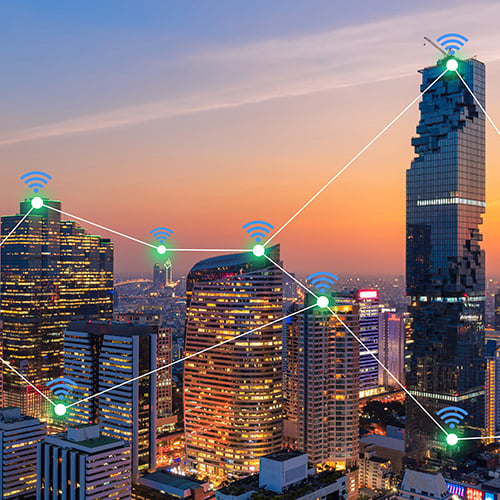
Smart Buildings
Efficient and Connected Environments
From energy management to occupancy monitoring, LPWAN supports the deployment of connected sensors across commercial and residential buildings.
Long device lifecycles reduce maintenance costs, while secure connectivity supports automation and improved performance.
Infrastructure Monitoring
Monitoring Critical Assets at Scale
LPWAN enables remote monitoring of infrastructure such as bridges, pipelines, and public lighting systems – supporting predictive maintenance and improved service delivery.
Secure device identity and standardised connectivity allow infrastructure operators to deploy trusted monitoring solutions over long asset lifecycles.

Cellular LPWAN at global scale
NB-IoT and LTE-M networks are commercially available in more than 100 countries. Deployments support long device life, predictable performance, and cross-border operation.
With mature roaming capabilities and continued network investment, cellular LPWAN provides a stable platform for IoT at scale.
Explore the deployment map below:

What’s next for LPWAN?
Reaching one billion connections is a foundation, not a finish line.
The next phase of cellular LPWAN will focus on continued scale, long-term security, and expansion into new sectors. Ongoing collaboration remains essential as requirements evolve and deployments mature.
GSMA continues to support this progress by helping the industry work together, sharing knowledge, and providing long-term support for the ecosystem.

Continue the collaboration
Cellular LPWAN reached scale through sustained cooperation across the mobile ecosystem. Future opportunity lies in the same collective commitment. You become involved in a number of ways: