


Tuesday 12 May, 2026
From network optimisation and planning to security and sustainability, quantum computing has the potential to address some of the telecoindustry’s most complex computational challenges. While the technology continues to mature, operators are increasingly asking a practical question: how do we begin evaluating where quantum computing can deliver value?
Many organisations face similar challenges. Which use cases should be prioritised? How can they be evaluated consistently? What evidence is needed before investment decisions can be made? And what actions can operators take today while quantum hardware continues to evolve?
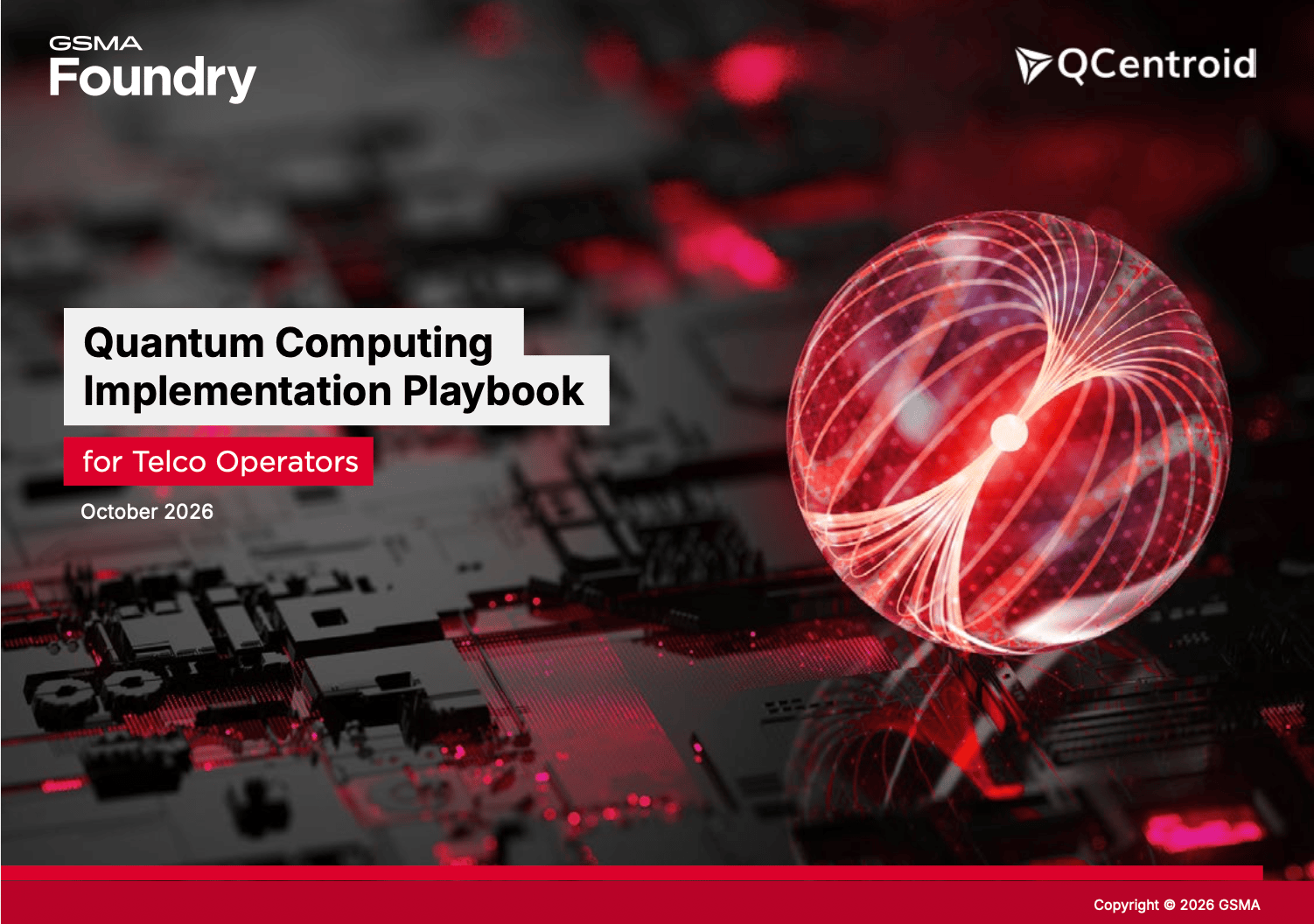
To help answer these questions, GSMA and QCentroid have developed the Quantum Computing Implementation Playbook for Telco Operators (Download link below)—a practical guide designed to help operators evaluate quantum computing opportunities through structured methodologies, evidence-based assessment and clear implementation pathways.
The Playbook also provides the foundation for the next phase of the programme: the GSMA Foundry x QCentroid Discovery Sandbox, where members can apply these methodologies through guided experimentation and begin building evidence for future deployment.
A Practical Framework for Quantum Adoption
The Playbook provides operators with a structured approach to assessing quantum computing opportunities from both a technical and business perspective.
It introduces a use case definition framework that helps organisations identify problems where quantum computing could provide meaningful value. The framework guides users from problem identification and mathematical formulation through to feasibility assessment and prioritisation.
To support consistent decision-making, the Playbook also introduces an evaluation and benchmarking framework. As quantum hardware continues to evolve, assessing solutions requires more than measuring current performance. Operators also need to understand a solution’s potential scalability, robustness and long-term operational relevance.
To demonstrate these frameworks in practice, the Playbook includes four validated telecom use cases spanning network planning, optimisation, security and operations. Each illustrates how quantum approaches can be assessed for technical suitability, business value and implementation feasibility, while providing practical insight into integration requirements and future scalability.
The Playbook concludes with a five-stage adoption roadmap, guiding organisations from initial awareness and experimentation through validation, early deployment and long-term scaling.
Together, these frameworks reinforce a simple principle: successful quantum adoption starts with selecting the right problems, evaluating them consistently and building evidence over time.
Key Findings from the Playbook
The Playbook highlights several clear conclusions for telco operators.
Quantum Computing is a Specialised Accelerator
Rather than replacing existing operational systems, quantum computing is expected to complement classical computing by accelerating specific computationally intensive tasks. Network planning, optimisation and resource allocation continue to represent some of the strongest near-term opportunities for quantum-enhanced solutions.
Organisations Can Begin Experimenting Today
Although today’s quantum hardware remains constrained, meaningful experimentation is already possible. The validated use cases demonstrate that reduced-scale implementations can provide valuable evidence on algorithm performance, scalability and operational relevance, enabling organisations to begin building capability today.
Organisational Readiness is Critical
Technology maturity is only one part of the equation. Successful adoption also depends on data readiness, workflow integration and organisational capability. Developing the skills and processes needed to evaluate quantum solutions will be as important as advances in the underlying hardware.
From Guidance to Practical Application– Download the Playbook and Join the Sandbox
The Quantum Computing Implementation Playbook for Telco Operators provides practical frameworks, validated telecom use cases and an adoption roadmap to help operators determine where quantum computing could create value.
To support this, GSMA and QCentroid have launched the Discovery Sandbox – a structured programme that gives members the opportunity to explore quantum computing in a collaborative, low-risk environment.
Building on the Playbook, the Sandbox helps operators move from understanding the opportunity to gaining practical experience – testing assumptions, evaluating potential business value and building the evidence needed to inform future quantum strategies.
Ready to take the next step?
The Quantum Discovery Sandbox offers two tracks, designed for organisations at different stages of their quantum journey.
The Accelerated Track is a 16-week guided programme for organisations with a pre-qualified use case, supporting them as they progress towards implementation and execution on real quantum hardware.
The Standard Track is an eight-week, lower-commitment pathway for organisations at an earlier stage. With expert support, participants will identify a portfolio of 3–5 potential use cases, map operational challenges to quantum approaches, assess feasibility and develop high-level investment cases.
Registration for the Accelerated Track has now closed. For organisations that missed the Accelerated Track, or are still identifying where quantum could deliver value, the Standard Track provides an opportunity to get started.
Registration for the Standard Track is open until 15 November 2026.
To register your interest, contact quantumtech@gsma.com.
To download the playbook fill your details below
The journey from quantum interest to quantum readiness has already begun. The next step is practical action.
